


Sold as:

from £6.99

Sold as:
from £19.99
 5 Star Service Rating




 Secure, One-Tap Checkout
 5 Star Feefo Rating
 Hand Picked, Delivered to Your Door!
 1 Year Bareroot Guarantee
 Platinum Trusted Service Award 2026
 Mail Order Plant Experts - Est. 1949
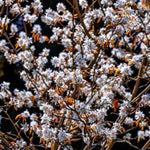
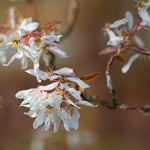

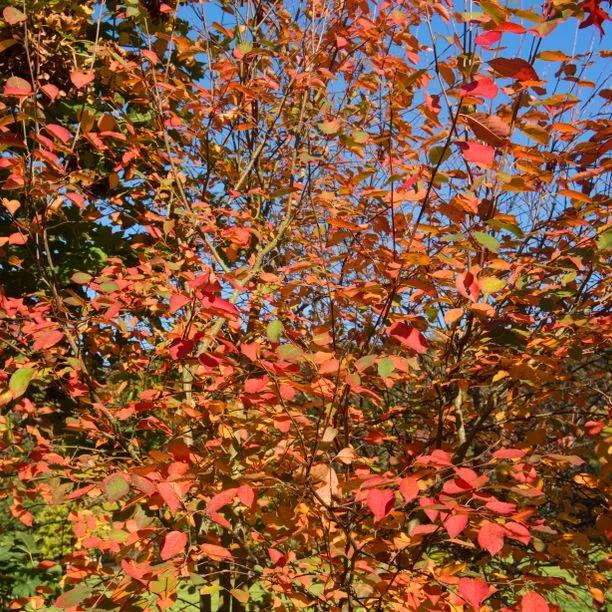
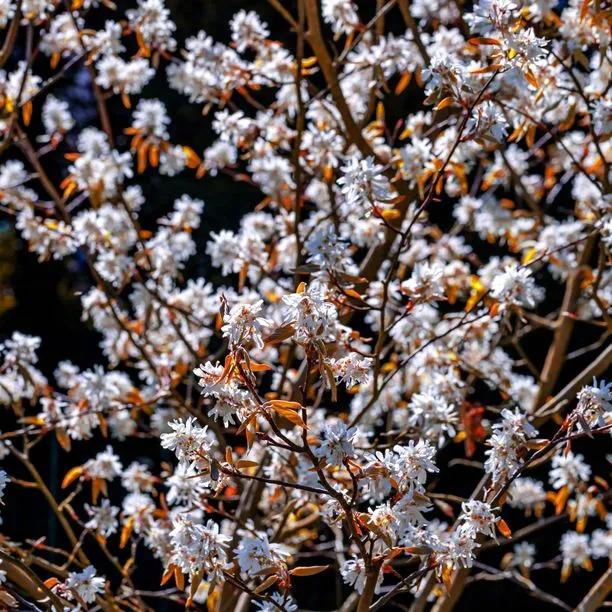
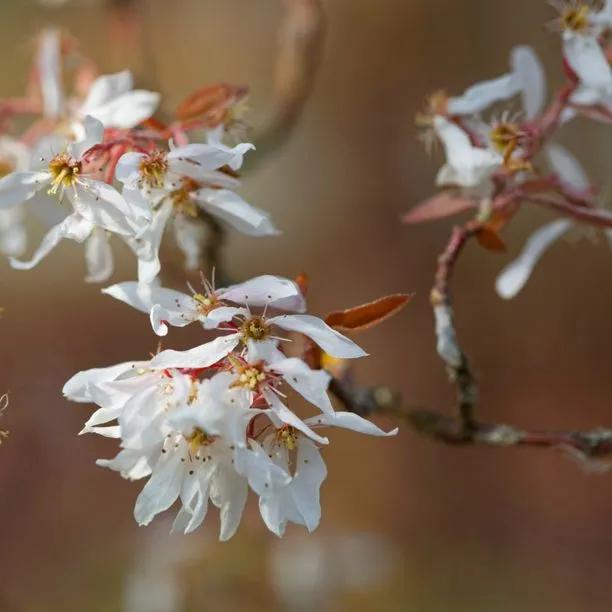




Amelanchier Robin Hill is small, fairly upright and graceful, with year round ornamental interest. The pink buds and young flowers open in April when the leaves are barely breaking, completely filling the tree with a cloud of flowers. The petals turn from pink to white as they mature. The young leaves are flushed with a bronze tone that fades to a rich green by summer. By August, the flowers ripen into a modest quantity of edible, deep red berries, about a centimetre across (all Amelanchiers are self-fertile, so you only need one tree). They look and taste a little like blueberries, are a good source of iron and can be dried, but you have to get them before the birds do. The fiery Autumn display is superb, and in winter, the slender branches look lovely against a cold steel sky.
Grown with a straight trunk, it can reach about 9 metres.
Browse all of our ornamental & garden trees, or our other trees for small gardens.
An undemanding tree that only needs decent drainage and a neutral to mildly acidic soil pH. The spreading, shallow fibrous roots are great for holding loose soil in place on a mound or bank, or thin topsoils on rocky locations. It's hardy, wind resistant, and suitable for coastal gardens. It benefits from a mulch in late spring / early summer.
It has a suckering habit that will tend to turn it into a large shrub over time if they're not removed.
It was bred at the Robin Hill Arboretum & Nature Preserve in New York State during the 1960's from Amelanchier arborea and A. laevis, and was previously classified as the former.
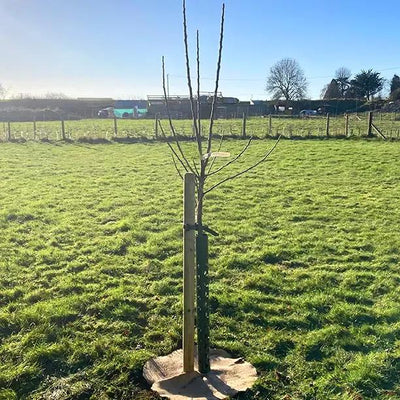
Standard trees are measured by their girth in centimetres 1 metre above ground level: their trunk's waist measurement. Unlike sapling trees and hedge plants, standards aren't measured by their height, which will vary quite a bit both between and within species.
So, a 6/8cm standard tree has a trunk with a circumference of 6-8cm and an 8/10 standard has a trunk 8-10cm around. This measurement makes no difference to the tree's final height.
On average, standard trees are 2-3.5 metres tall when they arrive, but we cannot tell you precisely how tall your trees will be before we deliver them.






 Sign In
 Saved items