Home > Hedging Plants > Evergreen Hedging > Laurel, Bay - Potted

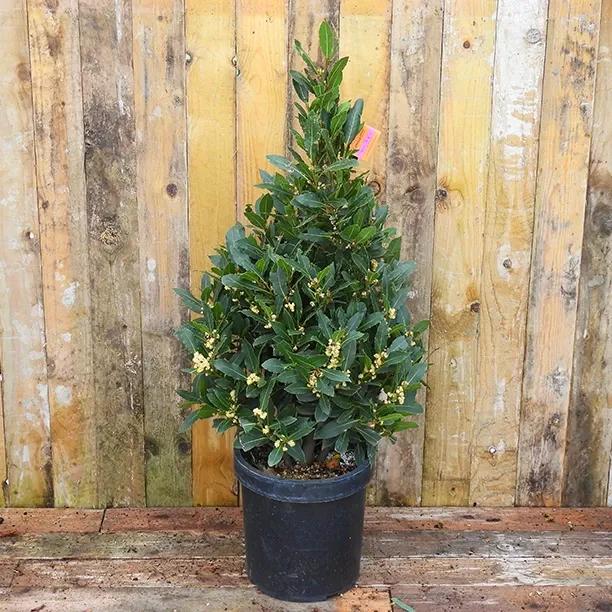
Bay Laurel Trees | Laurus nobilis (Sweet Bay / Edible Bay)

Key Data

Fragrant Evergreen Hedging Coastal Hedging Hedging

Evergreen Coastal Areas

Free Delivery
On all orders over £250

12 Month
Guarantee

£25 MINIMUM
Order Value

From £5.45 - £7.55 volume discount available (buy more, save more)

You get an EXTRA 5% discount on our catalogue prices when you order online.
1 Select a size
  NUMBER OF PLANTS
SIZES 1-7 8-23 24-47 48-99 100+
40/60 cm POTTED SOLD OUT FOR THE SEASON
2 Quantity
Unit price £0.00
Total price £0.00 inc. £0.00 VAT
3


Availability

  jan feb mar apr may jun jul aug sep oct nov dec
Potted                        

Legend

 In Season  Out of season

DescriptionDelivery & Guarantee

Bay Laurel Trees, Sweet Laurel, Edible Laurel, Grecian Laurel

Bay Laurel trees are sturdy evergreen plants with aromatic foliage that is often used in cooking.
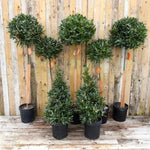
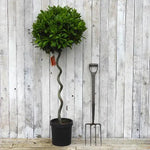
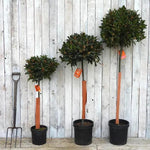
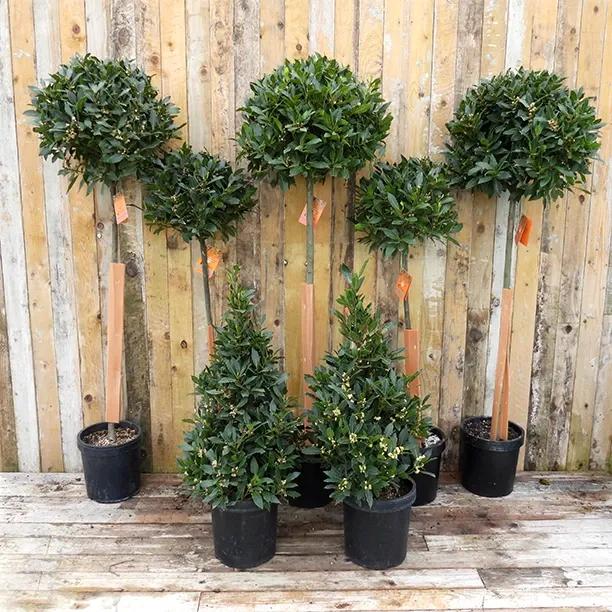
Bay trees
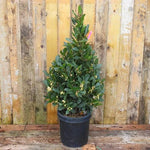
are fine specimen plants that naturally form a pyramid and are often used in topiary.
They are dense and clip well. A bay laurel hedge makes a smart boundary that will provide you and your friends with an unending supply of bay leaves for your kitchens.

Browse all of our other varieties of Laurel Hedging plant here.

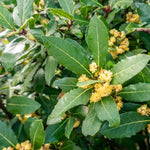
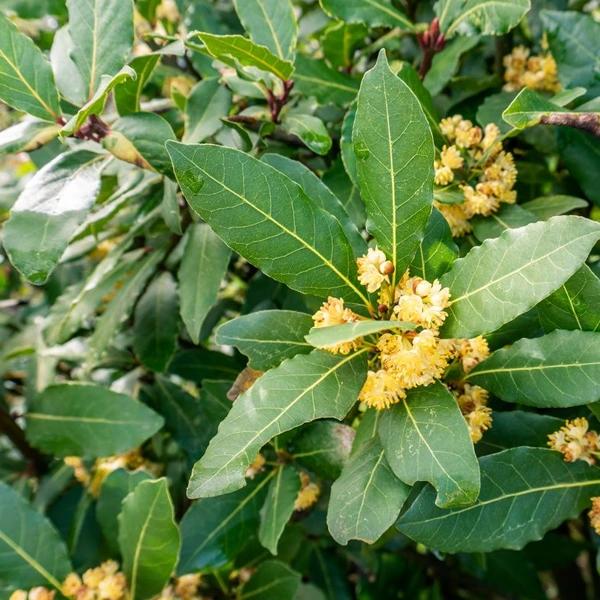
Bay laurel leaves are lance-shaped with a delicately wrinkled, serrated edge and red stalks. In April, they produce quite small greenish yellow flowers with thick petals, which appear at the bases of the leaves and so aren't very showy, though bees love them. On female bay tree plants, pollinated flowers will become small shiny black fruit that attract thrushes.

Bay laurel leaves are widely used as a culinary herb and the best leaves are picked in the early morning between May and August. Dry them in a dark place and use them before they turn brown - in less than a year, in any case. Store them in a sealed container. They can be used fresh, though they are more bitter that way. Bay laurel, thyme and parsley in a cheesecloth bag makes a bouquet garni, a simple but delicious way of infusing soups and stews with flavour. Remember that bay leaves should be used whole but not actually eaten.

According to the legend, the beautiful nymph Daphne transformed into a bay tree to escape the advances of the god Apollo, who made the tree sacred in her memory. Roman artists usually depicted Apollo wearing a wreath of bay leaves, which was used as a symbol of achievement in Roman society - Laurus nobilis comes from the latin words for "praise" and "famous", given to poets, soldiers and athletes, as well as heads of state. The word bay means crown in old Anglo-Saxon. Many supernatural properties have been attributed to bay laurel wreaths and leaves, from warding off lightning to curing arthritis. The sudden withering of a bay tree was held to be an omen of a ruler's impending death.

Bay Tree Care

Bay trees in pots: Bay trees are mediterranean plants and can be a bit frost tender until they have acclimatised. If you live in a city in the North you should have no problems but, if you live in an exposed area, your plants may suffer a bit the winter. Bay trees in pots do very well and can be brought inside when the temperature falls. Put them in a cool place with as much light as possible, give them little water and no fertiliser. They actually like having their roots restricted and you will only need to repot them every 6 years or so, in a pot about 5cms wider - start off with a pot about 30cms, 12 inches, wide. Keep them healthy with an inch of compost once a year and some seaweed based plant food throughout the summer months.

Left unpruned, a mature bay tree will reach about 12 metres, 40 feet.


Accessories

Hi, just a note to let you know that we do use cookies for our web site. They are used to help us determine what our customers really want and therefore to give them the best service they deserve. We also use cookies to enable you to buy products from us online and do so in a convenient and secure manner.

Thank you, The Ashridge Nurseries Team.