


Sold as:

from £6.99

Sold as:
from £19.99
 5 Star Service Rating




 Secure, One-Tap Checkout
 5 Star Feefo Rating
 Hand Picked, Delivered to Your Door!
 1 Year Bareroot Guarantee
 Platinum Trusted Service Award 2026
 Mail Order Plant Experts - Est. 1949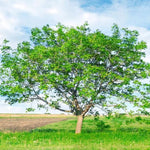
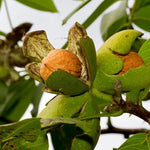
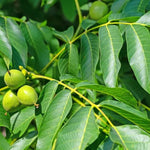
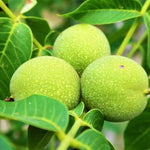
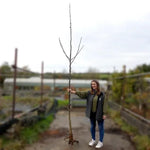



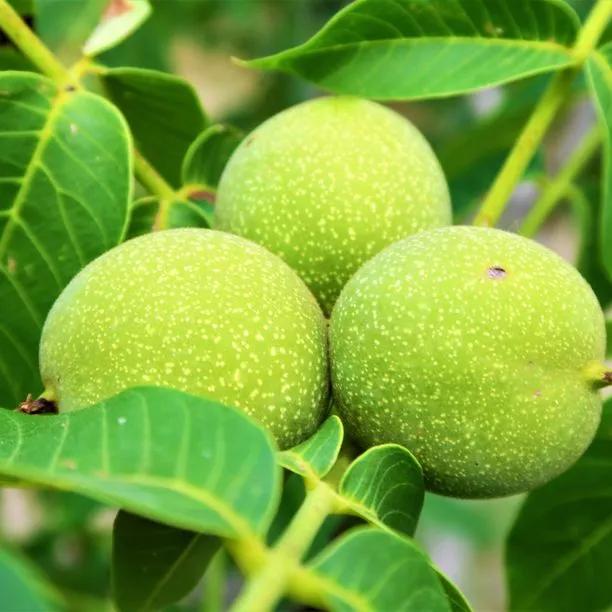





The 'Buccaneer' Walnut, Juglans regia 'Buccaneer', is a superb cultivar developed in Holland specifically for northern European climates. Unlike the species, which can take 10-15 years to produce nuts, 'Buccaneer' is precocious and self-fertile, typically beginning to crop within just 3-4 years of planting. This makes it an excellent choice for gardeners who want to enjoy home-grown walnuts without waiting a decade or more.
The tree develops into a healthy, robust specimen reaching 8-12 metres tall with a spread of 8 metres or more at maturity. Its foliage is particularly attractive: emerging bronze-purple in spring, maturing to fresh green through summer, then turning rich gold in autumn. The leaves are also pleasantly fragrant when brushed or crushed.
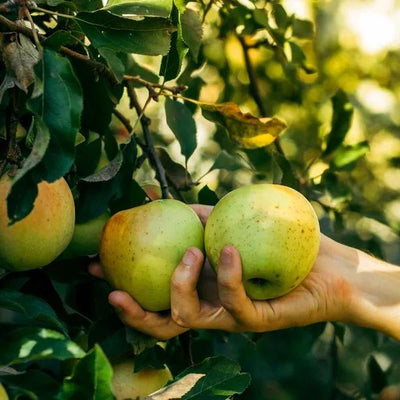
'Buccaneer' produces heavy crops of round nuts that are especially prized for pickling. For pickled walnuts, harvest in July before the shells have formed—test with a pin or skewer to check. Left to ripen fully, the eating nuts are ready for harvest in late September and can be stored through December.
We also deliver the straight species Common Walnut, walnut saplings, and Black Walnut (Juglans nigra). Browse our full range of nut trees or all of our large garden trees.
Delivery season: Walnut trees are delivered bareroot during late autumn and winter, approximately November-March inclusive.
Choosing a size: Small trees are cheaper, easier to handle and more forgiving of less than ideal aftercare, so they're best for a big planting project. If instant impact is your priority, or if you are only buying a few plants for use in a place where it's convenient to water them well in their first year, then you may as well use bigger ones. All our bareroot trees are measured by their height in centimetres above the ground (the roots aren't measured).
'Buccaneer' prefers a position in full sun with shelter from cold winds and late frosts—avoid frost pockets. It will tolerate many soil types but is happiest in light, sandy, well-drained conditions. On heavier clay soils, ensure good drainage. In northern areas, a sheltered site is particularly important.
Like all walnuts, 'Buccaneer' can be slow to establish in its first year, and some die-back in the shoot tips is normal. Water well during dry spells in the first growing season. Once established, trees are relatively trouble-free.
For pickling, harvest the green nuts in July before the shells have hardened—test by pushing a pin through the shell. For eating, leave the nuts to ripen on the tree and harvest in late September when the outer husks begin to split. Use long sticks with smooth or padded tips to rattle the branches and save your crop from the squirrels.
Prune only if necessary, from late summer to autumn to prevent profuse bleeding. 'Buccaneer' can be kept to a manageable size with regular pruning if required for smaller gardens.
The key advantage of 'Buccaneer' is speed to cropping. Where a seedling Common Walnut may take 10-15 years or more before producing a significant harvest, 'Buccaneer' typically begins bearing within 3-4 years. It is also self-fertile, so you need only plant one tree to get a crop, and its compact size (8-12m versus 30m for the species) makes it far more practical for most gardens.
The nuts are particularly well-suited to pickling, and the ornamental qualities—bronze spring foliage, fragrant leaves, and golden autumn colour—make it an attractive specimen tree as well as a productive one.
| Feature | 'Buccaneer' | Common Walnut |
|---|---|---|
| Ultimate height | 8-12m | Up to 30m |
| Years to first crop | 3-4 years | 10-15 years |
| Self-fertile | Yes | Partly (benefits from cross-pollination) |
| Best for pickling | Excellent | Good |
| Spring foliage | Bronze-purple | Green |
| Suitable for smaller gardens | Yes (can be pruned) | No |
'Buccaneer' was developed in Holland as part of breeding programmes to select walnut cultivars better suited to northern European growing conditions. Dutch breeders focused on trees that would crop reliably in cooler, shorter summers and tolerate harder winters than Mediterranean selections. The result is a cultivar that performs well throughout the UK, including in Scotland and northern England where Common Walnut can struggle.
The name reflects the tree's robust, adventurous character—a walnut that ventures successfully into territories where others fear to grow. It has become one of the most popular UK garden walnut varieties alongside 'Broadview', another selection bred for British conditions.
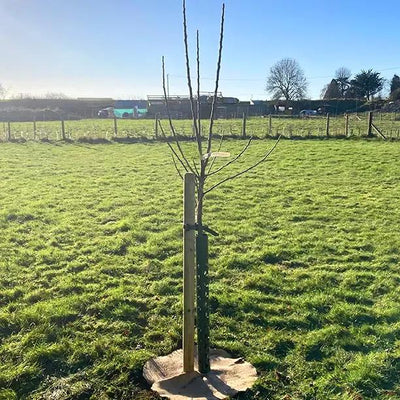
Standard trees are measured by their girth in centimetres 1 metre above ground level: their trunk's waist measurement. Unlike sapling trees and hedge plants, standards aren't measured by their height, which will vary quite a bit both between and within species.
So, a 6/8cm standard tree has a trunk with a circumference of 6-8cm and an 8/10 standard has a trunk 8-10cm around. This measurement makes no difference to the tree's final height.
On average, standard trees are 2-3.5 metres tall when they arrive, but we cannot tell you precisely how tall your trees will be before we deliver them.






 Sign In
 Saved items