

Sold as:

from £6.99
Sold as:
from £19.99
 5 Star Service Rating




 Secure, One-Tap Checkout
 5 Star Feefo Rating
 Hand Picked, Delivered to Your Door!
 1 Year Bareroot Guarantee
 Platinum Trusted Service Award 2026
 Mail Order Plant Experts - Est. 1949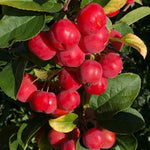






Red Sentinel crab apple trees have plentiful clusters of blood-red fruits that stay on the branches deep into the winter months. Starting in late April, the purple buds produce a mass of single, white (variably tinged with pink), strongly scented flowers that make a delicate, balanced display with the bright green leaves, rather than engulfing the whole tree.
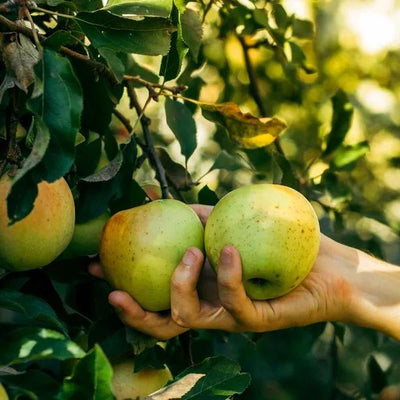
Red Sentinel's fruits are quite small, numerous and well suited for use in purC)es, jellies and other apple dishes that require a sharper taste. If you leave them on the branch to brighten up your garden in winter, birds usually won't start pecking away at them until after they have been well softened by a few hard frosts.
It can reach a height of about 6-7 metres tall, highly recommended for small, city gardens.
John Downie and Golden Hornet are classic pollinators for orchard apple trees, but if scab is a problem in your area, this variety is well worth a try.
Browse our range of crab apple trees.
Delivery season: Crab apple trees are delivered bareroot during late autumn and winter, approximately November-March inclusive.
Choosing a size: Small trees are cheaper, easier to handle and more forgiving of less than ideal aftercare, so they're best for a big planting project. If instant impact is your priority, or if you are only buying a few plants for use in a place where it's convenient to water them well in their first year, then you may as well use bigger ones. All our bareroot trees are measured by their height in centimetres above the ground (the roots aren't measured).
Any well drained soil, tolerates partial shade and urban pollution well.
Malus x robusta is a hybrid of Malus baccata (Siberian crab apple) and Malus prunifolia, both native to Asia. It was bred by Notcutts Nursery in the 1950's.
The RHS has given this tree an Award of Garden Merit, for beauty and ease of cultivation, and an Award of Merit for cuttings of its flowering stems when used in a display.
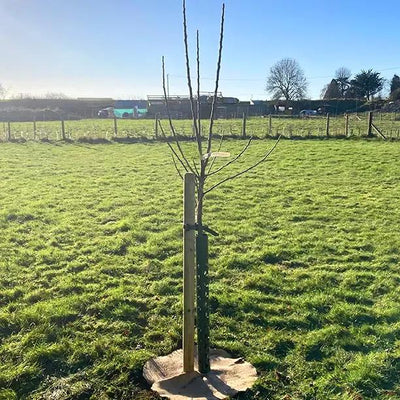
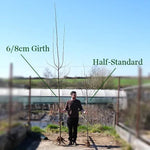
Standard trees are measured by their girth in centimetres 1 metre above ground level: their trunk's waist measurement. Unlike sapling trees and hedge plants, standards aren't measured by their height, which will vary quite a bit both between and within species.
So, a 6/8cm standard tree has a trunk with a circumference of 6-8cm and an 8/10 standard has a trunk 8-10cm around. This measurement makes no difference to the tree's final height.
On average, standard trees are 2-3.5 metres tall when they arrive, but we cannot tell you precisely how tall your trees will be before we deliver them.






 Sign In
 Saved items