

Sold as:

from £6.99

Sold as:
from £19.99
 5 Star Service Rating




 Secure, One-Tap Checkout
 5 Star Feefo Rating
 Hand Picked, Delivered to Your Door!
 1 Year Bareroot Guarantee
 Platinum Trusted Service Award 2026
 Mail Order Plant Experts - Est. 1949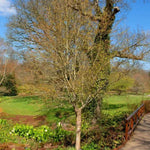
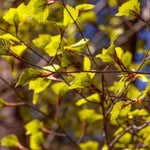
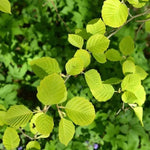
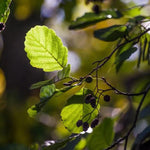






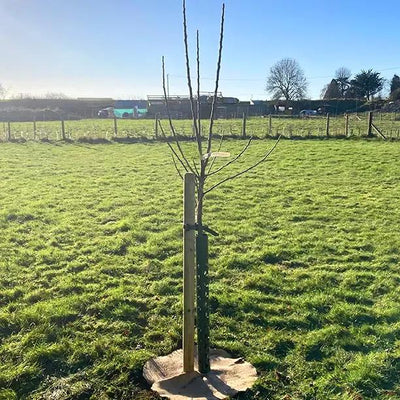
Alnus incana, the Grey alder, takes its name from its grey bark and the silvery-grey tint to its young leaves. In early spring, before the leaves appear, it produces yellow catkins with a pretty pink-red tinge and plump little green cones, which will mature and release seeds in autumn. Young trees are extremely vigorous, growing by up to a metre per year. It tends to grow lots of suckering shoots from its base, which provide cover for wildlife.
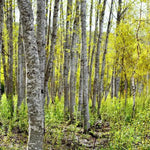
Wild trees tend to become multi-stemmed and shrub like, but in the garden they're fairly narrow and upright, reaching about 20 metres. It's a relatively short-lived tree in nature, where the main stem usually dies after about 100 years and other plants shade out the thicket of suckers it produces.
We also grow the tidier ornamental cultivar, Alnus incana 'Aurea'. Standard trees are the largest size that we deliver; you can also buy younger Grey Alder saplings.
Browse our other alder trees or our full range of garden trees.
An extremely tough and hardy tree that will grow on practically any soil (apart from acidic peat), wet or dry, as long as it has a good amount of sun. It has a reputation for disliking chalk, but the problem isn't the chalk, it's a shallow topsoil over any rocky foundation: it likes a deep soil.
It can grow quite near the coast where there is salt on the breeze.
Note on Alder roots: Alder has invasive roots that can break old water pipes and damage the foundations of old buildings or walls. 15 metres away from vulnerable structures is a safe distance to plant Alder. New build, concrete foundations aren't at risk.
Also known as Speckled, Hoary, or Thinleaf Alder. Native to Europe and Russia, but technically not Britain, although it has been naturalised here for a long time. Alders are pioneer trees, commonly found along the banks of rivers and mountain streams. They are often planted on polluted, reclaimed sites (they love the conditions around old quarries and mines, especially coal) where the soil is very poor or at risk of erosion, because their powerful roots stabilise and fix nitrogen below ground, while their vigorous growth dumps a lot of nutritious leaves every year over it. For the same reasons, they are used in forestry to support other young, timber trees that will eventually shade out the alders as they mature.
Grey alder wood isn't commercially useful nowadays, but it is lightweight and very easy to carve. It was once important in the cabinet making industry, and for making clogs and kitchen utensils.
Standard trees are measured by their girth in centimetres 1 metre above ground level: their trunk's waist measurement. Unlike sapling trees and hedge plants, standards aren't measured by their height, which will vary quite a bit both between and within species.
So, a 6/8cm standard tree has a trunk with a circumference of 6-8cm and an 8/10 standard has a trunk 8-10cm around. This measurement makes no difference to the tree's final height.
On average, standard trees are 2-3.5 metres tall when they arrive, but we cannot tell you precisely how tall your trees will be before we deliver them.






 Sign In
 Saved items