DescriptionPlanting InstructionsAfter CareDelivery & Guarantee
Guelder Rose Hedge Plants - Delivered by Mail Order from the Nursery with a 1 Year Guarantee
Guelder Rose, Viburnum opulus, is one of Britain's most beautiful native shrubs and it makes a great hedging plant, typically in a mixed country hedge. It also make a fine ornamental shrub for any garden: in the wild, it is often found in dappled woodland shade, but it needs full sun to give you the best show of flowers. Guelder Rose bushes will grow pretty much anywhere, including shady sites under large trees and chalky soils. It prefers a moist soil and will tolerate periods of waterlogging.
Guelder Rose is good for hedges up to about 5 metres high.
Browse all of our other varieties of Viburnum trees & shrubs plants.
Guelder Rose hedge plants are only delivered bareroot, during winter (Nov-March).
Choosing a size: When you are ordering Guelder Rose plants for a hedge, we suggest that you buy smaller plants if you are not in a rush. They are cheaper and easier to handle than large plants. They will also give you a bushy hedge with little effort.
Spacing Guelder Rose hedging:
Plant Guelder Rose at 3 plants per metre, 33cms apart.
You can also plant Guelder Rose at 5 plants per metre in a staggered double row,
with 33 cms between each plant and 40cms between the rows.
The Guelder Rose makes an excellent mixed hedge plant, typically with hawthorn.
General description of Guelder Rose plants:
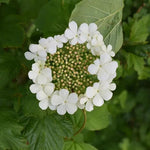
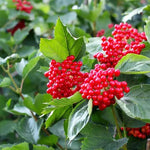
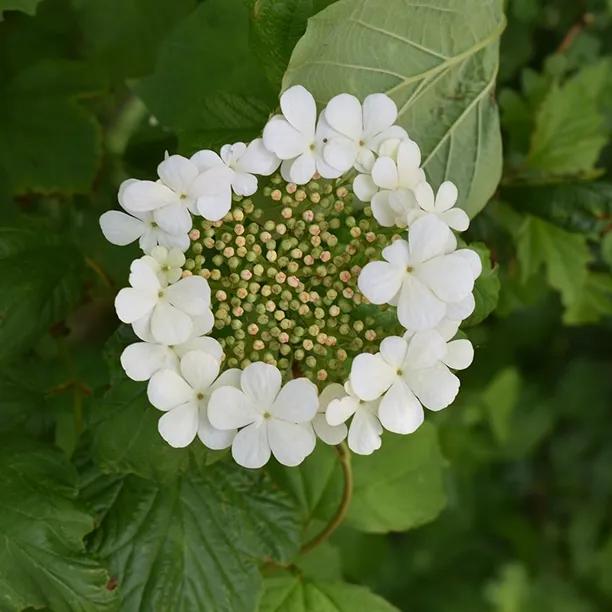
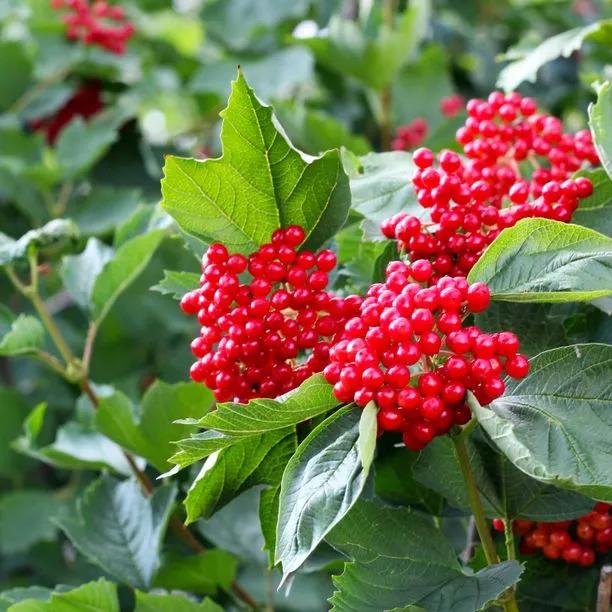
It has large, three lobed leaves that colour up in autumn with a jumble of tones that bleed together in a rough, rustic manner. The flowers are quite unique, with a ring of dainty little smooth star shaped flowers rising above bed of even smaller, bud-like blooms. The smaller flowers are the ones that ripen into blood red fruit, in time for the excellent red and yellow autumn colours.
History & uses of Viburnum opulus
The Guelder Rose isn't a rose at all, it is closely related to the elderflowers. The name probably comes from the Dutch region of Gelderland. Guelder Rose berries were one of the secondary food sources that our ancestors would have depended upon in hard times. We don't recommend eating them, as even slightly unripe fruit will cause stomach upsets, but if civilisation happens to collapse and you find yourself living in the woods, you could feed yourself by boiling up them up into a soup. Until then, we recommend leaving the berries for the birds.
Other common names: Water Elder, Cramp Bark
Growing Guelder Roses:
Guelder Rose will grow well in pretty much any conditions, although it will look best as an ornamental plant in sheltered gardens. It prefers a moist soil and will grow in soggy ground, but not in a fully waterlogged marsh. It prefers alkaline soils, including shallow chalk, but it will also be happy in slightly acidic soil. It will not grow well if the site is very dry or sandy.
Prepare your site before planting:
It is good to dig over the area where you plant a hedge several months in advance. Destroy the weeds first: nettles, brambles and ground elder are tough and a glyphosate based weed-killer is the best way to remove them. Then dig the soil over; remove rocks, roots and other rubbish. Mix in well rotted compost or manure down to the depth of about 2 spades.
Watch our video on how to plant a country hedge for full details. The instruction to cut the plants in half after planting only applies to thorny native hedging and plants in the conservation hedge mix: this isn't necessary for Guelder rose.
Hedge Planting Accessories:
You can buy a hedge planting pack with sheets of mulch fabric and pegs to hold it down.
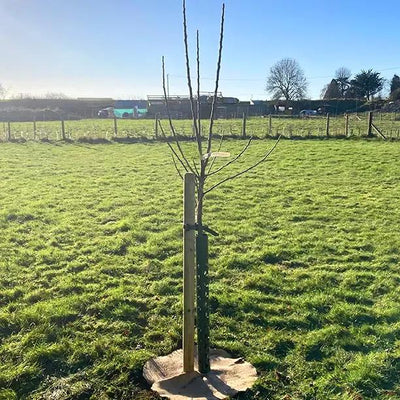
If you are planting in an area with rabbit and/or deer, you will need to use a plastic spiral guard for each plant, supported by a bamboo cane.
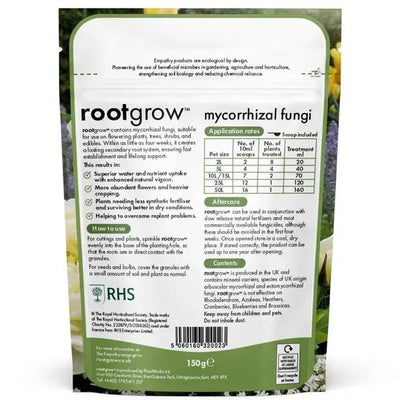
We recommend using mycorrhizal "friendly fungi" on the roots of all new plants, especially if your soil is poorly fertile.
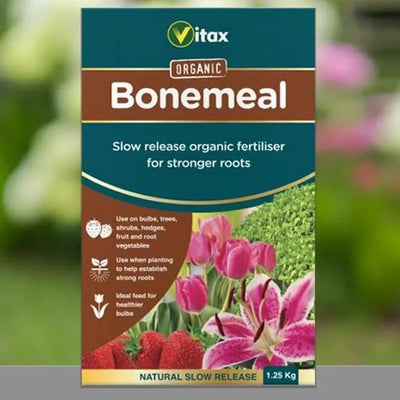
You can also improve your soil with bonemeal organic fertiliser and National Growmore.
After you plant a hedge, the most important thing to do is water it in dry weather. If you didn't use mulch of some kind, you will also need to weed around the hedge. Both of these will be necessary for at least a year after planting.
Trimming Country hedge plants: From the winter after planting onwards, your young hedge should be trimmed lightly every winter, until it is mature. When it is fully grown, you can clip it at anytime.
Special notes on caring for Guelder Rose hedges:
Guelder Rose is a very tough hedge plant that shouldn't need special attention once it has established. If you didn't use a mulch fabric, it is beneficial to mulch around the base of the hedge each year with well rotted manure or compost.
Hygiene & Diseases:
Dead, damaged or diseased wood can be pruned off as soon as it appears.
Disinfect your pruning tools between every cut if there is any sign of disease.
Burn or dispose of any diseased material, do not compost it.
Read our full terms and conditions here.
Delivery: The basic delivery charge for orders of bareroot plants is £9.49 + vat, which increases to £12.55 + vat if you add any pot-grown plants, standard trees or fruit trees to the order.
Because couriers sometimes experience delays, we schedule delivery by week, not by day. Therefore, please plan your planting day for the weekend at the end of the delivery week or for the week following delivery, at the earliest.
You can choose the delivery week that suits you during checkout and we will email you the day before your plants are due to arrive.
Payment: We do not charge your card until we begin to prepare your order for packing.
Guarantee: If any plants die within a year, we will replace them. We only ask that you follow our planting & growing instructions and sent us clear photographs of the dead plants in situ, so we can help to make sure that the replacement plants succeed. You only pay for the delivery of the replacements.
Please note that our guarantee is void if there is a hosepipe ban in your area: your newly planted hedging must be watered in dry weather while it is establishing. The best way to water is very thoroughly every few days: at least once a week if there is no heavy rain.
Our nursery has been supplying container grown and bareroot hedging plants to gardeners, farmers and town planners since 1949. Our website started in 2003, so we do understand the concerns that you may have about buying hedging plants online. If any of your plants are damaged when they arrive or if you are otherwise not satisfied with your order after you inspect it, please repackage it and contact us. We will give you a refund or send replacements and send a courier to come and collect the unwanted plants.
Your 12 Month Guarantee
If any of the plants that you buy from our nursery die within a year of delivery, we will replace them.
You only pay for the delivery of the replacements.
We do ask for clear photos of the plants in the soil, both taking in the planting area and close up. These will help us to work out what went wrong so we can give you the right advice for looking after your replacements.
The most important thing to do with establishing plants is to water them in dry weather. Water very thoroughly, but not too frequently: allow the top 2 inches of soil to dry out before you water again. In hot summer weather, this should mean that you are watering 1 to 3 times per week, depending on your site's drainage and exposure to wind and sun.
If there is heavy rain, that counts as a watering for your plants. If there is only very light rain during hot weather, this probably won't be of much use to your plants and they will still need watering.
Weeding is also very important; we strongly recommend using a mulch mat (for trees) or mulch fabric (for hedges) if weeding your new plants will be impractical.
Outside your 1 Year Guarantee period?
If your plants die or get sick after their first year, you are still welcome to take some photos and send them in: we will still be happy to give you what advice we can.
We can't make any promises, but if you want to buy replacements from us, give us a call and we'll see if we can arrange a discount for you.
Place an order for £250 excluding VAT and delivery and we deliver it for FREE!
Bare-root Plants are only delivered in the winter season, from November to April. Pot grown plants can be delivered all year round
Advantages of Bare-root plants:
You pay less for the same size plants.
You can carry and plan them easily.
You only plant them in winter, so they need less maintenance after
planting. The rain will water them for their first few months.
You get the biggest selection: Many trees are not sold pot-grown.
They are "asleep" in winter - this is the best time to transplant any tree.
They use fewer fertilisers & fungicides, less water and fuel in their production & delivery.
Advantages of Pot Grown plants:
Pot grown plants can be delivered & planted all year round.
Plants with tender roots & larger specimens must be delivered in pots.
Plants in pots can be kept for months longer if there is a delay in planting.
Our Advice to You:
If you can't wait to get planting, order Pot grown plants now.
If you are not in a hurry, order bare-root plants for delivery this winter. Simply add them to your basket and choose a winter delivery date that suits you during checkout.
This will reserve your plants before they sell out.
We won't charge you until the day before delivery, so cancelling your order is always easy.
If you are only ordering chemicals and other small items, delivery is £3.50
Our delivery charge for all other orders is £6.50 + VAT.
If you live in the Scottish Highlands or the Isle of Wight, there will be an extra charge of £15 + VAT on top of the appropriate basic charge, as listed above.
If your order is over £250 exc. VAT, there will be no delivery charge.
If you are uncertain, just add items to your basket which will calculate the basic shipping charge for you.