Home > Hedging Plants > Native Hedging > Hawthorn, Quickthorn
Best Plants for Hedges Hawthorn Hedging & Trees Native Hedging Screening Hedging
Native Cream White Acidic Soil Chalky Soil
Wet Soil Frost Pockets Scotland & The North Coastal Areas
Exposed Windy Areas Partial Shade Wildlife Value
Bareroot and potted - what' s the difference?
We deliver on a weekly basis, you can specify delivery dates after adding the item to your basket.
Most deliveries are charged at £9.49+VAT with a few exceptions
DescriptionPlanting InstructionsAfter CareDelivery & Guarantee
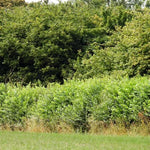
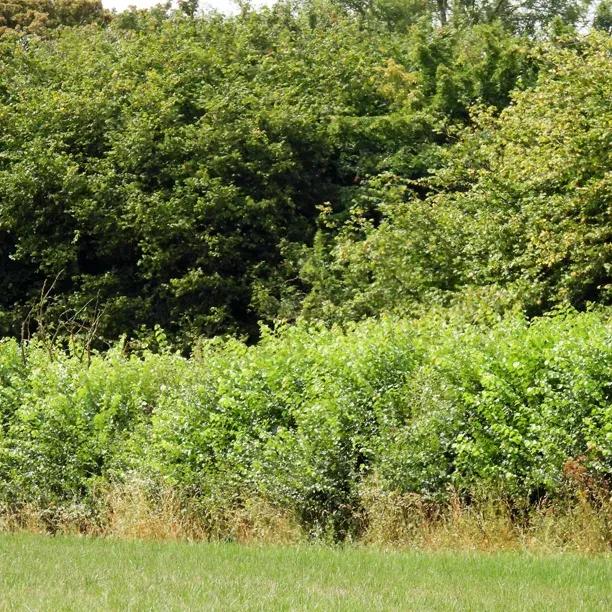
Hawthorn, Crataegus monogyna, is the most commonly used thorny native hedge plant. It grows naturally as a fairly small, bristly tree that has adapted to thrive in almost all conditions.
Hawthorn will grow to about 8 metres high.
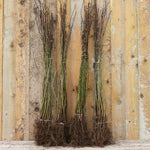
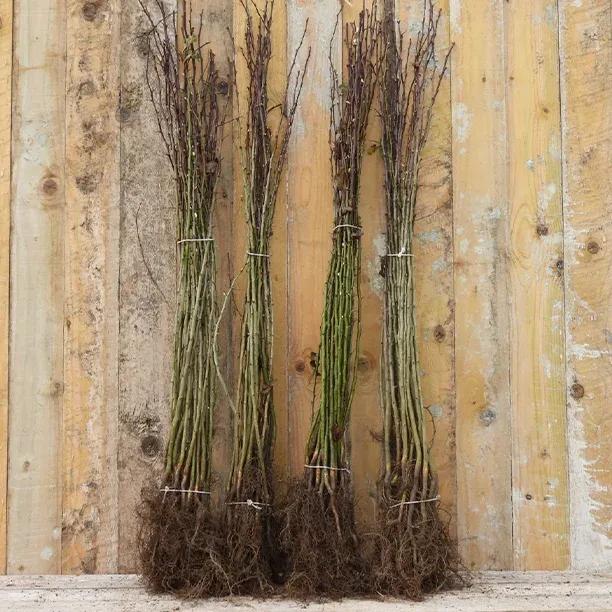
The plants on this page are wild, bareroot Hawthorn saplings grown from seed. They are ideal for hedging, or you can grow them into a tree. You can also buy cultivated Hawthorn trees in larger delivery sizes. We grow two with red flowers: Crimson Cloud and Paul's Scarlet , one with pink flowers called Rosea Flore Pleno and plain White Hawthorn.
Hawthorn hedge plants are only delivered bareroot, during winter (Nov-March).
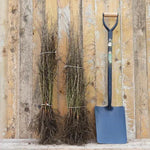
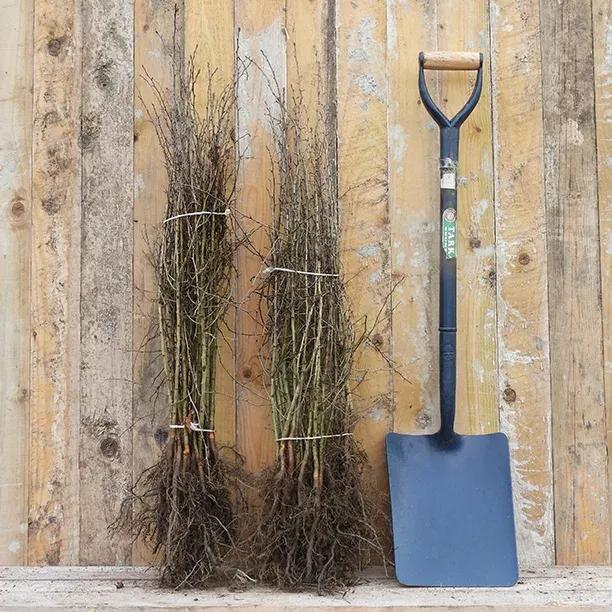
Choosing a size: Hawthorn hedging plants are known as whips. In general, we recommend that you use plants that are graded at 40/60cms and 60/80cms. They are cheaper than large plants, easier to handle and they will establish well in poor conditions. Use larger plants when you need a tall hedge quickly, or if you are going to let them grow into trees. You can buy the larger sizes in packs of 50 hawthorn plants.
All our hedge plants are measured by their height in centimetres above the ground (the roots aren't measured).
Spacing an Hawthorn hedge:
Plant Hawthorn hedging at 3 plants per metre, 33cms apart.
You can also plant Hawthorn at 5 plants per metre in a staggered double row,
with 33 cms between each plant and 40cms between the rows.
General description of Hawthorn plants:
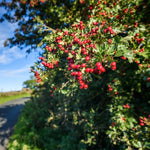
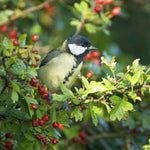
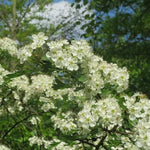
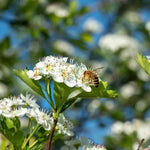
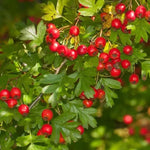
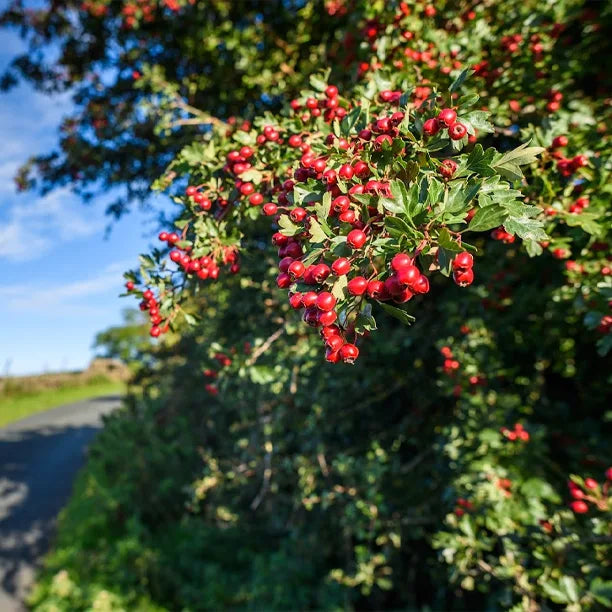
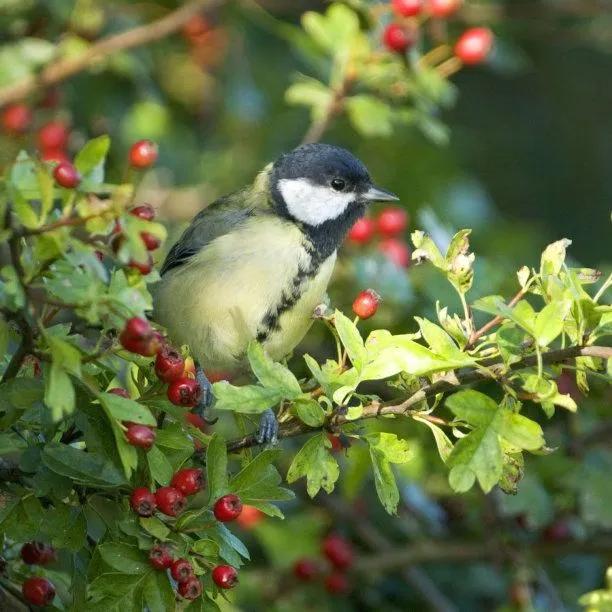
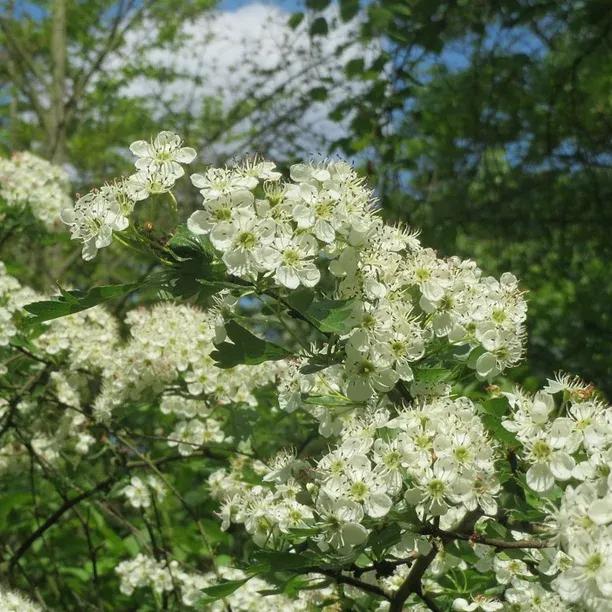
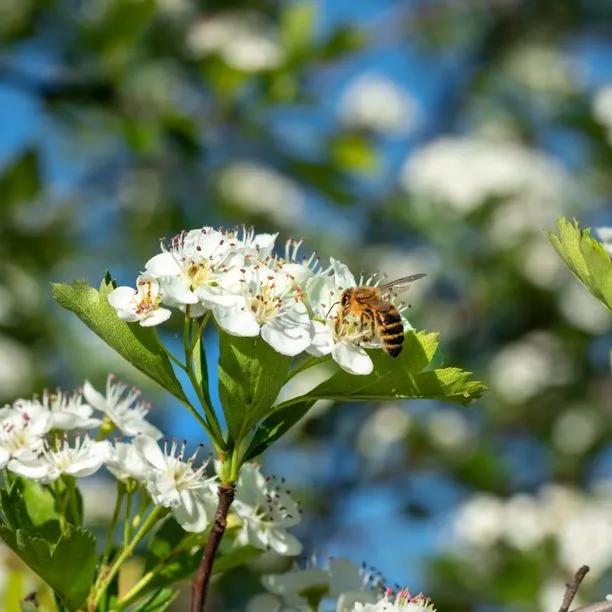
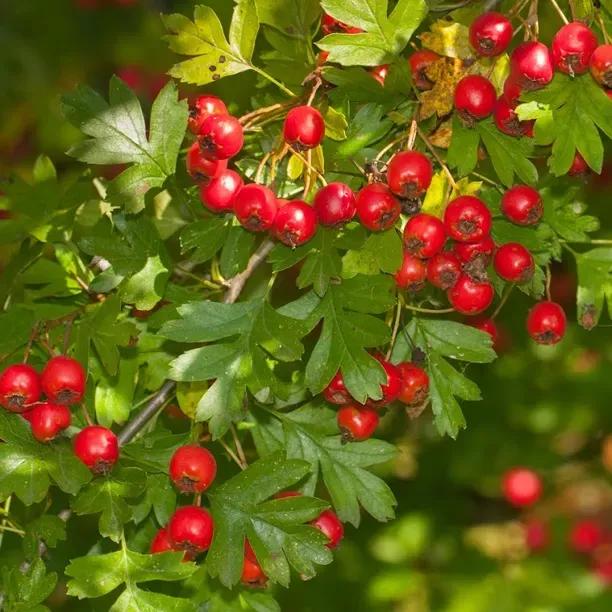
Hawthorn hedging is tough and vigorous. If it is left untrimmed, Hawthorn becomes a pleasantly shaped, small spreading tree. As a hedge or tree, it provides an excellent nesting site for small birds. Its leaves are quite small and glossy green, with three rough lobes. It is covered in small, single fragrant white flowers in spring and red, edible, quite tasteless fruit in autumn that can be sweetened with sugar and other fruit in a hedgerow jelly.
History & uses of Crataegus monogyna
Hawthorn and its wiry strength is the foundation of pretty much all mixed country hedging, especially stockproof hedges, and it has been used for this since ancient times. In medieval times Hawthorn was credited with a range of lucky powers: spring brides and Irish fisherman alike hoped that it would assist them. It is still used to decorate May poles today. Along with Oak and Ash, Hawthorn was part of the fairy triad and children were warned to stay away from places where all three trees grew together, in case they were snatched and replaced by a look-alike fairy. On the other hand, hawthorn trees protected houses from evil ghosts and witches were known to perform their rites under them.
Other Common Names: Haw, Hawthorne, Quickthorn, Whitethorn, Maythorn, Mayblossom, May. In country hedge terms, "thorn" usually refers to Hawthorn but it is interchangeable with blackthorn.
![]()
From: £11.25
Brandy Perry / Pear Cider. Pollination Group: D Crops in October Spur bearer.
![]()
From: £11.25
Pyrus communis Hellens Early (Perry)
![]()
From: £13.75
Crataegus monogyna - Packs of 50 Plants60 - 120cms SaplingsNative. Grows anywhere except a bog.Other Sizes: Standard Trees & Larger / Smaller SaplingsPerfect country hedgingMax. Height: 15mBareroot Delivery: Nov-Mar