

Sold as:

from £6.99

Sold as:
from £19.99
 5 Star Service Rating




 Secure, One-Tap Checkout
 5 Star Feefo Rating
 Hand Picked, Delivered to Your Door!
 1 Year Bareroot Guarantee
 Platinum Trusted Service Award 2026
 Mail Order Plant Experts - Est. 1949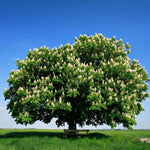
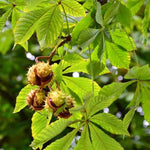
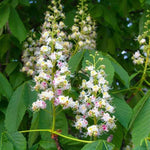
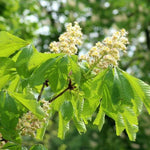






Everyone knows the Common Horse Chestnut or Conker tree, Aesculus hippocastanum, with its lovely big spires of pink-eyed, white flowers that cover the tree in early summer. It has big, deep green, lobed leaves that remind me of a splayed (giant) gecko's foot and turn a dirty, rustic amber colour in Autumn.
Large and spreading, suitable only for parks and big gardens, they can reach a height of about 30-35 metres and spread up to 25 metres across.
Browse our variety of large trees for your garden or view our full range of trees.
You can also buy younger horse chestnut saplings.
Delivery season: Horse Chestnut trees are delivered bareroot during late autumn and winter, approximately November-March inclusive.
Choosing a size: Small trees are cheaper, easier to handle and more forgiving of less than ideal aftercare, so they're best for a big planting project. If instant impact is your priority, or if you are only buying a few plants for use in a place where it's convenient to water them well in their first year, then you may as well use bigger ones. All our bareroot trees are measured by their height in centimetres above the ground (the roots aren't measured).
Any well drained soil, tolerates temporary flooding in winter. Full sun or partial shade. Young trees can manage in deeper shade as long as they grow up into sunnier conditions. Tolerant of pollution.
Horse Chestnuts suffer from two unsightly but fairly harmless leaf problems, one caused by a fungus, the other by a leaf mining insect, that cause the leaves to turn brown in late summer. The treatment for both is the same: rake up all the leaves in Autumn and get rid of them!






 Sign In
 Saved items