

Sold as:

from £6.99

Sold as:
from £19.99
 5 Star Service Rating




 Secure, One-Tap Checkout
 5 Star Feefo Rating
 Hand Picked, Delivered to Your Door!
 1 Year Bareroot Guarantee
 Platinum Trusted Service Award 2026
 Mail Order Plant Experts - Est. 1949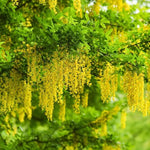
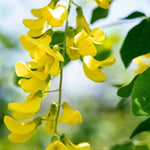
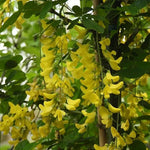

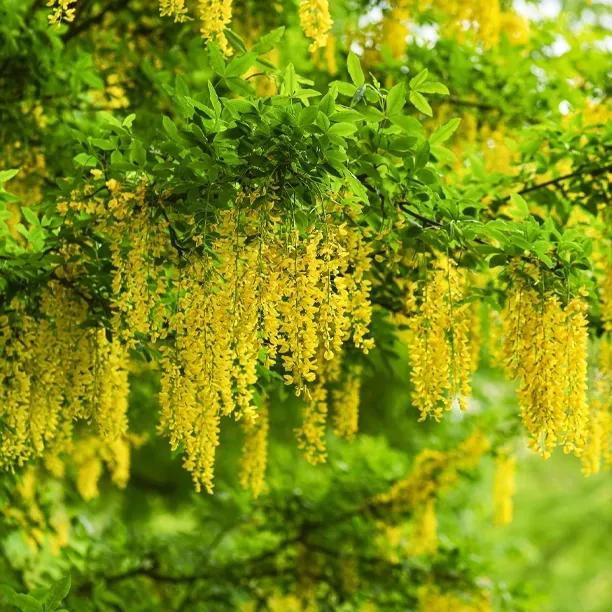
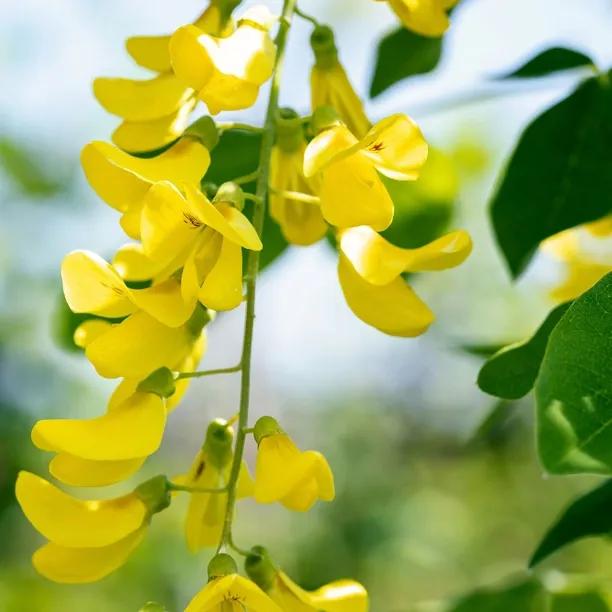
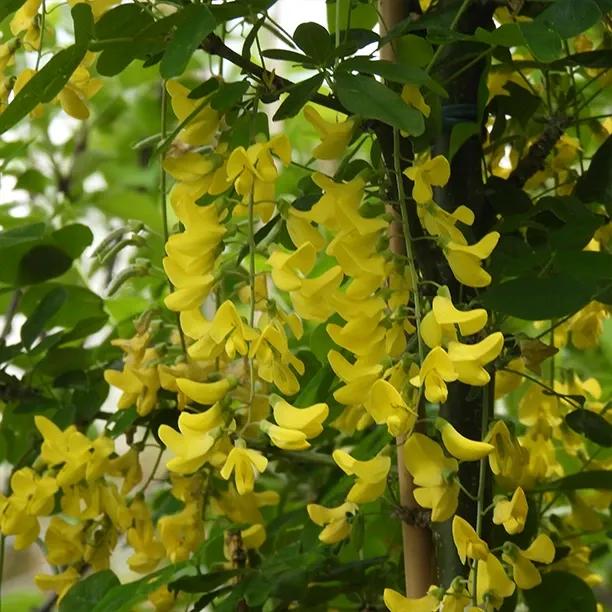
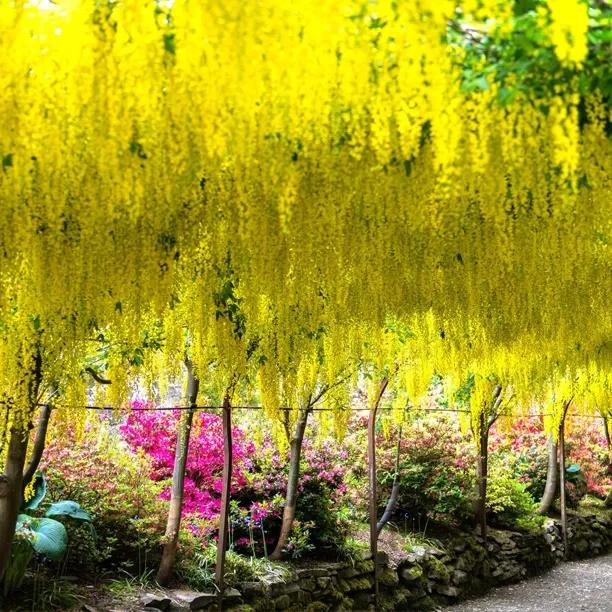




Laburnum Vossii, the Golden Rain tree,has much longer (up to 50-60cm) and better flowers than the wild variety, with the same lovely bark and quite dark green leaves for the flowers to stand out against. The flowers are fragrant and good for bees.
Left to grow freely, they can reach a height of about 8-9 metres and up to the same wide, but they respond well to pruning and can be trained over pergolas.
Browse our other trees.
Delivery season: Laburnum trees are delivered bareroot during late autumn and winter, approximately November-March inclusive.
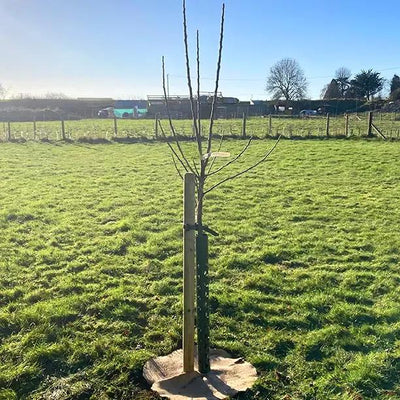
Choosing a size: Small trees are cheaper, easier to handle and more forgiving of less than ideal aftercare, so they're best for a big planting project. If instant impact is your priority, or if you are only buying a few plants for use in a place where it's convenient to water them well in their first year, then you may as well use bigger ones. All our bareroot trees are measured by their height in centimetres above the ground (the roots aren't measured).
This hardy tree needs a well-drained and reasonably fertile soil in full to thrive. They tolerate urban pollution well.
If they need pruning, aim to do it between the end of summer to December, otherwise the tree will bleed a lot.
Rabbits love young Laburnum, so you must use a tree guard if there are any in your area.
Laburnum alpinum and L. anagyroides naturally hybridise in the wild, and to the best of our knowledge the Laburnum x watereri cultivars are derived from plants selected by Knap Hill nurseries in the mid 1800's.
This one was bred in 1875 by C. de Vos in Holland (de Vos means 'the fox').
All parts of the Laburnum are poisonous. Because this variety is mostly sterile, it does not make many seeds, so it is safer for livestock and children.
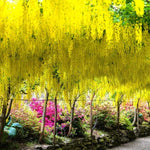
Here are a couple of photos of the Laburnum arch at Bodnant Gardens.
Standard trees are measured by their girth in centimetres 1 metre above ground level: their trunk's waist measurement. Unlike sapling trees and hedge plants, standards aren't measured by their height, which will vary quite a bit both between and within species.
So, a 6/8cm standard tree has a trunk with a circumference of 6-8cm and an 8/10 standard has a trunk 8-10cm around. This measurement makes no difference to the tree's final height.
On average, standard trees are 2-3.5 metres tall when they arrive, but we cannot tell you precisely how tall your trees will be before we deliver them.






 Sign In
 Saved items