


Sold as:

from £6.99

Sold as:
from £19.99
 5 Star Service Rating




 Secure, One-Tap Checkout
 5 Star Feefo Rating
 Hand Picked, Delivered to Your Door!
 1 Year Bareroot Guarantee
 Platinum Trusted Service Award 2026
 Mail Order Plant Experts - Est. 1949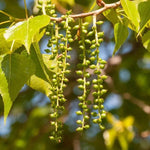







These are big trees, ready to make an impact the season you plant them. Standard Lombardy Poplars arrive at 2–3.5m tall (depending on girth) and will keep growing fast from there — a metre or more a year on a decent site. If you need screening now rather than in three years' time, or you're replacing a lost tree in an existing row, standards are the answer.
The shape is the same unmistakable narrow column: branches held almost vertically against the trunk, giving you 30m of height in just 5m of width at maturity. No other hardy tree in Britain occupies so little horizontal space for so much vertical presence. Diamond-shaped leaves, glossy green in summer, clear yellow in autumn. Copper-orange catkins in spring. Every tree in cultivation is a male clone of a single Italian original, selected in the late 1600s.
For large planting projects where budget matters more than instant height, we also sell Lombardy Poplar saplings — cheaper per tree, lighter to handle, and they'll catch up remarkably quickly given the growth rate.
Gap-filling in an existing poplar screen, where a sapling would look absurd next to established trees. Replacing a wind-damaged specimen. Lining a new driveway where you want presence from year one. Providing immediate screening for a new-build property. Anywhere patience is in short supply and the budget can stretch to a bigger tree.
For a new boundary screen from scratch, saplings planted 3–4m apart are usually the more practical choice — they establish with less fuss, need smaller planting holes, and the cost difference across a long run is substantial.
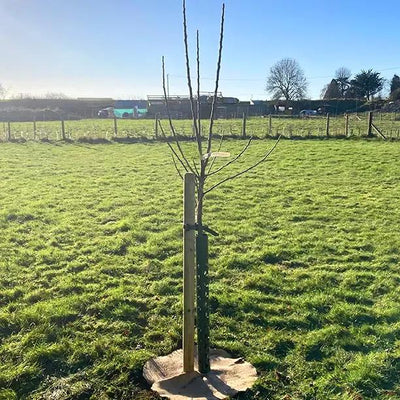
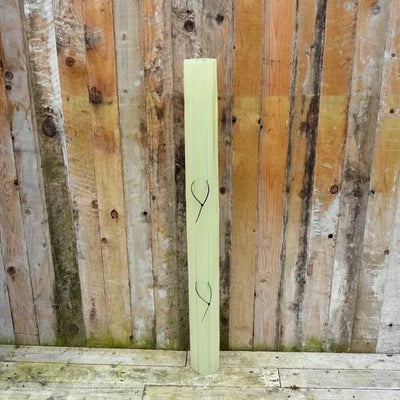
Standards are big enough to need a tree stake and tie for their first two years. Dig a hole comfortably wider than the root spread, drive in the stake before planting (to avoid skewering the roots), plant to the same depth as the soil mark on the trunk, backfill, firm in and water heavily. We strongly recommend using Rootgrow mycorrhizal fungi at planting — it makes a measurable difference to establishment. Water thoroughly and regularly through the first spring and summer; the two biggest killers of newly planted trees are drought and weed competition.
Lombardy Poplar has a vigorous, invasive root system. Plant at least 20m from any building, drain, wall or foundation. The tree is relatively short-lived — typically 40 to 60 years — and after about 40 years can begin shedding branches and becoming vulnerable to wind. If you're planting a long-term screen, consider that eventual replacement will be needed. This is not a tree for small gardens.
Standard trees are measured by their trunk girth in centimetres, taken at 1m above ground level. So a 6/8cm standard has a trunk 6–8cm around; an 8/10cm standard is 8–10cm. Height varies between individual trees but is typically 2–3.5m on arrival. We cannot guarantee an exact height before delivery.
UK-grown bareroot standards, dispatched dormant during the winter planting season by next-day courier. All bareroot trees carry our one-year guarantee. We've been growing and selling trees since 1949 and hold the Feefo Platinum Service Award and the Which? Gardening Best Plant Supplier award. If anything's not right, contact us.
Size and price. Saplings are young whips measured by height (e.g. 60/80cm, 100/125cm). Standards are larger trees measured by trunk girth (e.g. 6/8cm, 8/10cm) and typically arrive at 2–3.5m tall. Standards give you instant impact; saplings are cheaper and catch up fast.
Standard trees are typically 2–3.5m tall, varying by girth and individual specimen. We measure standards by trunk girth, not height, so we can't confirm an exact height before dispatch.
Yes. All standard trees need a stake and tie for the first two years until the roots establish. Drive the stake in before planting to avoid root damage. Use a tie with a buffer between stake and trunk to prevent rubbing.
At least 20m. The root system is aggressive and can damage drains, foundations and hard surfaces.
Typically 40–60 years. After about 40 years, branch shedding and wind susceptibility increase. Plan for eventual replacement if planting a long-term screen. For longer-lived narrow trees, consider fastigiate Hornbeam or Beech.
Almost anything except chalk with shallow topsoil. It handles poor ground, dry ground and heavy clay well. Full sun is preferred.
Bareroot standards are delivered November to March. You'll receive an email with your delivery window after ordering. Plant as soon as possible and water in heavily. Browse all our poplar varieties.






 Sign In
 Saved items