


Sold as:

from £6.99

Sold as:
from £19.99
 5 Star Service Rating




 Secure, One-Tap Checkout
 5 Star Feefo Rating
 Hand Picked, Delivered to Your Door!
 1 Year Bareroot Guarantee
 Platinum Trusted Service Award 2026
 Mail Order Plant Experts - Est. 1949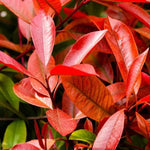
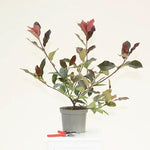
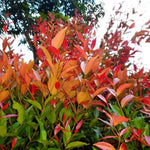
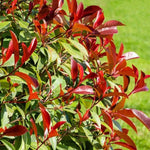

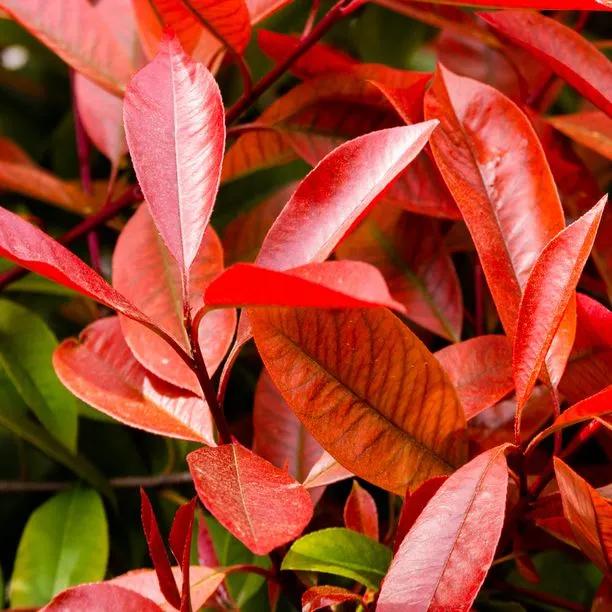
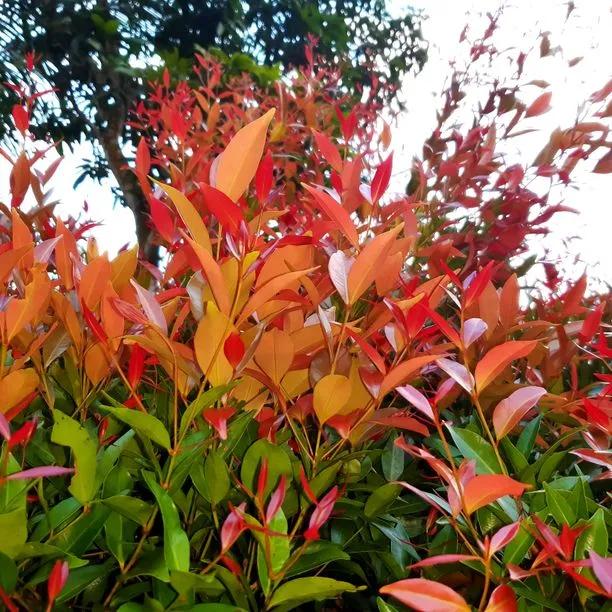
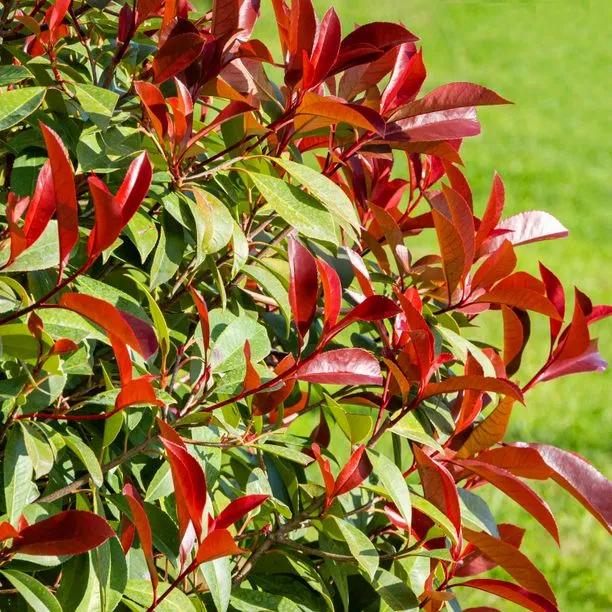

Photinia x fraseri 'Red Robin' makes one of the most exciting, colourful evergreen hedges and is also a fine specimen plant. It clips easily and can be hard pruned, which is ideal for both formal hedging and low-maintenance borders. 'Red Robin' gets its name from the bright red young leaves that appear each spring on the tips of every twig and stem, creating a superb show of colour that few other evergreens can compete with. The leaves gradually change, in a sort of reverse autumn display, through a muddle of oranges and bronzes to a lush, glossy green during the summer.
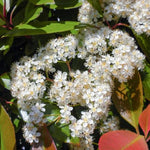
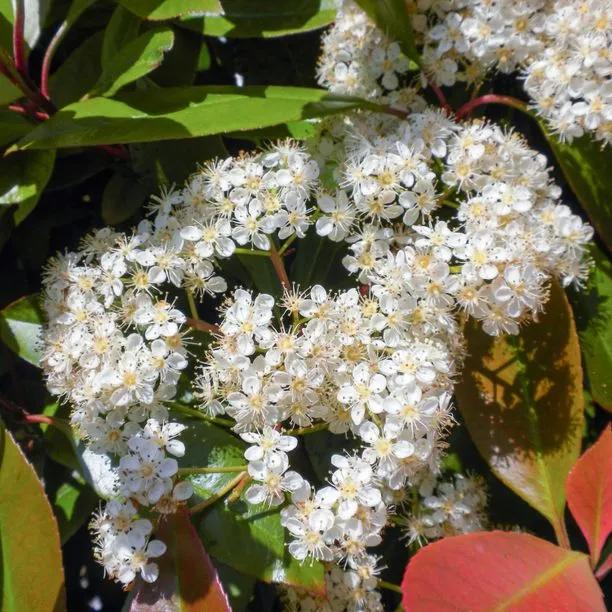
As long as Photinia gets plenty of sun, the new foliage will be followed in late spring by branching clusters of little white flowers with pale purple stems. These become little round, red (inedible) fruit in autumn. All in all, Red Robin is dressed to impress for most of the year.
Suitable for formal garden hedges up to about 5 metres high.
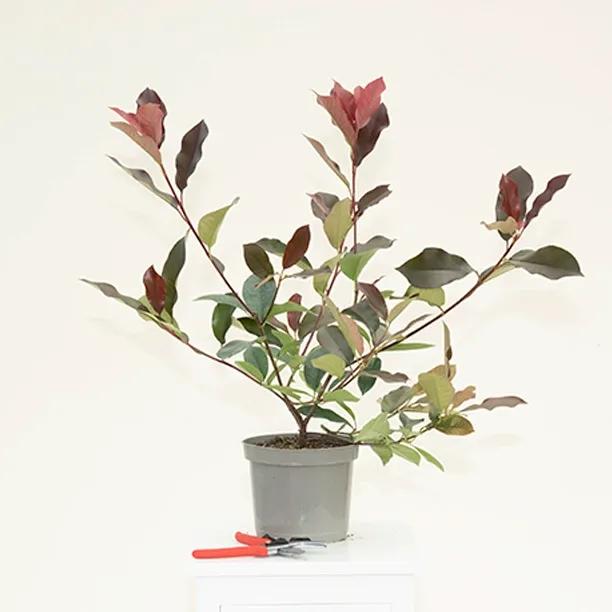
Photinia is only delivered pot-grown, year round.
All our hedge plants are measured by their height in centimetres above the ground (the roots aren't measured).
Browse our selection of garden shrubs or our full range of hedging.
'Red Robin' does need sun to flower well (and so produce berries) but will still grow well in quite shady spots at the back of a shrub border. It's not hardy enough for cold, exposed sites.
It'll grow in just about any well-drained soil type. Heavy clay is alright if it's on a slope, ridge or other site that doesn't trap water; waterlogged roots will kill your plants and excess humidity in the air can cause unsightly leaf spot.
Give your plants a little trim in early spring to bring on a strong flush of bright young leaves. As these begin to lose their glow, lightly trim them again to encourage another wave; you can do this about three times a year, with the last trim in July. Regular trimming also helps to prevent leaf spot.
Always clean up the fallen leaves from under your plants.
Photinia has an upright growth habit, so it naturally holds its shape when used as a hedge plant. You can also grow it as a tree with a domed canopy, about 5 metres high.
Spacing a Photinia Red Robin hedge: Plant at 2 plants per metre, 50cm apart.
If you want to take full advantage of those gorgeous young red leaves, plant in a place where they're backlit by the sun for at least part of the day. Its dense growth also makes an excellent garden screen and you can grow it as a standard if you want to make a pleached hedge. Standards work beautifully on either side of a doorway. Ornamental grasses and lavender look particularly good against photinia and spring bulbs such as crocuses or grape hyacinths, planted underneath make great companion plants. Euonymus are ideal shrubs to go with them as are hebes and glossy-leaved, pink-flowered camellia.
Also known as Red-tip photinia, the original Photinia x fraseri is a cross between Photinia glabra and P. serratifolia. 'Red Robin' was bred in New Zealand and has won the RHS Award of Garden Merit and the Award of Merit.


 Sign In
 Saved items