


Sold as:

from £6.99

Sold as:
from £19.99
 5 Star Service Rating




 Secure, One-Tap Checkout
 5 Star Feefo Rating
 Hand Picked, Delivered to Your Door!
 1 Year Bareroot Guarantee
 Platinum Trusted Service Award 2026
 Mail Order Plant Experts - Est. 1949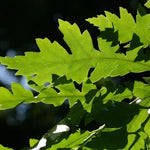
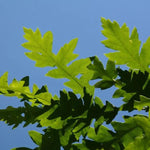





Turkey Oak, Quercus cerris, saplings are vigorous plants that will grow into soaring parkland trees. Suitable for any well-drained, moderately fertile soil this big tree is one of the most vigorous oaks, typically spreading out as wide as it's tall when mature. The autumn colour is a mellow brown with some brighter bronze tones. It's easy to tell Turkey oak from a native oak by looking at the acorn cups, which have moss-like growths on them, unlike the smooth cups of the native oaks. The leaf buds also have bristly brown hairs.
Turkey Oak is a good choice if you want a tall, majestic oak tree but don't want to wait for the slower growing Common Oak. It can be grown as a screening tree up to about 30 metres high and is a good windbreak tree.
The plants on this page are young saplings. You can also buy larger Turkey Oak trees.
Browse all of our other Oak trees, or our full range of hedging and saplings.
Turkey Oak plants are only delivered bareroot, during winter (Nov-April). All of our young trees are measured by their height in centimetres above the ground (the roots aren't measured).




 Sign In
 Saved items