


Sold as:

from £6.99

Sold as:
from £19.99
 5 Star Service Rating




 Secure, One-Tap Checkout
 5 Star Feefo Rating
 Hand Picked, Delivered to Your Door!
 1 Year Bareroot Guarantee
 Platinum Trusted Service Award 2026
 Mail Order Plant Experts - Est. 1949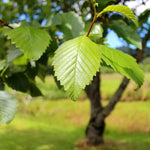
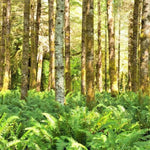





Red or Oregon Alder makes a neat screening tree with a fairly narrow, tapering canopy and slightly pendulous branches.
Unlike other Alders, it doesn't make a lot of suckers around the base.
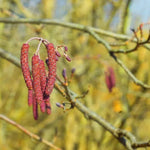
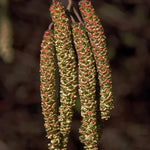
They have large ruddy-brown catkins in spring, before the crinkled leaves appear.
Young plants are very vigorous, and will reach 20 metres.
All alders have nitrogen-fixing bacteria living on their fibrous roots, perfectly suited for reclaiming sites with degraded soil and preventing erosion.
Alders in general are too vigorous for formal, tidy hedges, and we think that Italian Alder or Common Alder are best for rough country hedging.
Because Red Alder doesn't sucker much either, it won't form as dense of a wildlife friendly thicket as other varieties like Grey Alder.
Red Alder needs a sunny site, ideally with moist or wet soil. They prefer lighter, sandier soils to heavy clay, and will grow on very poor, degraded soils.
They'll grow near the sea, and although they're hardy across Britain, they aren't ideal for exposed sites or frost pockets in the North-East, where they'll probably suffer some damage from late spring frosts.
Alder is a classic pioneer tree that is often used to prevent riverbank erosion and to reclaim sites with especially poor soils, due to the bacteria living in nodules in its roots, which fix nitrogen from the air into the soil, improving it for other plants over time, especially as the tree ages and dies, or is pruned.
Perfect for coastal sites where salt tolerance is needed, and for sandy or degraded soils that need improvement.
Excellent for screening where a neat, narrow canopy is preferred over the spreading habit of other alders.
Ideal for reclamation projects on disturbed ground where quick establishment and soil improvement are priorities.
Native to the West coast of North America, where it's a classic pioneer tree that quickly colonises bare ground after storms, fires, logging or shifts in a river's banks after a flood.
It was introduced to Britain in the late 1800's.
It's also known as Oregon or Californian Alder,and is the traditional wood for smoking salmon in those regions.
The wood is good for making string instruments, especially electric guitars and basses.




 Sign In
 Saved items