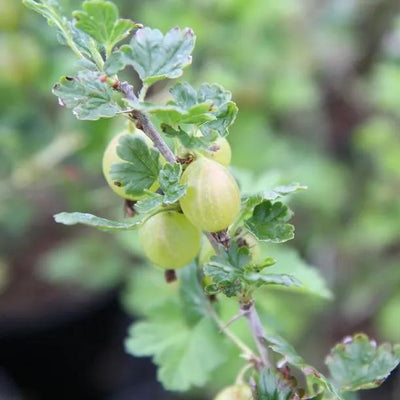
Gooseberry Bushes

The Gooseberry Bush: Ribes uva-crispa / Ribes grossularia

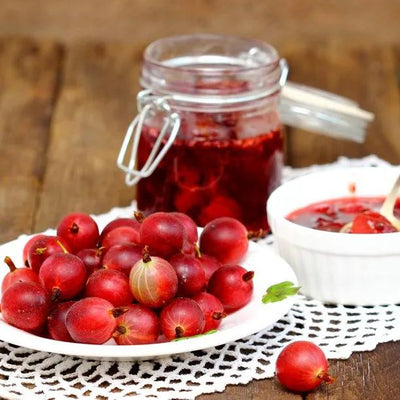
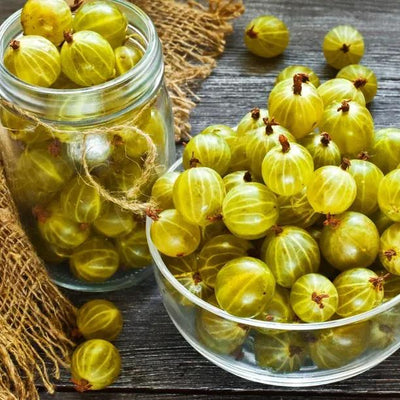
A classic British dessert fruit that is commonly found only in jams these days, the gooseberry bush is regaining popularity as delicious old puddings like gooseberry fool and crumble come back into fashion (scroll down this page to get right to them!). In parts of Europe, crushed gooseberry drinks are very popular, either with fizzy water, milk or something stronger - well worth a try!

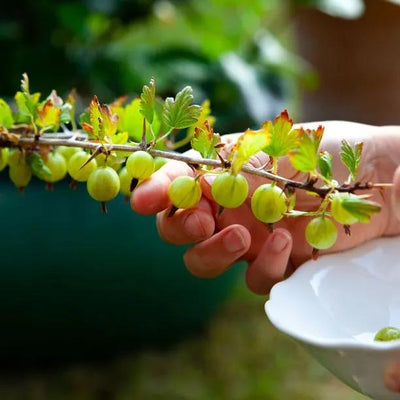
They take a bit longer than other soft fruit plants to begin cropping, but gooseberries are self-fertile, so you only need one of them to give them a go. Your plants can be grown as cordons if you are low on space, but the best way to grow them is as a fairly upright, open centered bush.

They can be picked early in late May / early June for tart cooking fruit or a bit later for sweeter dessert berries. An established bush can bear up to 6 pounds of fruit each year.

Pruning your gooseberry bush

Gooseberries fruit in 2 places: spurs on the old wood and at the base of side-shoots that grew the year before. The first task is to shape your plant into a sturdy framework of mostly upright branches which all point more or less away from the centre. After that, it is just a case of keeping the bush free of congestion and trimming back the new, fruitless growth to help divert energy to the berries that will appear at their bases.

Where to make the cuts: This varies depending on the angle of the branch. Gooseberries, when left to their own devices, often tend to be a bit droopy. To counteract this, it is always best to prune horizontal branches back to an inward/upward facing bud or upright side-shoot. Prune normally to an outward facing bud if the branch is already upright.

  • Pruning Gooseberries after Planting: After planting, trim all the branches by one half of their length, as described above.
  • Year Two: The following winter, around November, shorten all the main stems that you trimmed last year by one half of their new growth. Now inspect the new side shoots that appeared this year: use your judgement to choose the best placed ones (outward and upward facing, not congested with other branches) and shorten these stems by half as well, removing all the others. If there are any suckers or shoots low down on the trunk, remove these too - do this every year from now on (some bushes will do it more than others).
  • Year Three: Your gooseberry bush should have its core framework of main branches from last year, each with two or three new leading stems from the summer, and be ready to begin serious cropping: well done! During the winter, prune all the leading stems back by a half of their new growth. Remove any shoots that point into the centre (one won't hurt if it is well placed) and identify leaders that are crossing or pointing downwards: shorten these down to about 2 - 3 inches.

Happily ever after!: Your bushes now need a twice yearly trim to keep them in shape.

  • Summer: In the first week of July (not earlier), trim all new side-shoots down to 5 leaves. There's no need to prune the tips of the leading stems unless they have mildew.
  • Winter: During the winter, cut back the leading stems by half of their new growth. Now shorten all the lateral side-shoots that you took down to 5 leaves in the summer: this time, cut them back to two buds. If you cut them back to three buds, you will get more, smaller fruit.

Top Tip: This is also the same way that you prune red and whitecurrants as a bush, except that they are naturally more upright, so it it usually fine to prune them back to an outward facing bud, even if it is facing downwards a bit.

Diseases: Gooseberrys will definitely need spraying against aphids: you can use jets of soapy water and a paintbrush to knock them off if you are feeling organic. Mildew can strike: remove and burn affected parts. Products with carbendazim will help prevent reoccurrence & hygeinic pruning practice, keeping the centre of the bush open, is essential.

Blackcurrants can get a disease called reversion: afflicted plants have brown, singed looking top halves of their young leaf buds, before they open. Healthy buds are basically green, with a little star of grey hairs and small black markings at the tip. Sad to say that such plants must be removed and burnt.

All of our Gooseberry Bushes are VAT Free and covered by our guarantee.

Item Description Price
Gooseberry, InvictaGooseberry, Invicta Gooseberry, Invicta  Gooseberry, Invicta  As low as £3.85 
Gooseberry, PaxGooseberry, Pax Gooseberry, Pax  Gooseberry, Pax  As low as £3.85 
 1