

Sold as:

from £6.99

Sold as:
from £19.99
 5 Star Service Rating




 Secure, One-Tap Checkout
 5 Star Feefo Rating
 Hand Picked, Delivered to Your Door!
 1 Year Bareroot Guarantee
 Platinum Trusted Service Award 2026
 Mail Order Plant Experts - Est. 1949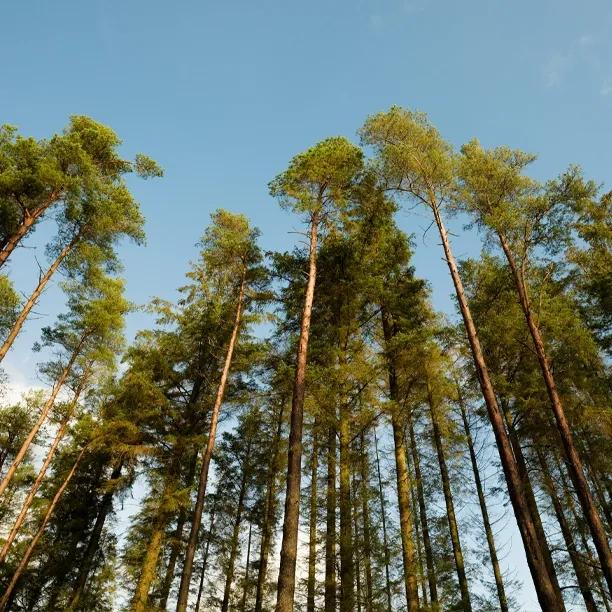




The Sitka Spruce, Picea sitchensis, is a very large, fast-growing evergreen, putting on a metre of growth per year for its first few decades: 30 metres in as many years is typical, after which it slows down. It has lovely thin, flaky bark that varies in colour from purplish-grey to silvery brown. Its needles are pale, glaucous blue on the underside and deep green on top, which looks great when the tree is buffeted by wind. It's an important forestry tree in its own right and it also makes a good nurse tree.
Growing Sitka Spruce Trees
This hardy tree thrives on the coast and seems to be happy on very poor soils, but not if they're chalky or too dry. It likes damp, alluvial sites beside water, although boggy, low-lying ground isn't suitable for planting saplings into (in the wild, Sitka seeds can germinate successfully in swamps, but there the tree adapts to the wet conditions from day one of its life). It isn't recommended for the city or polluted industrial areas.
Your trees can reach around 50 metres in the UK.
Also known as the Menzies' or Tideland spruce, Picea sitchensis comes from the West coast of North America and is the Alaskan state tree. It is the world's largest spruce: the tallest on record is a tad over 100 metres, growing amongst the Redwood Sequoias in California.
David Douglas brought it to Britain in 1831, and it has become one of our most used forestry trees; a 2010 estimate reckoned that around 70% of our commercial forests are Sitka spruces. It makes superb paper, and aircraft were usually made from Sitka timber until the rise of big, aluminium jets. We are told that Sitka wood is used in the nose cones of Trident nuclear missiles!
The Alaskan Sheet'-Ká tribe is today composed of people from the Tlingit, Haida, Aleut and Tsimpsian lineages.


 Sign In
 Saved items