


Sold as:

from £6.99


Sold as:
from £19.99
 5 Star Service Rating




 Secure, One-Tap Checkout
 5 Star Feefo Rating
 Hand Picked, Delivered to Your Door!
 1 Year Bareroot Guarantee
 Platinum Trusted Service Award 2026
 Mail Order Plant Experts - Est. 1949


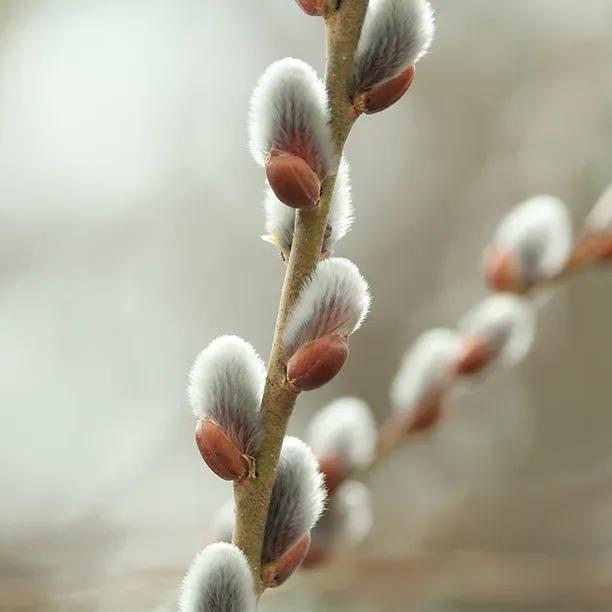




The Violet Willow, Salix daphnoides, is a medium sized, fast growing deciduous waterside tree that has lustrous violet young shoots. These are dusted in a fine, fluffy powder that disperses like smoke if the tree is shaken by wind in dry weather. Salix daphnoides is a European native, widely found in a belt between Greece and the Baltic Sea. It can't really be said to have naturalised in Britain, as surveys rarely find it outside of gardens and managed woodland. Despite that, it's a perfect source of early spring nectar and pollen for bees and some of the moth caterpillars that feed on our native willows will be happy munching on Salix daphnoides as well. It also has one of the most beautiful displays of spring bark of any willow. It can be grown as a screening tree up to about 20 metres high.
View our selection of willow hedging or see our full range of hedging plants.
Violet Willow plants are only delivered bareroot, during winter (Nov-April).
All of our young trees and shrubs are measured by their height in centimetres above the ground (the roots aren't measured).




 Sign In
 Saved items