Home > Hedging Plants > Evergreen Hedging > Yew, Taxus baccata - Rootballed

Yew Hedging | Rootballed

Key Data

Native Hedging Evergreen Hedging Hedging Evergreen Native

Acidic Soil Chalky Soil Coastal Areas Exposed Windy Areas

Full Shade Partial Shade Wildlife Value


1 Select a size
Qty 1+ 10+ 25+ 100+
80/100 cm £19.86 £17.82 £16.23 £14.25
100/125 cm £26.46 £22.75 £21.95 £20.55
200/225 cms £138.88 £118.80 £108.90 £99.00
More details: Sizing Guide
2 Quantity
Unit Price £0.00
TOTAL £0.00 inc. £0.00 VAT
You get a 5% discount on catalogue prices when you checkout.
Our minimum order value is £25.


Availability

  jan feb mar apr may jun jul aug sep oct nov dec
Bareroot                        

Bareroot and potted - what' s the difference?

We deliver on a weekly basis, you can specify delivery dates after adding the item to your basket.

Most deliveries are charged at £9.49+VAT with a few exceptions

DescriptionPlanting InstructionsAfter CareDelivery & Guarantee

Large Yew | Rootballed Plants | Delivered by Mail Order from the Nursery with a 1 Year Guarantee

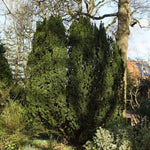
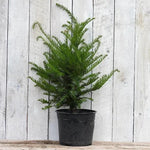
These rootballed yew trees are the largest sizes that you can order from us. They are the nearest thing you can get to an instant yew hedge. They can also be planted singly as specimens. Yew leaves are evergreen needles that clip neatly into a formal hedge and regrow from hard pruning. Yew will grow in any well drained soil and it tolerates quite deep shade.

Rootballed Yew hedge plants are only delivered during winter (Nov-March).

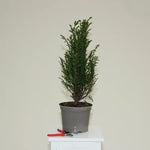
Choosing a size: With big, comparatively expensive plants like these rootballed Yew, it's really up to your budget to decide which size you want. If you need to spend less money, you can also buy Yew in smaller sizes here. Smaller plants are cheaper and will make equally good hedging.
All our hedge plants are measured by their height in centimetres above the ground (the roots aren't measured).

Spacing Rootballed Yew plants in a hedge:
These large Yew plants have quite wide rootballs, so they should be planted 60-75cms apart along the hedgerow.

General description of Yew plants:
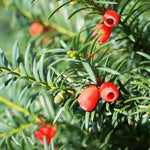
Yew is an extremely hardy, disease resistant tree. It is actually a conifer, but unlike other conifers it produces red, berry like fruit instead of pine cones. A yew hedge can be clipped and pruned hard if necessary: it makes new shoots from old wood, so it will always recover from any mistakes with the shears. Old, overgrown yew hedges that have been allowed to become sparse at the base can be cut back to encourage dense new growth.
Yew will grow anywhere with decent soil drainage. It should tolerate occasional waterlogging, but if you are concerned that your soil is too damp, we suggest holly as a good evergreen alternative.

History & uses of Taxus baccata
To our ancestors, the Yew tree was a god of death and rebirth. It must have seemed immortal to them, living as it does for thousands of years, growing in the dark heart of the forest or on freezing mountain slopes. Old yew trees tend to spread outwards and slump a bit as their heavy branches pull open the centre of tree, creating a thick, wide evergreen canopy quite close to the ground. It is easy to imagine groups of stone age humans sheltering under such foreboding trees, fending off packs of wolves and bears.
The gloomy spaces under these Yews were places of pagan worship that housed the wizened, gnarled face of the god itself; a massive, brooding creature that did not suffer cold or time. The red flesh of Yew's fruit would have been a nourishing treasure to our ancestors in winter, but anyone who bit down on the seed inside could have been paralysed and possibly killed, which surely added to the awe that this unique tree inspired.
Yew is good firewood, but it needs to be split and then seasoned for several years before it will burn well.