Best Medlar Jelly Recipe (for home grown or shop bought medlars)

Homemade medlar jelly recipe

The best medlar jelly in the world


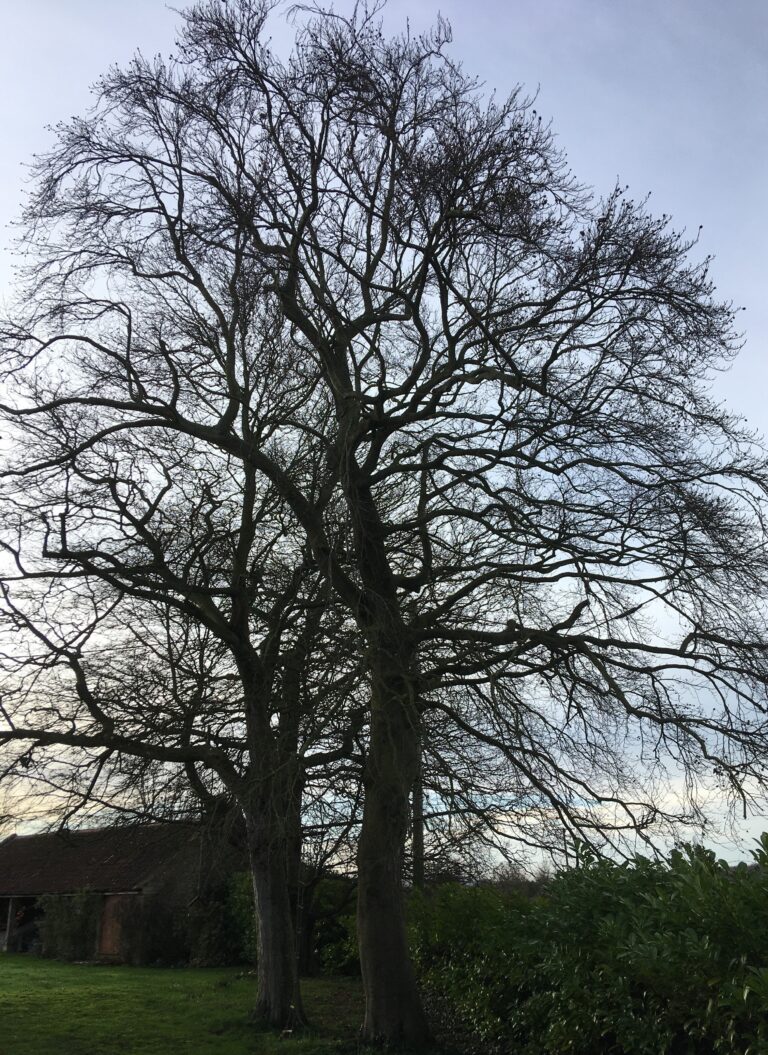
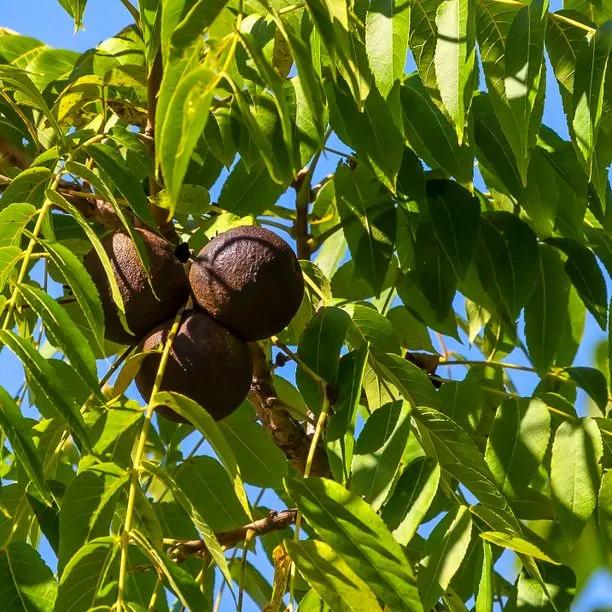
Well made medlar jelly is a true delight. It is beautiful to look at – amber with pink highlights and very glossy. And medlar jelly is joyous to taste; some say it is like sweet cider infused with cinnamon and a touch of allspice. Whatever your adjectives it is utterly delicious, wondrously fragrant and gives a lift to game and cold meats like no other jelly. Add a spoonful to your gravy and you will never be without it again. You can buy medlar jelly in the shops, especially in season, but it is easy to make.  So much so that everyone should have a medlar tree – small, well behaved, tolerant of most soil types and producing the best fruit jelly made. Who could ask for more?

This recipe for medlar jelly is a family heirlook and never fails. The quantities shown make about 6 big jam jars full (but have a couple extra ready in case you get a bit more).

Ingredients

3 Small, sharp apples or 20-25 crab apples

2.5 kg bletted medlars(see below)

600g firm medlars

4 lemons

3 litres water

1.2 Kg granulated sugar

Optionally, you can add about 20 cloves at the beginning which are removed when you strain. They make the jelly a bit more Christmassy.
Instructions

The bletted medlars should be dark and soft before your start. Clean them by removing any stalks and leaves and chopping them in half. Remove any really obvious rotten bits.

Cut the lemons and apples into quarters (just halve crab apples if you are using those instead). Then put all the fruit into a maslin or large saucepan such as you would use for jam making.

Pour all the water over the fruit and bring to the boil. Once boiling, reduce the heat and cover with a lid. Leave to simmer gently for about an hour.

Don’t boil hard, and keep covered so the water doesn’t evaporate.

every 10-15 minutes squash the fruit with a wooden spoon. Don’t over squash or stir the whole time as your jelly will end up cloudy (the taste is unaffected though).

Pour the whole mess into a jelly bag hung over a large bowl. Bathroom taps are great for the job although we have a hook on a beam in the garage. Just let the juice drip into the bowl. For the clearest jelly, do not squeeze at all. If you leave the bag there for 12 hours, almost all the juice will have run through by itself anywhy. You can put the contents of the bag on the compost heap.

Measure the juice, which should be clear and a wondeful amber/rose colour, into a suitably sized clean saucepan and boil hard for 6-7 minutes. Then add an equal amount of sugar (which shouldbe about 6 cups or 1.2kg). Bring back to the boil and stir until the sugar has completely dissolved. Boil hard for another 2-3 minutes and test on the back of a spoon for setting. When it has just begun to set (medlar jelly is best with a soft as opposed to hard consistency) pour or ladle into sterilised, warm jars and seal. Leave to cool.

If you were a bit nervous about your jelly being too hard, and find that is still has not set the next morning, you can put it back into a pan and boil for 4-5 minutes then return to the jars. When cool, medlar jelly should be smooth and soft and have a lovely gleam to it.

Bletting Medlars

Bletting really means to overripen. It just sounds better. Shop sold medlars are generally unripe and really hard. To be useful they need to be bletted and much softer. So remove their leaves and put the medlars on plates. you do not have to be fussy about them touching, but at the same time do not heap them up. Put them in a cool but frost free place away from vermin and leave them until they turn deep brown and are soft. Really soft – they should be almost squashy. Depending on how hard they were when you started this can take from 1 week to 4 weeks.

If you grow medlars yourslef (and it is a really easy tree to grow) then bletting is simple.  Leave them on the tree until they are ready. You can pick by hand, or if you have a mature tree are going to use them immediately, knocking them off the tree with a pole on to a sheet spread below is quicker

They are then ready to cook. Medlars lose their pectin as they ripen and pectin is essential to make your jelly set. So you either need some hard medlars or you can replace them with sharp apples, or crab apples (Golden Hornet makes golden jelly while Evereste makes pink jelly. You choose.

How to Choose Rootstocks for Fruit Trees – The Easy Way

Rootstocks on fruit trees bought from our Nursery:

Rootstocks cause a lot of unnecessary worry. A rootstock controls the growth of a tree and there are many different ones in existence.
This post is a long winded way of saying do not worry about rootstocks when you buy fruit trees from us; we choose the best ones for the job.

In short, we grow all of our 2 largest sizes of fruit tree, Bushes and Half Standards – on “semi-vigorous” rootstocks that produce a nice size tree for a garden or orchard.
Our 2 smallest sizes, Maidens and Cordons (only apples & pears are grown as cordons) are grown on either “semi-vigorous” or “semi-dwarfing” rootstocks depending on the variety. Whichever it is, it will be suitable for growing as a restricted, wire-trained shape.

Just What is a Rootstock?

All the fruit trees that you know and love are clones, from Granny Smith to Victoria Plum.

More than just clones, they are living in a Siamese twin relationship with another tree’s roots.

So, there is only one Granny Smith apple tree from a genetic point of view.
Cuttings of new growth from that one tree, called scions, can be grafted onto a rootstock chosen from a range of different sapling apple trees.

Grafting a scion onto a rootstock is a much better way of cloning a fruit tree from a cutting than just getting the cutting to take root itself.

The key benefit is that each rootstock type has known attributes and a predictable effect on the new tree’s growth.

The practical reality is that people either want a medium-large fruit tree or they want to train fruit tree on wires, usually against a wall or fence.
As described above, you only really need 2 rootstocks to be able to grow any normal size tree or restricted shape like fans, espaliers, step-overs or arches.

Which Fruit Tree Size Should I Start With?

We get this question all the time and it’s a very sensible one: which of the 3 or 4 starting sizes of fruit tree should I choose?

A well loved fruit tree will be in its prime for about 50 years and a new one takes at least a couple of years to establish and bear fruit, so choosing the right one matters!

I’m going to jump to the end here.
For most people’s gardens, where space is precious, the best choice of free-standing fruit tree (i.e. not trained on wires) is a Bush.

A bush fruit tree has simply been pruned when it was young to give it with a very short main trunk, about 1 metre tall. As a result, the canopy of branches that produce the fruit is smaller and lower than a full sized fruit tree.

Compared to a “normal”, large fruit tree, which are known as standards, a bush shaped fruit tree:

  • Needs less room & can be planted closer together.
  • Will use up smaller amounts of soil nutrients & cast less shade around it.
  • Can be pruned, harvested and sprayed easily with a sturdy little step-ladder.
  • Can be netted easily to protect against birds (often necessary for cherries).

Of course, there is nothing wrong with a big half-standard tree if you have the room for it. It will need a big ladder made safe for garden use when your trees are mature.

So, if you want the biggest possible tree, get a Half-Standard.
If you want a proper fruit tree but don’t have the room for a Standard, get a Bush.

What about all the Wire Trained Shapes?

There are several ways to train a fruit tree on wires in a restricted space – espaliers, fans, cordons, step-overs and arches being the main ones.

There is only one starting size you need for all of these: the Maiden.
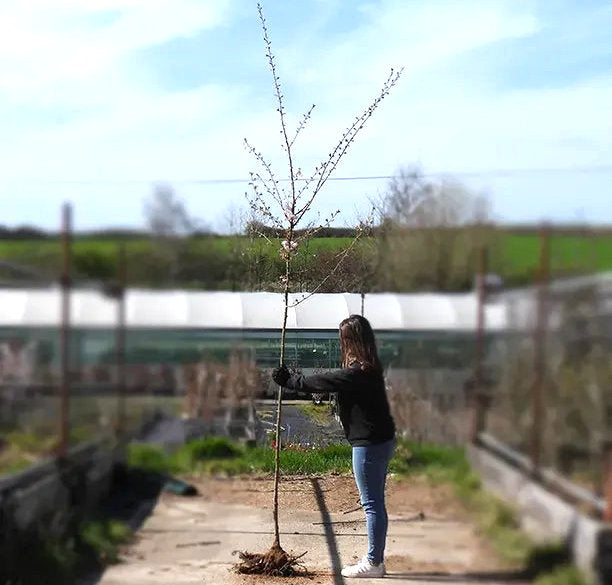
A maiden is the youngest & cheapest fruit tree you can buy.
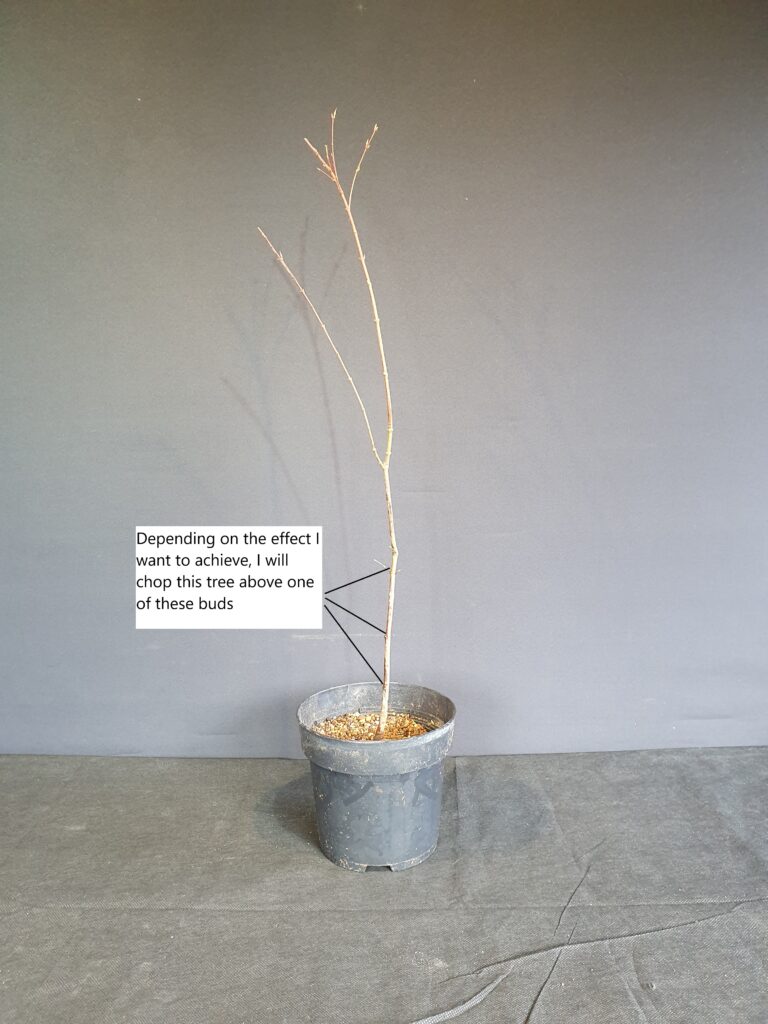
After planting, you prune it yourself down to the correct size for your project.

Most of our suitable apple and pear varieties are available as ready made cordons, which effectively a tree with a single, thin branch grown on wires or other supports at a 45 degree angle.
You can train a maiden into a cordon yourself, but buying a cordon will give you a 1 year head start.

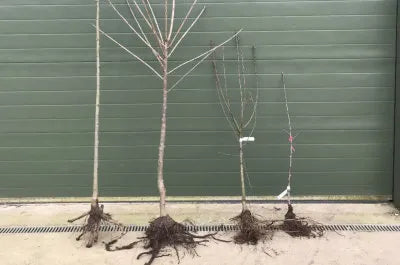
In order of final size when mature, the four sizes we sell:

Biggest:
Half Standards
.
Bush
All the various wire trained shapes – use a Maiden.
Smallest: Apples and pears that are spur bearing, as opposed to tip bearing, can be grown on wires as restricted Cordons.

Whichever size is right for your garden or orchard, all the fruit trees we grow are Guaranteed for 1 Year & have O% VAT.

Winter Frost & Snow Damage on Leaves & Branches

Frost & snow damage are facts of life & no cause for alarm – some years will just be harder than others and this winter has been pretty nippy.

Frost Damage in Winter:
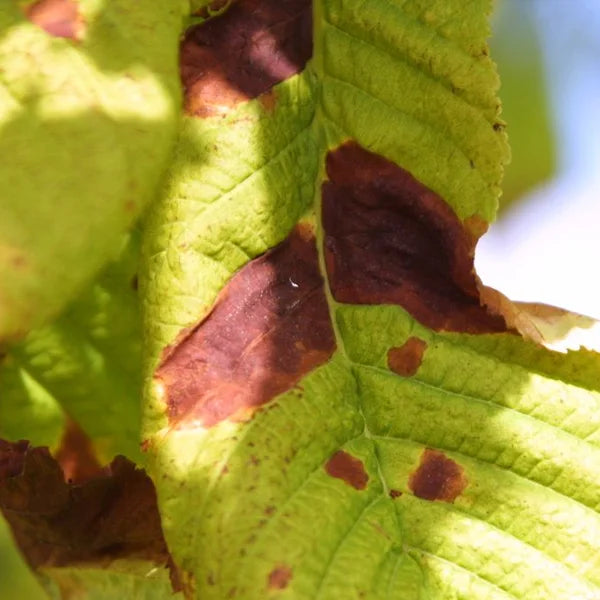
Winter frost damage hits young, soft leaves and shoots that didn’t have time to harden up last autumn – this is most obvious on evergreen plants.

East facing sites that get early morning sun usually have the most frost damage (the sun makes the plants thaw faster, which is more destructive).
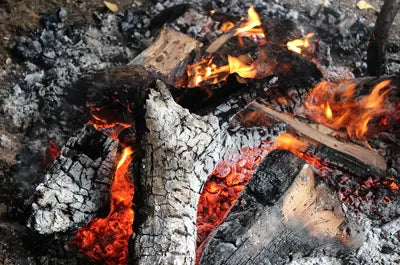
Frost damage should be left alone until the spring, when a quick trim should sort it out.

Frost Lift: This affects things that were transplanted recently.
The frost expands in the soil, pushing everything upwards, then it thaws, leaving the plants unstable.

Frost lift should be gently firmed back down by walking on the soil around the plants when it has thawed.

Snow damage:
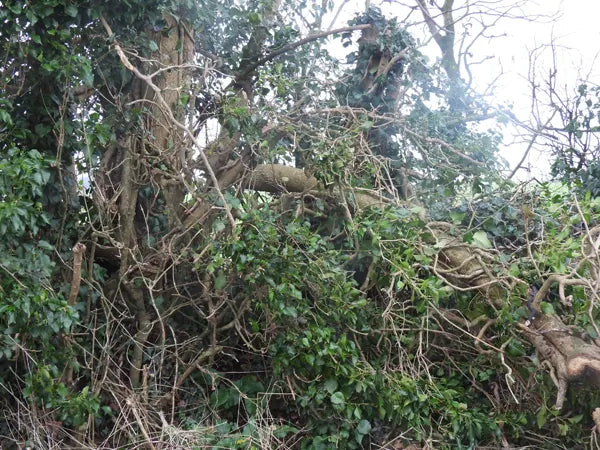
This happens when snow collects on branches and breaks them. Hedges can be affected too by the weight of snow piling up on top of them, bending them down or sideways.

Branches that are broken or damaged by snow should be pruned back neatly.
Pruning a larger branch is done in at least two pieces, this diagram shows the idea.

What to do next time: Go round in the morning after heavy snow and use a broomstick to gently remove as much snow as possible from plants that are having a rough time (we missed out several of the lavender plants in our garden and they were totally crushed by the snow. When it thawed, there was just a soggy mess left clinging to some dead stems that smelt faintly of lavender!).