How to Choose Rootstocks for Fruit Trees – The Easy Way

Rootstocks on fruit trees bought from our Nursery:

Rootstocks cause a lot of unnecessary worry. A rootstock controls the growth of a tree and there are many different ones in existence.
This post is a long winded way of saying do not worry about rootstocks when you buy fruit trees from us; we choose the best ones for the job.

In short, we grow all of our 2 largest sizes of fruit tree, Bushes and Half Standards – on “semi-vigorous” rootstocks that produce a nice size tree for a garden or orchard.
Our 2 smallest sizes, Maidens and Cordons (only apples & pears are grown as cordons) are grown on either “semi-vigorous” or “semi-dwarfing” rootstocks depending on the variety. Whichever it is, it will be suitable for growing as a restricted, wire-trained shape.

Just What is a Rootstock?

All the fruit trees that you know and love are clones, from Granny Smith to Victoria Plum.

More than just clones, they are living in a Siamese twin relationship with another tree’s roots.

So, there is only one Granny Smith apple tree from a genetic point of view.
Cuttings of new growth from that one tree, called scions, can be grafted onto a rootstock chosen from a range of different sapling apple trees.

Grafting a scion onto a rootstock is a much better way of cloning a fruit tree from a cutting than just getting the cutting to take root itself.

The key benefit is that each rootstock type has known attributes and a predictable effect on the new tree’s growth.

The practical reality is that people either want a medium-large fruit tree or they want to train fruit tree on wires, usually against a wall or fence.
As described above, you only really need 2 rootstocks to be able to grow any normal size tree or restricted shape like fans, espaliers, step-overs or arches.

Growing Yew – A Message from the Suppliers

Busting Myths about Growing Yew

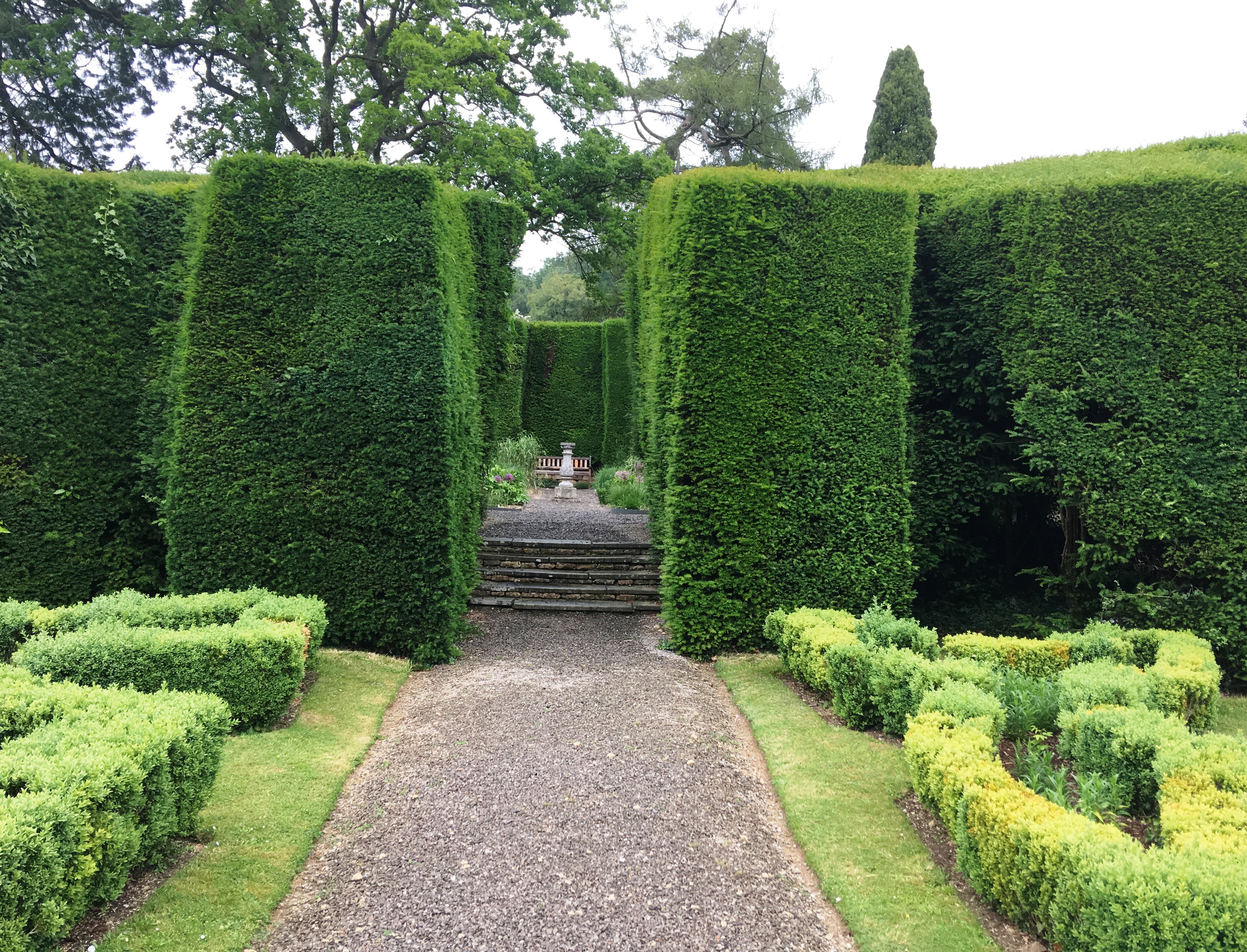
Yew is quite a pricey plant, especially sizes over 80 cms tall that are delivered in a pot.
If you were going to get a free hedge and based your choice on saving the most money, Yew would be a top contender.
As you know, we are are yew hedging suppliers (amongst a few other plants!).

You might well guess that our friends and family often try to blag a few plants from us.
If they cook us a nice enough dinner, we might even give them a deal on some.

So we’ve seen a few yew hedges come up in their gardens since 1947 and we want to say a triple of things about them:

1. Yew is not slow growing

Yew is a fast growing plant when it is young.
It will easily grow 30cms per year, more if it is in full sun all day and well cared for.
Yew will begin to grow slowly when the growing tips of the central, leading stems are cut.

With a young yew hedge, simply leave the tops alone and give the sides just the lightest trim once each winter.
When the hedge reaches full size, trim the tips for the first time.

2. Yew Loves Heavy Clay

Yew trees need a reasonably well drained soil to grow. They do not like bogs or riversides.
However, they will grow in any soil that isn’t really wet for most of the year – some winter flooding is fine.

Yew loves heavy clay – it grows beautifully on it in most places.  You will only be unable to grow Yew if the site traps water for long periods.

When planting in clay, do not dig out a trench and fill it with topsoil.
Simply make a slit in the soil and use the spade to sweep the roots gently down into it. Firm it closed again.

3. Yew is Futureproof

Your hedge’s lifespan is ~4000 years.
Unlike the other lush evergreen conifers, an old Yew hedge can be hard pruned if necessary and it will regrow beautifully.