Hawthorn Hedging – Tip No. 3

Another hawthorn tip for those of you who planted your quickthorn (same as hawthorn) whips last year.  Hopefully you followed our instructions and cut each plant back by half when you planted it.  Equally hopefully, they all survived the weird winter last year and the very dry April.  (Second dry spring in a row for those who are counting).

If they did both of the above, then each little stick should by now have somewhere between two and five side branches and be beginning to make a little hawthorn bush.  If they are, here is tip number 3 for hawthorn beginners.

Be brave and cut those side branches (some of which are probably 30-40 cms long back by half again. Don’t do it exactly now, but don’t forget to get the shears out between the end of November and the beginning of March.

If you do this, then each branch will behave in the same way as the original stem did last winter. In spring, between two and five dormant buds will break into growth below each cut.  So your (average) 3 branches per plant will produce 3 side branches each and the little bush will have all the making of a thicket.

Which is what you want in the best hawthorn hedge.

Hawthorn Hedge Planting – Tip 1

A lot of people will tell you to spray the weeds off before planting a hawthorn hedge.

Don’t bother. Use woven polypropylene weed prevention fabric instead. Cut the undergrowth short, put the fabric down where you want to plant the hedge and weigh it down with stones. If you want to be really tidy, push a strip about 2″ (5cms) wide of the fabric into the soil with a spade down each edge and at both ends (there is a good film on how to plant a native hedge on our site).

You slit the fabric where you want your hawthorn plants and plant as normal. No weedkillers, no regrowth. And no need to water as it acts as a mulch as well. Over the 2-3 years it takes your hedge to establish this is an amazing labour saver and will cost you less than the weedkiller bill over the same time.

And, if you need them, we can supply the hawthorn hedging plants too….

Sit back and watch your hedge grow. Enjoy.

Hawthorn: Hedge Plant Portraits

If you will pardon the french, Hawthorn is the dog’s b*****ks of a hedge plant. Most of the hedges near us (be they hawthorn, beech, whatever) come from us – not surprisingly as Ashridge Trees sells over 2 million plants a year of which a large proportion end up in hawthorn hedges.

With the possible exception of yew, no other hedge plant has the dignity and good temper of hawthorn.  It is almost unflappable.

Next to our packing shed is what ought to be an abomination of a hedge.  Solid hawthorn, planted on a bank of what can only be described politely as “subsoil”, weed infested, unclipped.  What you might call neglected or, if it was a small child, abused. And yet here we are on 5th January 2009 and this long suffering hawthorn hedge is still covered in haws. They were dripping with frost this morning and looked simply stunning as I walked in to work.  Closer examination showed a few buds are beginning to stir, and I have complete confidence in sayng that that the seriously hard frost we got last night will have left them as perfect as ever.

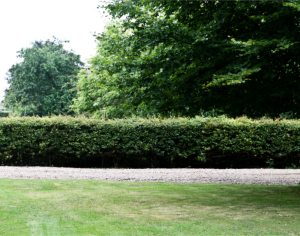
Less than a mile away is a small ex-council house (I think privately owned now) whose exquisite small garden is open to the public one day a year in June.  In the interests of the Gardeners Benevolent Fund, I am afraid you will need to buy the Yellow Book of Gardens Open to the Public in England & Wales to find out where it is. Anyway, in June, when a Hawthorn hedge is neither in flower or in full berry, this little garden’s boundary hedge is a tight clipped, razor edged, utterly immaculate thing of beauty.  And visitors do a double take when, on reading the notes to find out what it is, they discover they have been had by a simple old hawthorn hedge.

If you have room, and you have not got one…..

You can start here if you want to buy hawthorn hedge plants.