


Sold as:

from £10.95

Sold as:
from £19.99
 5 Star Service Rating




 Secure, One-Tap Checkout
 5 Star Feefo Rating
 Hand Picked, Delivered to Your Door!
 1 Year Bareroot Guarantee
 Platinum Trusted Service Award 2026
 Mail Order Plant Experts - Est. 1949
 1 Year Bulb Guarantee





Wild Pear is the native Pear of old hedgerows: white blossom in mid-spring, glossy leaves that turn orange and gold, and small Pears for birds, squirrels and the jam pan. Clip it in a mixed native hedge, or let it grow into a tall, narrow tree of 8 to 12 metres.
Pyrus communis is the native, Wild Pear tree. It's a great hedge plant and produces small, edible fruit that are good for wildlife. It reaches 8 to 12 metres if it grows freely as a tree.
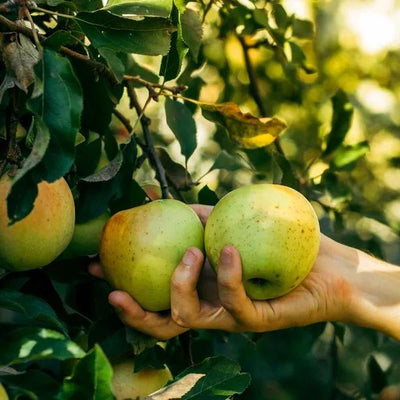
It flowers heavily in April when the leaves are still small and pale green, which all looks great together. The mature leaves are glossy, rich green. The small, edible fruit are popular with birds and squirrels, but if you can get your hands on them they're usually sweet and quite delicious: this is a wild tree, so the fruit'll vary. If the pears aren't sweet when fresh, use them for jam. The autumn foliage is orange & gold and if you are clipping these plants as a hedge, the leaves will stay on the branches for some time. Although it isn't thorny, its short twigs have pointed ends.
You can buy eating pear trees here, as well as ornamental Chanticleer pears and weeping pears.
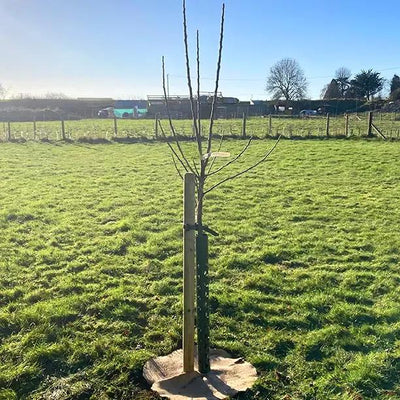
Bareroot hedge plants are only delivered during winter (Nov-April).
All our hedge plants are measured by their height in centimetres above the ground (the roots aren't measured).
Plant at 3 plants per metre, 33cm apart.
It's typically used in a mixed native hedge.
Uncultivated pears are also called Pyrus pyraster. The history of the common pear is hard to trace. There are records of a cultivated pear growing in the palace of Sennacherib at Nineveh, Iraq, in 700 BC (note, that is over 2000 years before Europeans started breeding modern pears). The common pear we have today is believed to be hybrid of more ancient European and Asian trees, but with all the cultivated pear seeds that have escaped from orchards over the centuries, it's impossible to tell apart the really wild pear trees and the rogue pears that have bred with their wild cousins. Pear breeding in Europe probably began in the 1500's, but the first proper records are from about 1610, written by Jean Robin, King Henri III's fruit tree gardener.
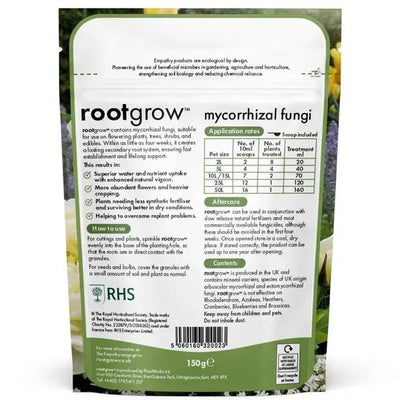
In a hedge, Wild Pear is a minor ingredient among Hawthorn and Blackthorn, with Crab Apple and Wild Cherry for more blossom and fruit. It is one of the five plants in our Edible Hedge mix. Dust bareroot roots with Rootgrow as you plant.
Hedging and young native trees are not a sideline here: your Wild Pear saplings are grown for us by specialist growers. Bareroot plants are lifted to order while dormant and guaranteed for 12 months. Ashridge has sold plants since 1949 and is a Which? Best Plant Supplier 2025.
Left alone, it grows 8 to 12 metres tall and 4 to 8 metres wide, in 20 to 50 years, with a narrow, upright shape. In a hedge it is clipped with the rest.
Yes. The Pears are small and they vary from tree to tree. Some are sweet straight from the branch, and the rest make good jam.
Only slightly. It is occasionally thorny, and the short side twigs often end in a point.
Pyrus communis is native. Wild and escaped orchard Pears have crossed for centuries, so no two hedgerow trees are quite alike.
Three plants per metre, 33cm apart, in a single row.
Deep, fertile, well-drained soil in a sunny, fairly sheltered place. Avoid very acid soils and shallow chalk.
Bareroot only, from November to April, while the plants are dormant. You can order at any time of year and your plants are lifted and sent once the season opens.




 Sign In
 Saved items