
Sold as:

from £10.95


Sold as:
from £19.99
 5 Star Service Rating




 Secure, One-Tap Checkout
 5 Star Feefo Rating
 Hand Picked, Delivered to Your Door!1 Year Bareroot Guarantee
 Platinum Trusted Service Award 2026
 Mail Order Plant Experts - Est. 1949
 1 Year Bulb Guarantee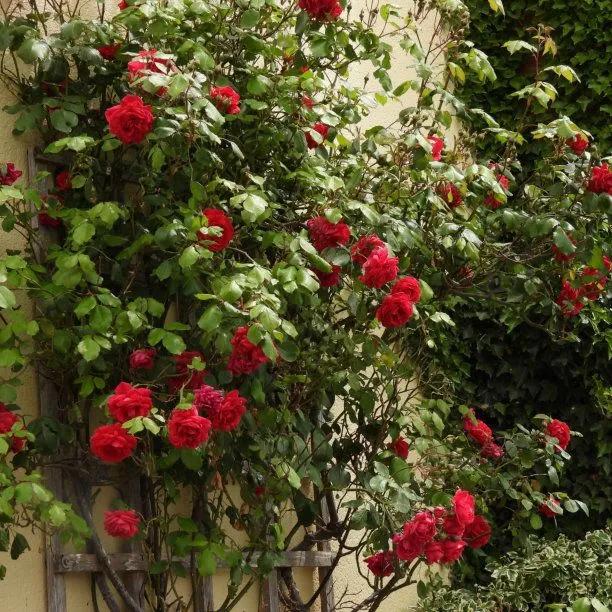




Paul's Scarlet Climber is a vigorous climbing rose producing brilliant scarlet-crimson, semi-double blooms in generous clusters during one glorious flush in late June and July. A classic cottage garden favourite bred in 1916, it remains one of the most widely grown scarlet climbers of all time, and for good reason: it's easy to grow, fast-growing, and will clothe large walls or pergolas in stunning colour within a season or two.
This rose has earned its place in gardens across the UK for over a century. Bred by Paul England in 1916, Paul's Scarlet Climber combines vigour with the sort of unfussy, reliable performance that old-fashioned gardeners loved. The brilliant scarlet-crimson blooms are semi-double, arranged in handsome clusters that cover the plant densely during its main flowering season. Whilst it produces one abundant flush rather than repeat flowers, that flush is so generous that the entire plant becomes a sheet of colour for several weeks.
What makes Paul's Scarlet Climber especially valuable is its speed of growth and ease of cultivation. It will rapidly cover a large wall, pergola, or archway without fussy pruning or training, making it ideal if you want to transform a bare structure into a flowering feature quickly. The slightly fragrant blooms are attractive to bees and other pollinators, and the semi-double form gives them a softer, more romantic character than fully double varieties.
Plant it in full sun to light shade, and protect from cold northerly or easterly winds if you're in an exposed garden. It's naturally vigorous and hardy, thriving in most well-drained soils. Tie in young growth loosely to encourage flowering along the horizontal shoots, and once established, deadhead spent flowers to tidy the appearance through the summer.
Paul's Scarlet Climber grows to around 400cm (13ft) in height and will spread generously across horizontal supports. Its vigour is one of its greatest assets if you're looking to dress a large expanse quickly. Young plants establish well and put on substantial growth in their second and third seasons. The foliage is healthy and mid-green, providing a handsome backdrop to the flowers even when not in bloom. Once established, it needs minimal maintenance beyond the annual tying-in of long shoots and light deadheading.
This is a rose for the gardener who wants impact and isn't afraid of scale. It suits cottage gardens, country gardens, and any setting where a robust, unfussy climber can be allowed to grow with vigour. Train it horizontally along fence lines or pergolas to maximise flowering. It also makes a striking specimen on a house wall, though you'll need space: at 13ft, it's too big for a narrow border. The slight fragrance is an honest charm rather than a selling point, but the sheer volume of colour more than compensates.
Paul's Scarlet Climber looks splendid paired with complementary climbers and wall-trained shrubs. Consider training clematis through it for season-long interest, or underplant with soft mauves and purples such as lavender. Hardy perennials like delphiniums and salvias provide textural contrast at ground level. For a romantic cottage scheme, combine with other climbing roses that flower later in the season, ensuring colour from June through autumn.
Our climbing roses are budded onto vigorous rootstock and grown for us by specialist growers. We're Which? Gardening Best Plant Supplier and Feefo Platinum award winners. Browse our complete climbing rose collection.
Plant bare root roses November to March when dormant. Potted plants can be planted year-round, but establish best in autumn or spring. Avoid planting during hard frost or waterlogged soil.
Minimal pruning is needed. Tie in young growth horizontally to encourage flowering spurs. After flowering, deadhead spent blooms and remove dead, diseased, or crossing wood. See our climbing rose pruning guide.
Bare root plants flower in their first summer if well established, though second-season flowering is usually more generous. Potted plants flower the same year. Full vigour develops in year two or three.
Whilst possible in large containers, this variety performs best in open ground where its roots can spread freely. Containers restrict growth and the plant won't reach its full potential height and spread.
It produces one abundant flush in late June and July, not repeat flowers. However, that single flush is so profuse the entire plant becomes a sheet of brilliant colour for several weeks, making it well worth growing for that spectacle alone.







 Sign In
 Saved items