An Intimate Portrait of the Inside of a Privet Hedge

How to Prune a Privet Hedge – Do’s & Don’ts

This Privet hedge had a corner section of it cut off, then a few days later it was trimmed all over and the top was also pruned down a bit.
I took photos after the first pruning and then 8 weeks later:

A vigorous plant like Privet responds well to being hard pruned. Most hedge plants do too, but remember that conifers, which are popular for formal hedging, will not grow back from this sort of pruning.

The Good: By cutting off the top of the hedge, sunlight can reach the new growth.
The Bad: The angle of the side of the hedge is not ideal: the top is wider than the base.

In the photo below, you can see how the top of the hedge leans out and casts shade over the base of the hedge.

This hedge is being trimmed in a top heavy way that will encourage the base to become sparse over time.

This is the wrong angle to cut a hedge - the base should stick out further than the top.

This bare strip was caused by shade from the top of the hedge.

Privet is an easy plant that grows well in shady places, so the bald patch at the base of the hedge here will recover quite fast.
Again, most coniferous hedges will not recover from the base at all, so they must be trimmed to the right shape every year.

The right shape for a hedge is a bit like this: / \
Not at all like this: \ /

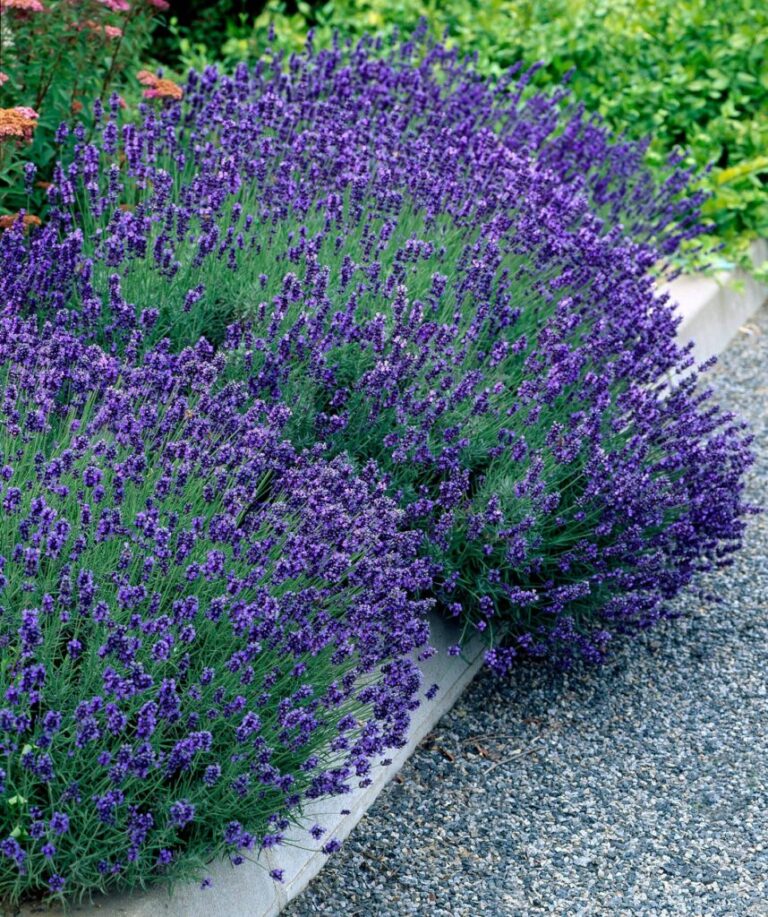
Give Lavender its first trim in February or Early March

This post is a bit late for getting in a February trim, but since the weather hasn’t been great this year we think your Lavender deserves a bit of a rest first (phew, I got away with that one!).

Our school of thought on Lavender clipping is to do it twice a year:

  • A light trim in late February / early March – right about now at the time of posting.
  • A hard trim after flowering, sometime in August.

The first trim needs be done by early March. This is the trim that tidies up your plants for summer and encourages lots of flowers.

Lavender that was planted last year must not be spared!
If it often fine to let a shrub settle in for its first year with little or no trimming, but with Lavender it is essential to trim it young.  This forces it to make lots of leaf buds close to the centre of the plant, which forms a strong base for the future.

The second trim should n0t be left too late. The new growth needs time to harden up before the weather gets cold.
If the weather turns frosty early, it won’t hurt to cover up your plants for the first few frosts to give them a bit more time.

Be ruthless with this August trimming! If Ruth wants to join in, ask her politely to sit this one out.
Trim every stem so that about 2cms (at most) of new growth from the previous year is left. Your plants will look pretty sad when you are finished. They will grow back a bit before the end of autumn and look beautifully neat for winter.

Flowering Forsythia in February – Unless you Clipped in Winter!

All over the country, yellow star shaped flowers are lighting up in streamers along the upright, arching branches of Forsythia bushes and hedgerows.

The most popular garden variety is Forsythia x intermedia Spectabilis. It can be grown as a dense, functional hedge plant, a sinuous small tree or pruned into a vigorous shrub.

But you might well see many Forsythia hedges looking quite sad right now, with lots of bushy, bare twigs and few flowers.

These sparsely decorated hedges were trimmed in winter – this was bit of a mistake, because most of the maturing flower buds got chopped off.

Winter is a fine time to trim a hedge from the plant’s point of view, but because you also want to admire the flowers of Forsythia, or other spring-summer flowering plants like Choisya ternata, you have to trim it soon after it flowers in spring or early summer.

It’s good to be rough with this trim: Try to cut off all of the parts of the stems that had flowers on them, ideally cutting back to nice bud or side shoot.

This will encourage lots of new growth, which have close to a year to mature and then flower.
You can tidy up vigorous shoots in August and even take a little off all over if you enjoy a really neat looking hedge without affecting the flowers much, but I prefer to just leave it be.

Forsythias come from China; they were brought here by a great-grandfather of Bruce Forsyth.
The Forsythia intermedia hyrid was first crossed in Germany in the 1870′s.

The pictures above were taken on the same day in Bristol and all the plants were in sunny locations.

When do I prune a tree? Winter and Summer.

Pruning a tree is not like trimming a hedge, although a seriously overgrown hedge is basically a row of scrubby trees that could need pruning to restore it to a proper hedge again.

Young ornamental trees may be shaped using secatuers to prune side shoots, but removing branches on an adult tree will need a special pruning saw or saw blade for your bow saw.

Winter is usually the right time to prune a tree.

Why is winter the best time to prune most trees?
Some trees will bleed sap if they are pruned in spring. This is not likely to kill a healthy tree, but it’s best to avoid it.
Birch, Laburnum, Hornbeam, Lime (as in the common roadside tree, not the citrus) and Poplar trees are all potentially heavy bleeders, so they are always pruned in late autumn to  early winter for this reason.

Magnolia and Walnut trees are pruned in late summer. The Walnut may lose some sap at this time, but within a year it will have healed more than it would a year on from an early winter pruning.
That said summer is often a fine time to prune as well.

Flowering cherry trees and many stone fruit trees (i.e. cherries, plums, peaches – these are all in the group Prunus) should be pruned in summer only.

This avoids the risk of Silver leaf disease, which spreads in winter.

As for pretty much all other trees, pruning them in summer or winter makes little difference.
If a tree needs pruning to remove Dead, Diseased or Damaged wood, it is usually best to do it right away.