
Since ash saplings infected by the Chalara fraxinea fungus were found at Buckingham Nurseries at the beginning of 2012, the UK ash die back crisis has reached fever pitch, with many column inches devoted to both blame and cure. With such media attention, it’s no surprise that anyone with an ash tree on their land (or even near it) is starting to worry.
Images by kind permission of Thomas Kirisits, Josef Wampl, Christian Freinschlag, Katharina Kräutler and Michaela Matlakova of the Institute of Forest Entomology, Forest Pathology and Forest Protection (IFFF), Department of Forest and Soil Sciences, University of Natural Resources and Life Sciences, Vienna (BOKU), Vienna, Austria
We at Ashridge Nurseries have had a number of enquiries, from both customers and others, about the health of their trees. However, the fact that we are well into autumn, when even healthy ash trees are losing their leaves, means that any diagnosis isn’t straightforward.
We hope that the collection of pictures in this article will help you to decide more clearly whether your trees are infected, or simply getting ready for the winter. We’ve also had enquiries about plants other than ash that are exhibiting leaf loss. It’s important to recognise that the fungus causing ash die back, Chalara fraxinea, ONLY INFECTS ASH (Fraxinus being Latin for the ash family). You can rest assured that trees other than ash (including Mountain Ash, which is a rowan and completely unrelated) will not be affected by the ash die back fungus. If you’re concerned about a tree other than ash, your first call should be to a local nursery or tree surgeon.
Ash dieback disease in pictures
This section presents a gallery of ash dieback disease symptoms. It shows examples (from countries outside of the UK) of branch lesions, leaf loss, crown dieback, and, finally, the sexual stage of the fungus, a trumpet-shaped mushroom called Hymenoscyphus pseudoalbidus. It is this final stage that will release Chalara fraxinea spores into the air, looking to reinfect ash tree leaves.
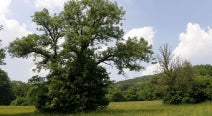
Fig 1: In the foreground is a (presently) healthy common ash (Fraxinus excelsior) with a leafy crown – and in the background, a diseased ash having had most of its crown die back to the trunk.
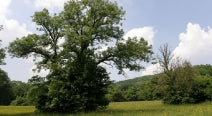
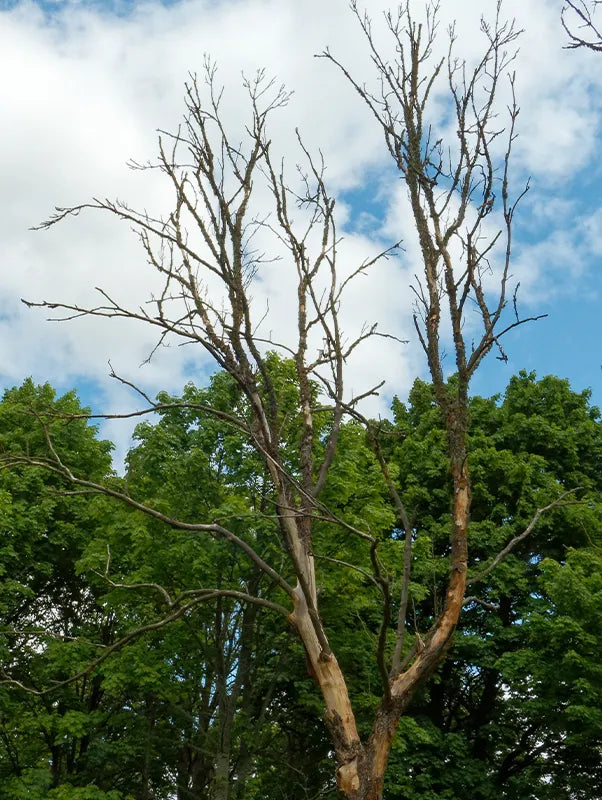
Fig 3: Lesions caused by the Chalara fraxinea fungus.
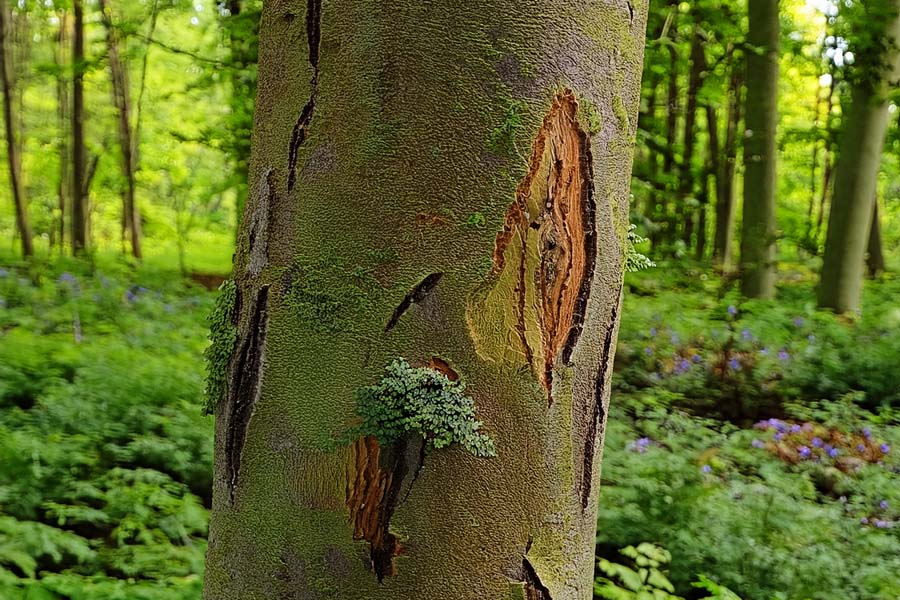
Fig 4: If you cut into the tree or split a slimmer branch lengthways, you can see how deeply the disease penetrates
Fig 5: Once the lesion has encircled the branch, it cuts off all nutritional support above it. This causes leaf loss from the tips of the branches inwards, giving Chalara fraxinea its common name of Ash Dieback Disease.
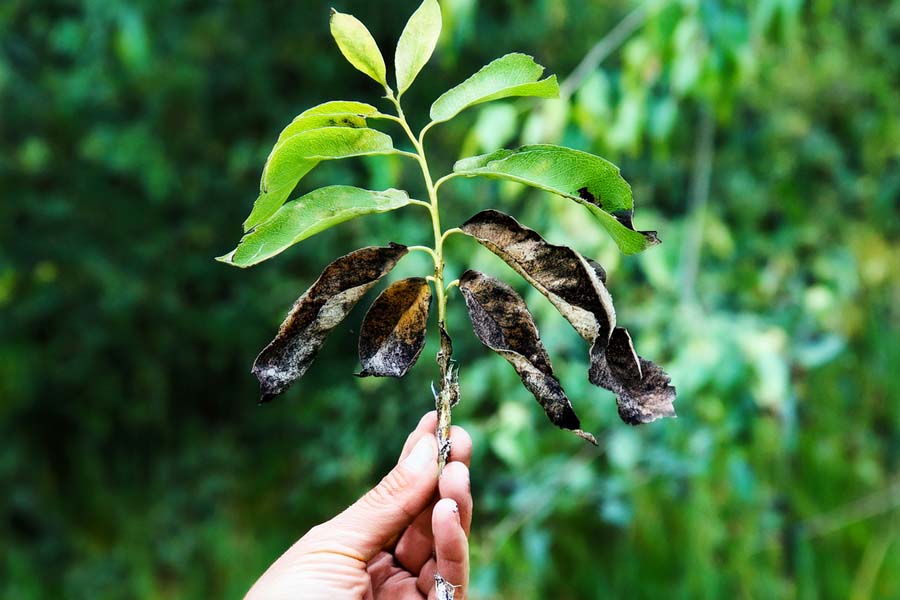
Fig 6: Ash die back is progressive. As it spreads and its lesions grow, more leaves are lost closer to the trunk and the tree loses its crown, until the entire tree has ‘died back’.
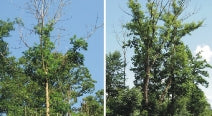 More diseased ash – Photo T. Kiritsis
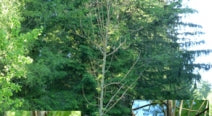 Severely diseased ash tree
Fig 7: The reproductive stage of the disease (Hymenoscyphus pseudoalbidus) thrives in damp vegetation on the floor. These small trumpet-shaped mushrooms will eventually release ash die back spores into the air to find new ash leaves to infect.
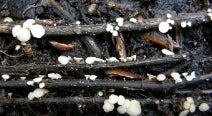 Reproductive stage of chalara fungus ready to release new spores
(credit: Thomas Kirisits)
My mountain ash (rowan) died of a honey fungus infection this year. Ash are resistant to honey fungus, rowan are resistant to ash dieback. It doesn’t really matter to the tree which fungus kills it.
I hate to disagree, but I think it does matter.
The two are fundamentally different. Honey fungus attacks through a “root system” (called rhizomorphs). It therefore travels relatively slowly but kills incredibly fast. It is not species specific (by the way, ash are not resistant to honey fungus – very few tree species are). It is preventable in the sense that it cannot cross barriers so planting susceptible trees inside an impermeable barrier in the top 6″ of soil should keep them safe. Honey fungus also tends to attack weaker and more stressed subjects, so the best prevention is to improve the soil using loads of organic matter such as well rotted manure, compost and so on. Healthy plants have their own defences.
Ash die back is different in a number of significant respects. It is spread by the wind and so can move many miles a year. It is species specific – it only attacks members of the Fraxinus family. It is indiscriminate – it attacks them all. And, critically, it does not seem that many Fraxinus have a defense system that can repel it. It is also not preventable and not treatable.