Buying Crab Apple Trees Online:
Order Potted Crab Apple Trees Now For Spring Delivery
Order Bareroot Crab Apple Trees For 2026 Spring Planting Season
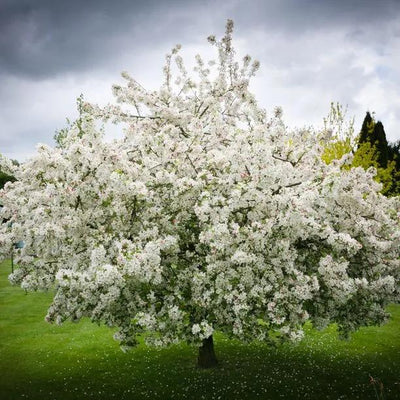
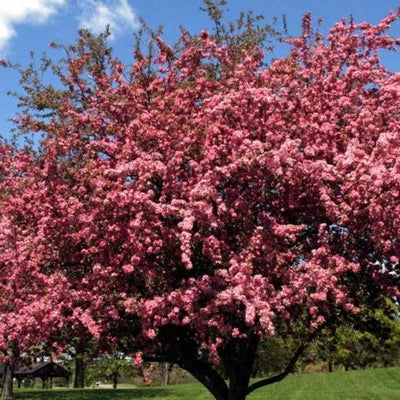
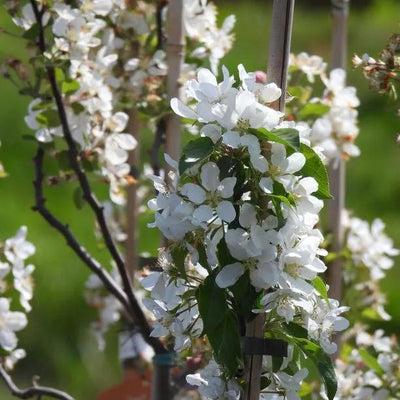
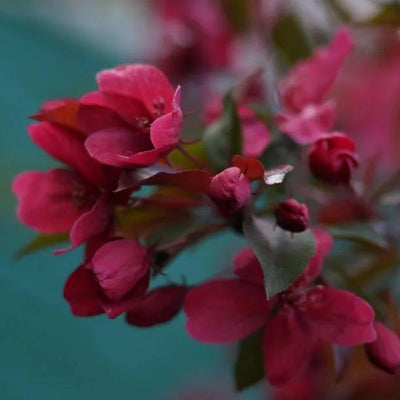
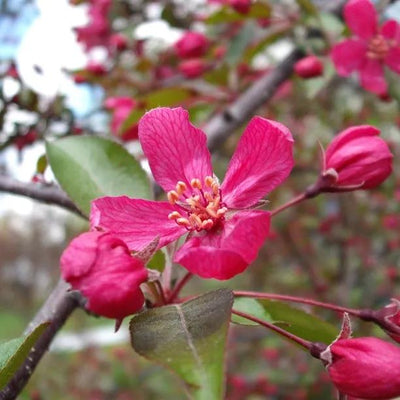
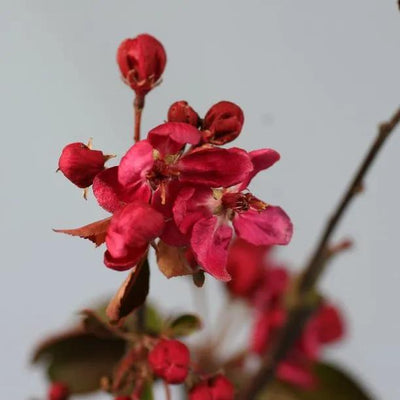
Flowering Crab Apples are some of the most decorative smaller garden trees, covered in white, pink, or purple Spring blossom.
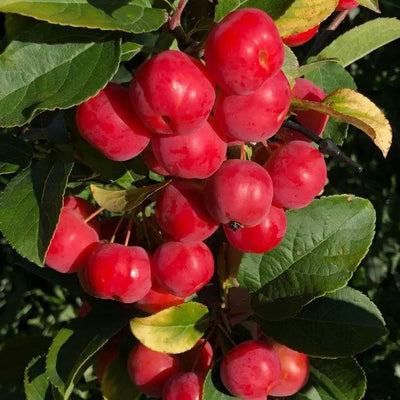
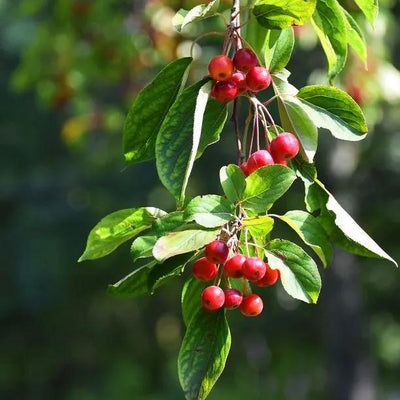
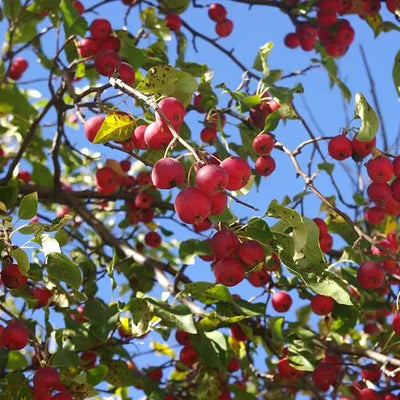
Their foliage comes in green and purple, and most varieties colour well in autumn before displaying their crab apples like bright marzipan fruits until after well Christmas.
All crab apples are self fertile and do not need a pollination partner.
What size Crab Apple trees should I buy?
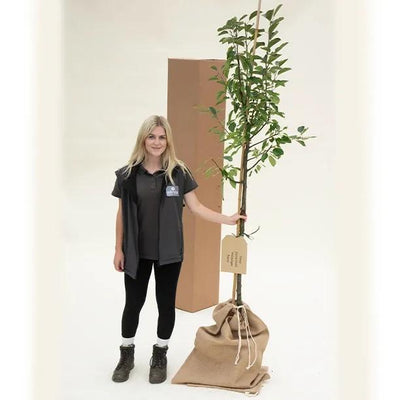
- If you are not in a hurry to get a full sized Crab Appletree, we recommend starting with the smaller 6/8cm girth size.
- If you are in a hurry and need instant impact, then go for the 8/10cm girth size.
Standard trees are measured by their girth 1 metre above the ground, and young saplings are measured by height.
So, a 6/8cm Standard Crab apple tree is much bigger than an 60/80cm sapling Crab apple tree. If a tree is available in both sizes, it will be noted in the product description.
See our complete tree guide to help you find exactly the right one
Browse our other ornamental garden trees.
- When your order is ready: your mail order trees are delivered by next working day courier (not the next working day after ordering!)
- Friendly support: if there is anything wrong with your plants when you inspect them, Contact Us within 5 working days
All bareroot plants are covered by our Refund Guarantee, so you can give them a whirl with complete confidence.
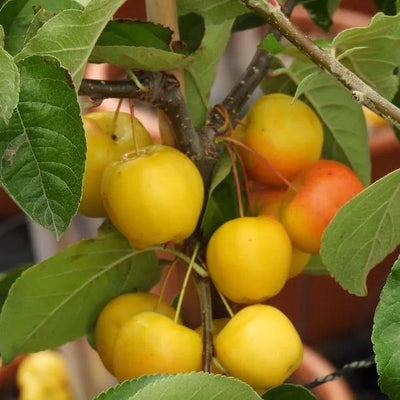
Crab apples are beautiful, compact trees with vibrant autumn foliage followed by clusters of yellow, red or orange fruits that can adorn the branches for months
Spring brings prolific flowering with pure white, pink and red blossom, and attractive foliage, often with deep purple tones.
Thriving in almost any soil and aspect, the versatile crab apple tree is perfect for injecting colour and interest into the garden all year round.
Malus ‘Evereste’ is a disease-resistant, upright variety with fresh white spring flowers opening from scarlet buds and deep green foliage that develops soft yellow, gold, and bronze shades in autumn. As well as large fruits that are ideal for jellies, she is an excellent orchard pollinator.
Malus ‘Royalty’ also has superb autumn colour, with deep purple summer foliage that turns a fiery red. After the leaves have fallen, striking red-black fruits hang like sultry jewels on the bare branches.
Malus 'Red Sentinel’ is a wonderful all-rounder with small, glossy red crabs that look stunning in Christmas decorations. With scented white flowers in spring, soft bronze autumn foliage and good tolerance to pollution, this variety really does have it all.
Malus ‘John Downie’, king of the culinary crabs, has orange-red fruits that make a fabulous jelly and striking reddish gold autumn foliage.
Malus ‘Butterball’ produces enormous amounts of pollen in spring, followed by a prodigious crop of rich yellow fruits that ripen in October, providing food for the birds and a vivid yellow jelly. Malus ‘Gorgeous’ and Malus ‘Red Glow’ are also heavy-croppers with fruit that persists on the tree for many months if it is not harvested for use in the kitchen. Both varieties produce high quality crab apples that make delicious preserves.
Malus moerlandsii with its profuse, fragrant dark wine-red flowers. As the foliage emerges in spring, its purple-red leaves add to the colourful blossom, creating a fantastic ornamental display. Later in the season, the foliage turns deep green, scored with red veins. Notably disease-resistant.
Malus ‘Red Jade’, the weeping crab apple, has glorious pinky-white flowers hanging from its pendant boughs. In autumn, the leaves turn buttery yellow and tiny, cherry-like fruit complete the pretty picture.
Where Can I Grow Crab Apple Trees?
Crab Apples are very tough and will grow in any reasonably well drained soil, including heavy clay as long as it is not waterlogged.
Partial shade is fine, but like all fruiting trees, crab apples fruit and flower best in a sunny location.
The ideal soil conditions are moist, rich, neutral to slightly acidic, with a yearly mulching.
As a tree, they are wind resistant, but in exposed locations the wind will tend to knock the fruit off by early-to-mid Autumn. In sheltered spots, they can hold their colourful deep into winter.
How tall do Crab Apple trees grow?
Ornamental Crab Apples are relatively small, compact trees to under 10 metres, perfect for most gardens.
Red Sentinel is very compact at about 7 metres tops, with a narrow canopy.
All Crab Apples respond well to pruning and are easy to control.
When and How do I plant Crab Apple Trees?
You can plant Pot Grown Crab Apple trees at any time of year, and Bareroot trees during winter, except when the soil is frozen.
The best time to plant Crab Apple trees is from late Autumn to early Spring (November to March), using bareroot stock, which is cheaper, easier to carry and plant, and tends to establish even better than their pot grown equivalents.
Watch our Tree Planting Video for instructions.
Although optional, we strongly recommend using Rootgrow.
Aftercare:
Remember: the two biggest killers of recently transplanted trees are underwatering, and being choked by weeds and grass.
- Regular, thorough watering is vital during dry weather in their first spring and summer, and highly recommended the following summer, especially if there is a heat wave.
- Either remove weeds and grass by hand periodically, or use some form of mulch to suppress them.
Tree Planting Accessories
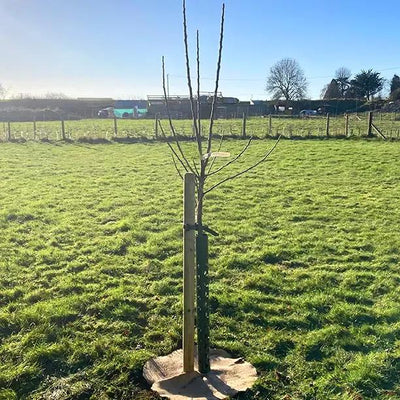
Standards that are 6/8cm in girth and upwards are quite big trees, so they need a tree planting stake and a tree tie (with a buffer between the tree and the stake) during their first couple of years.
A mulch mat is will suppress weeds & grass, and preserve moisture: remember that dry soil and competition with weeds are the two biggest killers of new trees.
Even with a mat, you should remove anything that manages to grow up between the mat and the trunk in late spring and summer.
You can buy those items separately, or save money with our Tree Planting Pack.
You definitely need a tree guard if there are deer or rabbits about.
In urban areas with no wild animals, tree guards are great for protecting against mowers and strimmers.For that purpose, you can cut one tree guard into several pieces about 20-25cm long, to act as skirting around the base of the tree.
Mycorrhizal Fungi
We cannot recommend using Rootgrow fungi enough: it makes a huge difference, especially with larger trees, which are scrambling to regrow the root systems that they lost when we dug them up, in order to support their now top-heavy growth above ground.
Mycorrhizal fungi assist the roots in accessing soil nutrients and water, and protect the roots from soil critters.
In return, the tree shares sugar with them, and the result can be over 50% more growth above ground!
Can a Flowering Crab Apple Pollinate an Apple Tree?
Yes, most crab apple trees are excellent pollinators of orchard apples. They have a long flowering period that crosses pretty much all apple pollination groups.
The best crab apple varieties for pollinating apples are 'Golden Hornet' and 'John Downie', and ‘Evereste’.
The wild crab apple, Malus sylvestris is another good apple pollinator for nearby apple crops. It's a tough, reliable hedging plant, commonly used in a mixed native hedge.


 Sign In
 Saved items


 5 Star Service Rating




 Secure, One-Tap Checkout
 5 Star Feefo Rating
 Hand Picked, Delivered to Your Door!
 1 Year Bareroot Guarantee
 Platinum Trusted Service Award 2026
 Mail Order Plant Experts - Est. 1949