Filter & Sort:

135 Results

Filter & Sort

Chevron
135 Results
Chevron
Availability Chevron
Plant Delivered As Chevron
Flower Colour Chevron
Price range Chevron
£0
£269.99
Type Chevron
Ornamental Qualities Chevron
Misc Chevron
Flowering Chevron
Area Chevron
Shade Chevron
Soil Chevron
Quick Filters Chevron
Berries on a Hawthorn Hedge Bird enjoying life on a hawthorn Hedge
Best Value
Country Hedging
Hawthorn Hedge Plants
Crataegus monogyna
Sold as:
Bareroot
from £0.99
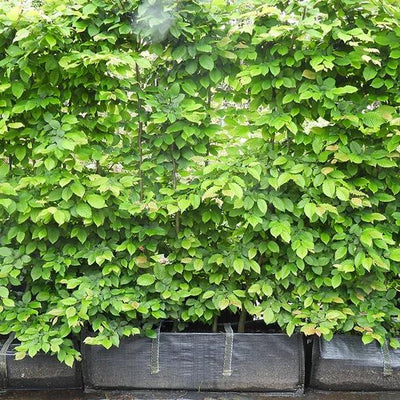
Green Beech Hedging Plants Green Beech Leaves
Sold as:
Bareroot
Trough
from £1.09
Common Hazenuts on the tree Mature Common Hazel tree
Country Hedging
Hazel Hedge Plants
Corylus avellana
Sold as:
Bareroot
from £1.49
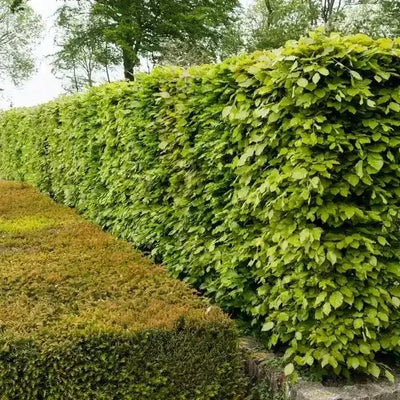
Mature Hornbeam Hedge Hornbeam Hedge Leaves in Spring
Hornbeam Hedging Plants
Carpinus betulus
Sold as:
Potted
Bareroot
Trough
from £0.99
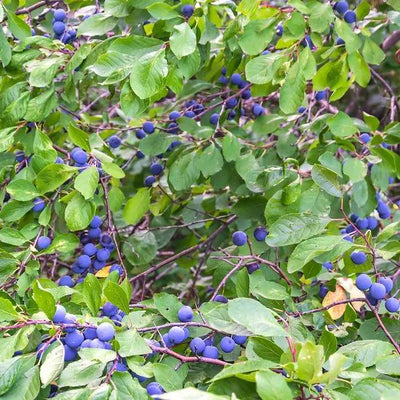
Blackthorn flowers Blackthorn Sloe Berries
Best Value
Country Hedging
Sold as:
Bareroot
from £1.12
Wild Crabapple Flowers Wild Crabapple  Fruit on the tree
Country Hedging
Sold as:
Bareroot
from £1.34
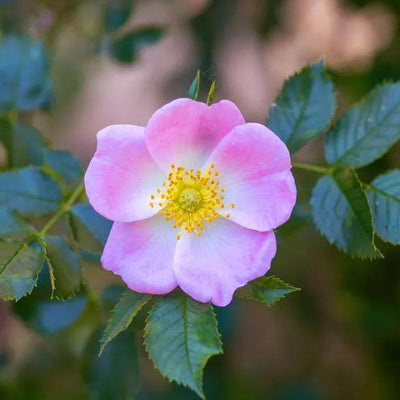
Dog Rose Flowers Dog Rose Flowers
Best Value
Country Hedging
Sold as:
Bareroot
from £1.39
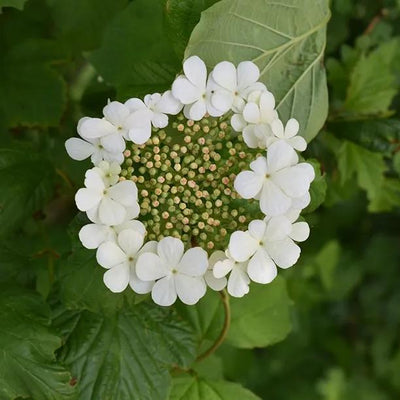
Guelder Rose Flowers Guelder Rose Berries
Country Hedging
Sold as:
Bareroot
from £1.99
Narrow Copper Beech Hedge clipped to under 1 metre wide Copper Beech Hedge in early Summer
Copper / Purple Beech Hedging Plants
Fagus sylvatica purpurea
Sold as:
Bareroot
Trough
Potted
from £3.90
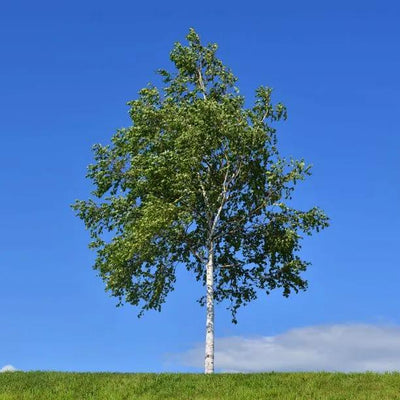
Mature Silver Birch tree Silver Birch Leaves
Fast-growing
Sold as:
Bareroot
Potted
from £1.99
Cherry Plum Fruit Cherry Plum Flowers
Cherry Plum Hedging Plants
Prunus cerasifera
Sold as:
Bareroot
from £1.84
Field Maple hedging Field Maple Seeds
Best Value
Country Hedging
Sold as:
Bareroot
Potted
from £1.29
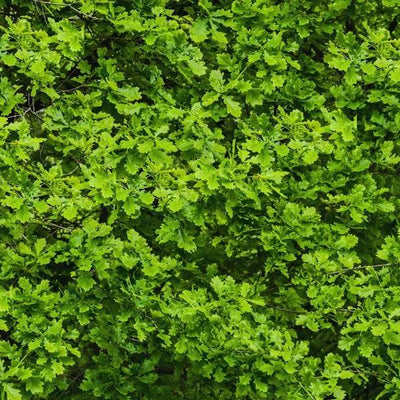
English Oak Leaves English Oak Leaves in Autumn
Sold as:
Bareroot
from £1.49
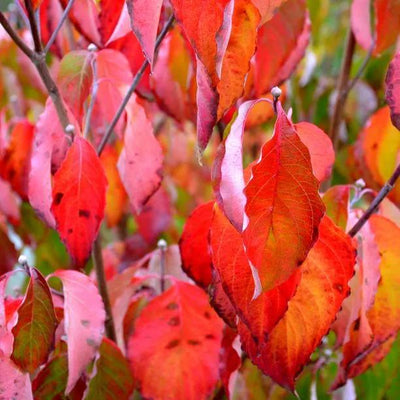
Common Dogwood Autumn Leaves Common Dogwood Flowers
Country Hedging
Sold as:
Bareroot
from £1.99
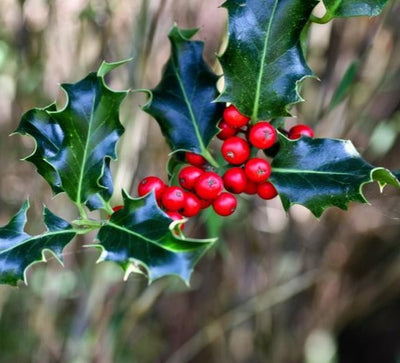
English Holly Hedge Plants Green Holly Ilex aquifolium Berries
Sold as:
Potted
from £6.89
Bird enjoying life on a hawthorn Hedge
Bird Friendly Hedge Plant Pack
Mix of 9 Species Bundles
from £84.99
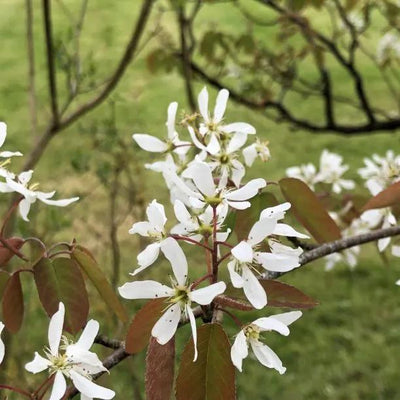
Snowy Mespilus Amelanchier Flowers Amelanchier lamarckii flowers
Juneberry / Snowy Mespilus Plants
Amelanchier lamarckii
Sold as:
Bareroot
Potted
from £2.99
Mountain Ash Rowan Berries Mountain Ash Rowan Berries
Sold as:
Bareroot
from £1.39
Wild Plums on the tree Wild  Plum tree  Flowers with butterfly
Country Hedging
Only 1 Left
Wild Plum Hedge Plants
Prunus domestica
Sold as:
Bareroot
from £3.65
Midwinter Fire Dogwood in Winter Midwinter Fire Dogwood  Flowers
'Midwinter Fire' Dogwood Plants
Cornus sanguinea Midwinter Fire
Sold as:
Bareroot
Potted
30/40cm
3 Litre
from £6.99
Common Alder Leaves Mature Common Alder Tree during Summer
Fast-growing
Sold as:
Bareroot
from £0.99
Load more

About Hedging Plants

Hedge Plants and Sapling Trees

Buy potted plants and Hedge Troughs now for quick delivery

Order bareroot hedge plants for 2026 spring planting season

Browse our UK-grown hedge plants and sapling trees for garden and field boundaries, tall privacy screening, and wildlife habitat.

Available bareroot (November-March delivery) or potted year-round.

Popular Choices:

What is so good about bareroot hedging?

The majority of hedging and sapling trees planted in the UK is bareroot. Buying plants with no soil around the roots doesn't sound ideal the first time you hear it, but it really does mean better plants that are cheaper and easier to work with than pot grown.

The strong, field grown stock transplants so well because it's sleeping in winter, minimising stress.

While out of the ground, plants are kept in ideal cold, humid conditions until picked, quality-checked, and sent by next-day delivery.

Bareroot hedge plants are, compared to pot grown equivalents:

  • Cheaper
  • Stronger, field grown plants
  • Faster growing & better establishing
  • Weigh much less = easier to handle and plant
  • More eco-friendly, plastic free cultivation
  • Wider selection available
  • Only delivered November-March

Some plants or larger sizes only come in pots. We have some popular species for sale as bareroot in winter and potted the rest of the year.

Where you have a choice, bareroot is better.

  • When your order is ready: your mail order hedge plants are delivered by next working day courier (not the next working day after ordering!)
  • Friendly support: if there is anything wrong with your plants when you inspect them, Contact Us within 5 working days

All bareroot plants are covered by our Refund Guarantee, so you can give them a whirl with complete confidence.

To add interest to a new hedge or woodland, you cannot beat a range of garden bulbs .

What are the cheapest hedge plants?

Bareroot is always cheaper than pot grown. Small sizes of hedging plant are better value than large.

Top 4 cheapest deciduous hedges:

Top 4 cheapest evergreen hedges:

For larger projects, mixed hedge packs offer the best value per plant.

Choosing Which Size Hedge Plants to Order

At Ashridge Nurseries, we have a wide selection of UK-grown hedge plants for sale online; the most popular species are delivered in sizes ranging from little 40/60cm tall unbranched 'whips', up to over 1.5m, feathered with side branches.

  • If you are in a hurry for privacy and need instant impact, then pick the biggest size that fits your budget
  • Otherwise, we recommend planting smaller plants, which require less maintenance to reliably produce a satisfyingly dense mature hedge
  • If you are filling gaps in an existing hedge, large replacements are usually better, but small plants can slide into tough soil full of roots, and require less water.

Smaller plants have several advantages

  • Cheaper
  • Easier to plant
  • Establish well because they are dug up with most of their roots intact
  • Need less water in their first summer (but watering is still essential in dry weather)
  • Can be clipped attentively to ensure a bushy base & dense growth

So Which Size Hedging Should I Order?

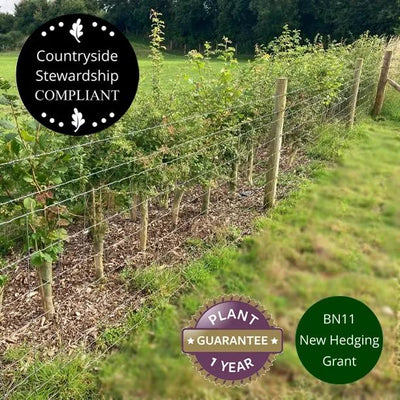
  • Farmers and other large scale hedge or forestry projects prefer 40/60cm tall: it's the minimum required size for Countryside Stewardship hedging , and has the best success rate in field conditions.
  • Bareroot conifers typically have to be sold a bit smaller, e.g. 20/40cm tall for a Sitka Spruce .
  • Many people choose 60/80cm tall as a great compromise between price, size, and waiting time until you get a mature hedge.
  • Plants over 80cm tall are good for creating privacy ASAP, or filling gaps in mature hedges. Popular choice for short, housefront hedges that are only a few metres long.
  • Remember, big plants need more water in their first year to thrive.
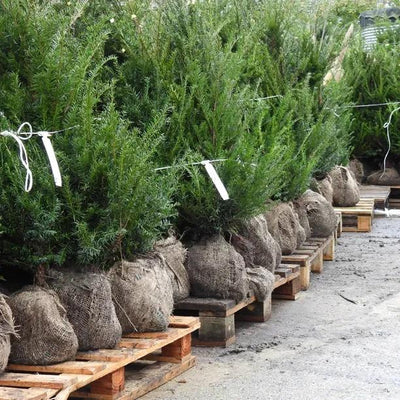
  • Rootballed Yew is the biggest hedging we deliver, along with Instant Hedge Troughs .

Choose the Best Hedging for Me

Most people plant evergreen hedges or beech / hornbeam around their homes for privacy and year round interest, and rugged, deciduous native plants everywhere else.

Most popular hedge plants lists:

More Useful Hedge Plant Lists:

What plants can't I use in a hedge?

Most hedge plants are sapling trees, but not all sapling trees make good hedge plants.

Trees like Birch, Oak, Sycamore, Rowan, and Wild Cherries on their own don't produce satisfying hedges, especially in winter when bare branches provide little screening.

You will spot them growing wild in mixed native country hedges, looking fine surrounded by solid hedge plants like Hawthorn and Blackthorn, but it's not standard practice to buy and plant them as part of the clipped hedge.
However, their hedge-sized saplings or "tree whips" are good for any garden or forestry purpose, and they are often planted every few metres along country hedges, intended to grow as hedgerow standard trees above the hedge line, not clipped with it.

Use tree guards on hedgerow trees so their tops aren't trimmed with the hedge.

When and how do I plant hedging?

Bareroot: November to March
Pot grown: Year round

See our step-by-step guides:

How many hedge plants per metre?

Standard spacing for most hedging:

  • Single row garden hedge: 3 plants per metre, 33cm apart
  • Double row stockproof, grant compliant: 6 plants per metre, 33cm apart along each row, rows 40cm apart
  • Interior garden hedges: 2 per metre
  • Beech & Hornbeam double row: 4 plants per metre, 50cm apart along each row, rows 35-50cm apart
  • Box - Buxus: 5 plants per metre (20cm apart)

For detailed spacing by plant type and purpose, see our complete hedge spacing guide .

Aftercare

New hedges need watering and weeding in their first year to establish, and mulch is recommended. Read more about new hedge aftercare .

Hedge Trimming

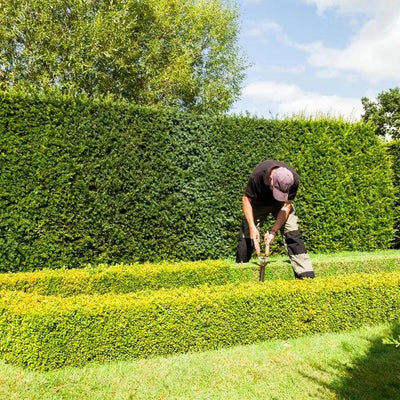
Trimming is essential for dense hedges. Best timing: autumn to early spring (avoid pruning during nesting season, March-August).

For detailed trimming instructions by hedge type:
Hedging

To turn a sturdy fence or wall into a narrow sort of "fence-hedge", climbing plants can do that for you.

Another option is espaliered plants, trained on wires to grow flat against a surface.

Pyracantha is an excellent ornamental for this purpose, being evergreen and carrying ornamental berries well into winter. 

Or you could use most fruit trees: apples and pears are ideal espaliers. They aren't evergreen, but they still make a new focal point in front of the eyesore. 

To cover a shed or garage, consider a vigorous rambling rose.

Bamboo plants aren't true hedging because you don't clip them,
but most running varieties will make a solid screen quickly, and can be
contained using root barrier membrane.

Mainly their intended use!

Most hedge plants are sapling trees (the rest are naturally bushes/shrubs), sold at the ideal starting sizes for hedge use.

  • If you plant, say, a beech hedge plant and leave it to grow naturally, it will become a normal beech tree, not a hedge.
  • All the young trees listed as suitable 'hedge plants' are also used for forestry planting.
  • Only the trees listed as 'sapling trees' are not really suitable for clipped hedge plants (such as Oak or Sycamore: it's not that you can't possibly make a hedge with them, it's more that the final result will look unsatisfactory, especially in winter with no leaves), although most of them are good for taller screening - all such exceptions will be clearly noted in the product description.

Many of the sapling trees sold for hedging in this section are also delivered in large standard sizes, which are the same tree, just grown with a straight, unforked stem.

  • Hedging plants (listed on this page) are mostly delivered bareroot, and used to make a secure, functional barrier hedge.
  • They are clipped / trimmed at least once or twice a year in order to maintain bushy, leafy growth.
  • Ornamental garden shrubs are mostly pot-grown
    and primarily intended for border specimens, and for ornamental, rather
    than barrier hedging (or low edging around paths and borders).
  • They are generally pruned once a year at most, in order to
    encourage more flowering the following year, but many of them only need
    pruning when they are getting too big.

Naturally, there is plenty of overlap: a plant's use in your garden is up to you!

For example, the classic formal evergreen plant for low hedges and topiary, Box, given enough time, could be grown as a tall hedge, and over many decades a tall tree.

Dogwoods are an example of where the wild species, Cornus alba and Cornus sanguinea, are used for practical country hedging, usually mixed with other natives like Hawthorn.

Their colourful cultivars like Cornus 'Midwinter Fire' or C. 'Westonbirt' are typically hard pruned down to a stump every Spring for their display of brightly coloured new shoots.

However, if you want to jazz up your regular hedge with those bright
bark cultivars, or hard prune the wild species as a border specimen for a
natural look, that's your call.

If you don't like how it looks, we'll be here for you when you want to change it.

All Hedges:

1. Water when it is dry: new hedges are on "water life support" for
their first summer at least. We recommend an irrigation system like a leaky pipe. Otherwise, soak the soil around your plants twice a week in dry weather.

2. Hoe down weeds and grass for about 75cm on either side of your hedge;
hand-pull weeds that grow out from under mulch fabric right next to
your plants.

3. Firm the soil back down after a frost, or if your plants are pushed
around by the wind: put up a temporary windbreak if necessary.

4. Check the hedge to remove and record losses; replace them in one go
next planting season. Do not be concerned if evergreens drop their
leaves.

5. Mulch yearly, when the soil is moist and warm.

Weeds kill hedging, more than rabbits in most gardens. Mulches suppress weeds and preserve soil moisture, which gives an astonishing boost to your hedge's growth rate!

• Organic mulches are best for garden hedging, including
grass clippings, compost, woodchips, cardboard, carpet felt, only don't
pile it up around the trunks of your new plants.

• One application of weed control fabric, woven plastic mulch, lasts for years.

Hedge Trimming is the key to dense, bushy foliage.

Developing hedges are best cut in autumn, winter, or very early spring, any time the weather is not freezing. 

A mature hedge can be trimmed any time.

Cut mixed country hedging back to 6-8inches
(15-20cm) immediately after planting, this creates several low side
shoots when it starts to grow in Spring: the base of a bushy hedge.

• Reduce those new shoots by 50% in the autumn/winter following planting.

• Trim gently every winter thereafter, until desired height is reached.

• One rough cut per year is all mature hedges need. Aim to leave 2-3cm of growth from the previous year.

Hedgerow trees like Ash, Oak, or Silver Birch are
planted in the same way as a hedging plant, but only their lowest
branches are pruned off, to encourage a single trunk. A short tree shelter is convenient, so their tops aren't trimmed with the rest of the hedge. 

Hedge Laying is used to regenerate old country
hedges. Well-planted hedging is stock-proof in about 5 years and, if
trimmed every 1-2 years, it should be over 50 years before it first
needs laying. If you want to lay your hedge for the practice, you could
do so from the 5th year onwards.

Trim formal hedging only lightly; do not trim the
leading stem of Yew at all until it reaches the desired height. With
small beech plants, you can pinch out the last leaf buds at the tips of
each stems by hand.

• To look their best, mature formal hedges like Beech and Privet require
clipping twice a year; slow growers like Box and Yew are fine with one.

Slit planting is the easiest way to plant bareroot hedging of 60/80cm or less, as in our video on how to plant a country hedge. Have a bucket of water to hold the plants. 

Push your spade into the soil, to the depth of the roots.

Rock backwards and forwards to widen the slit. For a bigger slit, cut at
right angles to the first slit to make a T or L shaped notch.

Take a plant from the bucket, sweep the roots into the hole from one side without squashing them.

Firm hedging in well with the ball of your foot: don't damage the bark, but be really firm.

The root collars should finish at or slightly above soil level: don't plant them deep.

We recommend planting in teams of three for large jobs. One makes the
slit, one sweeps the roots down into it, and one firms the soil back
in, checking it's at the right level. An amateur team ought to manage
500 plants a day, or 100 metres of double rot hedging.

Pit or trench planting is for pot-grown hedging and larger bareroots, generally on plants over 100cm tall, as in our video on formal hedge planting

Dig a hole big enough for the roots and centre the plant in the hole
with the root collar barely below ground level. Replace the soil, gently
tugging the plant as you firm it and the soil settles round the roots;
the root collar ends up at, or slightly above, soil level. 

When putting replacements into existing hedging, cut a hole in the
hedge and work over a section of soil, improving it with compost.

Hedge plant protection: Rural locations usually need our perforated spirals against rabbits and voles, and bamboo canes to hold the spiral up with the young plant. For trees that you want to grow above the hedge, we suggest using tree guards and stakes.

Plan your hedge in advance, calculate the spacing, prepare the soil, and be ready to give it the watering & trimming it needs during the first couple of years of growth.

5-minute videos: how to plant bareroot country hedges and how to plant formal hedges

Hedge plants should have a good ratio of root to shoot, so younger
hedge plants up to 80cm tall with their slim roots, which can still be
slit planted, are more convenient. Larger hedging, with its bulky roots,
is harder to plant, requiring more digging.  

A new hedge needs water in dry weather (irrigation pipes make this chore easy), regular weeding or mulch fabric to suppress weeds, and in the countryside protection from rodents and deer: spiral guards with bamboo supports are usually enough, but if deer pressure is high then sturdier tree guards with small stakes are wise, unless you fence off the area.

In our experience, deer repellents are effective until a hungry deer in winter braves them for a meal!

Ready the Ground: In late summer, destroy the weeds or cut them short and smother them with polypropylene weed control fabric. Doing this early is best, as it allows time for a second weeding. 

Hedge spacing: 

Almost all bareroot hedging is 33cm apart, 3 plants per metre for a
single row, or 6 plants per metre in stockproof, staggered double rows
45cm apart (for a wildlife hedge, leave up to 100cm between rows).

For a country hedging grant, the approval document tells you the spacing to use. 


Formal hedges can be 3 plants per metre for boundary hedges or 2 per metre for interior hedges and large rootballed plants.

Box (Buxus) hedging is best planted at 5 per metre, 20cm apart.

Trees and shrubs that make good hedge plants respond well to clipping by producing bushy, even regrowth.

Birch, Oak, Sycamore, Rowan & Whitebeam, and Wild Cherries can
all be found growing in country hedges, and they look fine when
surrounded by solid hedge plants like hawthorn and blackthorn, but on
their own they produce an unsatisfying hedge, especially in Winter when
the bare branches provide little privacy or wind break. Sycamore is best
removed, it tends to smother its neighbours. 

Hedging With Berries: provide extra interest & wildlife value, and several soft fruit bushes can be grown as / inside hedges as a treat beside a gate. 

By default, people plant evergreen hedges or beech around their homes
for privacy and year round interest, and rugged, deciduous native
plants everywhere else. 


More Hedge Plant Lists:

  • Farmers and other large scale hedge or forestry projects prefer plants 40/60cm tall: it's the minimum required size for Countryside Stewardship hedging,
    and has the best success rate in field conditions.
  • Conifers for forestry typically have to be sold a bit smaller, e.g. 20/40cm tall for
    a Sitka Spruce. This is good for gardens too, as buying them in larger sizes is a lot more expensive with a much higher risk of failure.
  • Many home gardeners choose 60/80cm tall as a great compromise between price, size, and waiting time until you get a mature hedge.
  • Plants over 80cm tall are good for creating privacy ASAP, filling gaps in mature hedges, and when they suit your budget.
    Remember, big plants need more water in their first year to thrive.

    Rootballed Yew is the biggest hedging we deliver, along with Instant Hedge Troughs.

Many hedge plants are
delivered in sizes ranging from little 40/60cm tall unbranched 'whips',
up to almost two metre, bushy specimens for the most popular species.

  • If you are in a hurry for privacy and need instant impact, then of course pick the biggest size that fits your budget.
  • If you are filling gaps in an existing hedge,
    large size replacements are usually better, but small plants are easier
    to slide into soil full of roots. Inspect the ground well and test
    getting a spade or pickaxe down along it.

Smaller plants have several advantages

  • Cheaper
  • Easier to plant
  • Establish well because they are dug up with most of their roots intact
  • Need less water in their first summer (but watering is still essential in dry weather)
  • Can be clipped attentively to ensure a bushy base & dense growth