Sold as:

from £6.99



Sold as:
from £19.99
 5 Star Service Rating




 Secure, One-Tap Checkout
 5 Star Feefo Rating
 Hand Picked, Delivered to Your Door!
 1 Year Bareroot Guarantee
 Platinum Trusted Service Award 2026
 Mail Order Plant Experts - Est. 1949
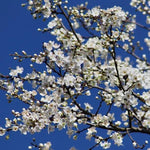
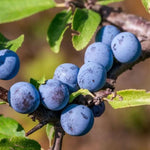
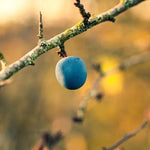
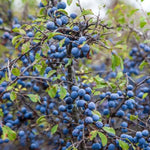






Blackthorn, Prunus spinosa, is a thorny, deciduous native that makes a stock-proof country hedge, with small white flowers in early spring and bloomy black sloes in autumn. Unpruned it reaches about 4m; as a hedge you trim it once a year to whatever height you need.
Blackthorn, or sloe, is a native tree that makes a wonderful deciduous wildlife hedge. Its sharp black thorns provide an impenetrable barrier for keeping intruders out and stock in, while a froth of small white, open flowers bring sublime beauty in early spring, an iconic sight in the British countryside. In autumn, the shrub produces small purple-black sloes, covered in a pretty bloom; these berries make wonderful sloe gin. Blackthorn is the perfect secure boundary to any sizeable garden or field, and is tough enough to be a roadside hedge, in sun or part shade, and will thrive in any soil except waterlogged sites. Fast growing, it'll reach about 4 metres, but is easily kept in check by annual pruning.
The plants on this page are bareroot saplings, ideal for planting as hedging or in woodland projects. If you're looking for another kind of hedging, evergreen perhaps or something for smaller gardens, here's where you can browse our full range of hedging.
Delivery season: Blackthorn hedge plants are delivered bareroot during late autumn and winter, approximately November-April inclusive.
Choosing a size: Small plants are cheaper and overall more convenient for hedge use, unless instant impact is your priority. If you are only buying a few plants for ornamental use, then you may as well use bigger ones. All our hedge plants are measured by their height in centimetres above the ground (the roots aren't measured).
It's extremely hardy and tough. It'll grow anywhere with decent drainage, chalk included. It's a native British shrub, recognisable for its distinctive clouds of white spring blossom on bare branches, then purple sloes in autumn. It's also drought tolerant.
It's a tough hedging plant and will regrow quickly after clipping, so it can be hard pruned annually to keep it in check. Do this wearing suitably tough gloves, in winter but not in freezing temperatures. Blackthorn can also be left to grow, if you prefer a more natural shape to your hedge.
Blackthorn has a reputation for its sharp thorns, so take care where you plant it; however, its dense network of foliage and branches means it's popular with birds who use it for nesting and for foraging under cover (they also love the autumn sloes). Plants are quite vigorous, and can grow up to 60cm each year.
Spacing a Blackthorn hedge:
Plant at 3 plants per metre, 33cm apart.
A blackthorn hedge is great anywhere you want to keep out intruders, keep animals in or encourage wildlife, in all but the smallest of gardens. In a city garden, it's definitely a statement of rural intent, that frothy white spring blossom bringing a hit of countryside charm. Consider it for enclosing an allotment, as it provides a home for a huge range of wildlife and pollinators and also gives you sloes for gin and vodka in October and November.
The hedge alone will be a real draw for wildlife, attracting pollinating insects, birds and all kinds of small mammals to its dense cover. To continue the ecological theme, underplant with common dog violet, hedge woundwort or dead nettles and don't tidy up too much. The leaves and fallen berries are rich pickings for hedgehogs, insects and other creatures. Team it with a wildflower meadow on a sunny bank for maximum pulling-power for insects, birds and mammals.
Blackthorn is an essential component in some of our hedge mixes, including our Bird Friendly hedging, and combines well with other native hedging plants such as wild crab-apple and dogwood. Treat as a good old-fashioned pick and mix to create a mixed hedge to provide fruit, flowers and protection all year round.
Blackthorn is one of the two thorns that hold a native hedge together. Hawthorn is the other, flowering in May when the blackthorn has finished, and Hazel is the usual third. To have the mixing done for you, our blackthorn-based hedge mix is the traditional sheep-country recipe. Native bluebells do well at the foot of a thorn hedge, and the rest of the natives are in our native hedging plants.
We sell more bareroot hedging than almost anyone in the UK, so your blackthorn is lifted to order and does not sit about. It is grown for us as hedging from the outset. Ashridge holds the Feefo Platinum Trusted Service Award, and bareroot plants are guaranteed for 12 months.
Three per metre in a single row, 33cm apart. For a stock-proof hedge, six per metre in a staggered double row, the rows 40cm apart.
Blackthorn flowers first, in early spring on bare wood, and bears sloes. Hawthorn flowers in May and bears red haws. Blackthorn suckers into a thicket; hawthorn does not.
Yes. The RHS lists blackthorn for chalk, clay, loam and sand, acid or alkaline. What it will not stand is waterlogging. Full sun gives the most blossom and sloes.
It does, and the RHS advises removing them unless a solid thicket is what you want. In a field hedge that is a virtue. Beside a lawn, mow them off.
From November to April, while dormant, on any day when the ground is not frozen or waterlogged. Water the row through its first summer and keep it weed-free for two or three years.




 Sign In
 Saved items