Sold as:

from £6.99

Sold as:
from £19.99
 5 Star Service Rating




 Secure, One-Tap Checkout
 5 Star Feefo Rating
 Hand Picked, Delivered to Your Door!
 1 Year Bareroot Guarantee
 Platinum Trusted Service Award 2026
 Mail Order Plant Experts - Est. 1949
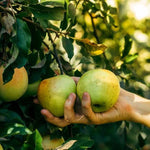
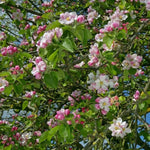
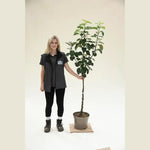
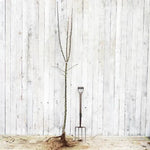
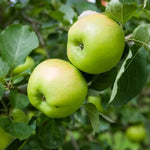

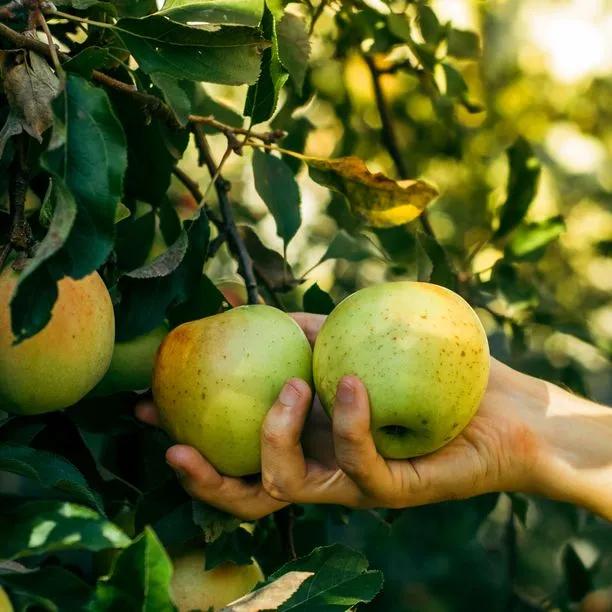
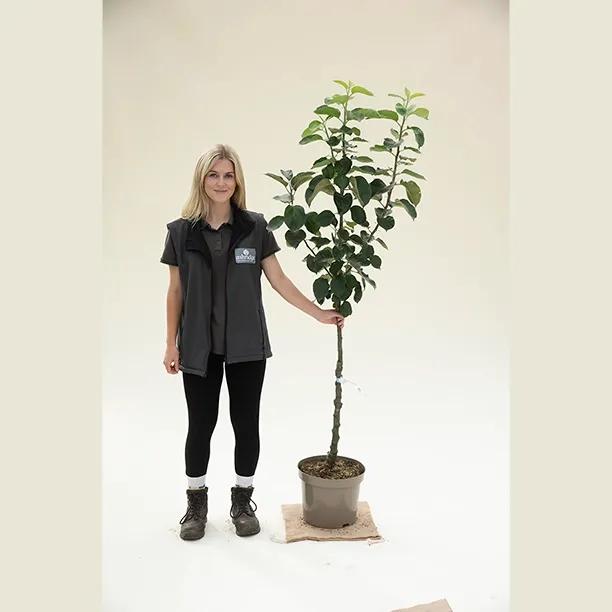
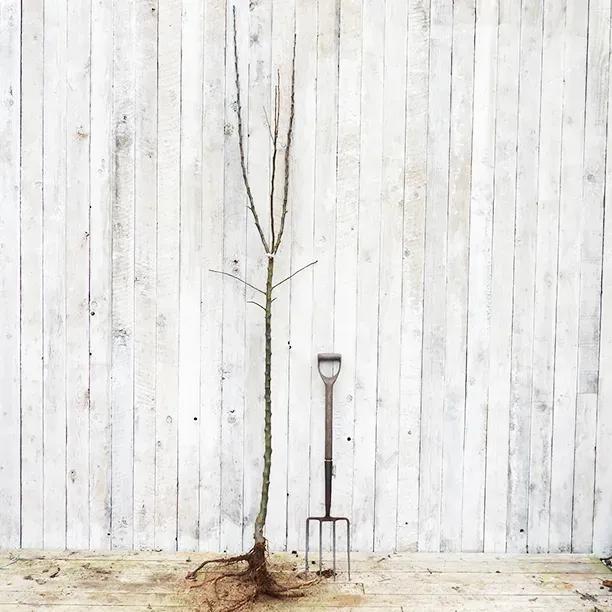
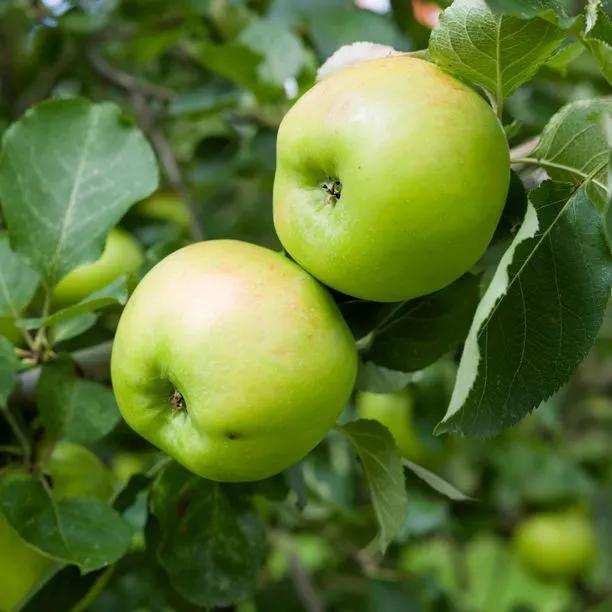



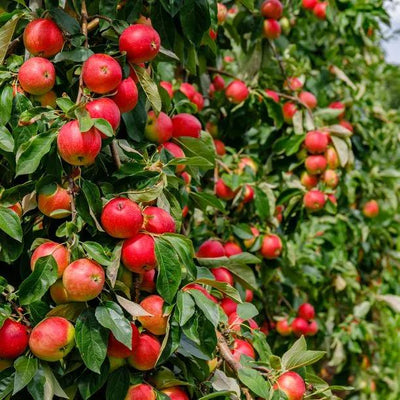
Bramley's Seedling is the classic British cooking apple: a vigorous tree with heavy crops of large, sharp apples that are picked in early October and cook to a smooth purée. It holds the RHS Award of Garden Merit. It is a triploid in pollination Group C, so it needs two other apple varieties nearby.
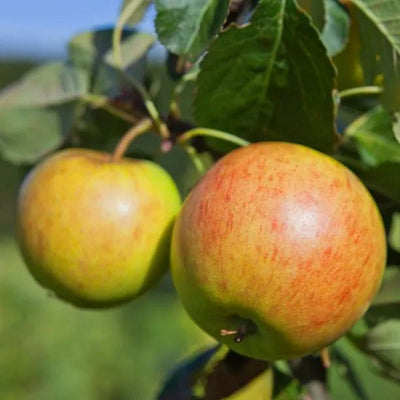
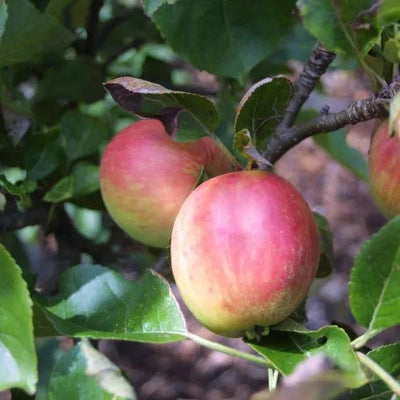
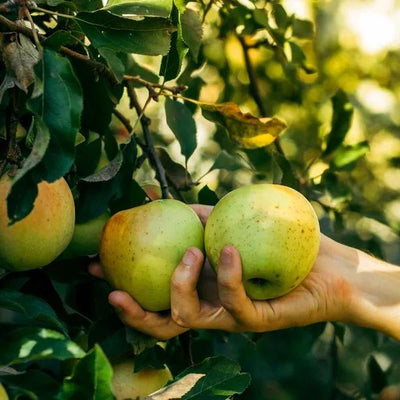
Bramley Apple trees produce the most popular cookers. These are great big, flat-bottomed apples, usually with a rusty coloured, striped flush. The white flesh is the most acidic of British cooking apples; a raw Bramley apple contains about 2.5 times more vitamin C (ascorbic acid) than the average.
Bramley Seedlings have a distinctive, sharp flavour that mellows with storage so that by spring they're almost tart dessert apples. Freshly picked, they juice very well indeed and mixed with other apple varieties, it makes excellent apple juice: go for about 70% Bramley's, 30% sweet varieties. It's also added to many ciders.
Unlike dual-purpose apples such as Blenheim Orange or Howgate Wonder, which keep shape when cooked, Bramley breaks down completely, which is exactly what you want for a smooth apple sauce or a light-textured pie filling. If you prefer your apple slices that stay intact, say in a tart, then you might prefer an even firmer cooker like Grenadier, but for classic British baking, the trusty Bramley remains unbeatable.
Bramley Seedlings are vigorous trees with heavy crops ready to pick in early October. They're partial-tip bearers, so only need pruning to keep them open or to remove dead wood.
Browse our other apple trees or read our guide to buying the right apple tree.
Rootstocks for Bramley apple trees:
All of our Bramley trees are grown on MM106 rootstocks.
Pollination Partners for Bramley:
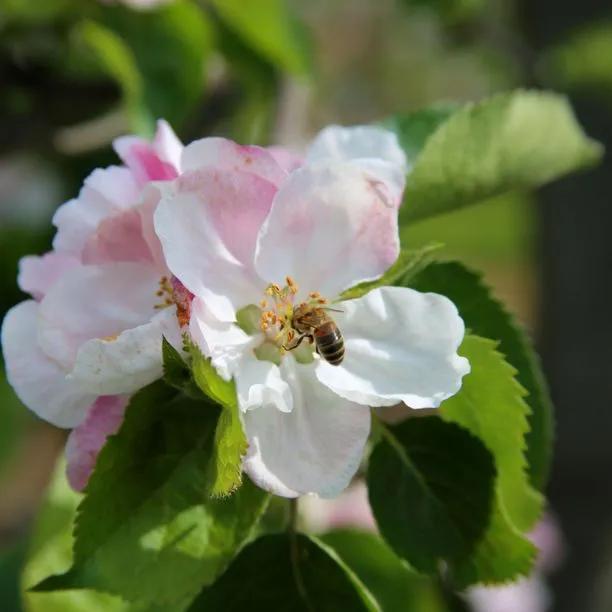
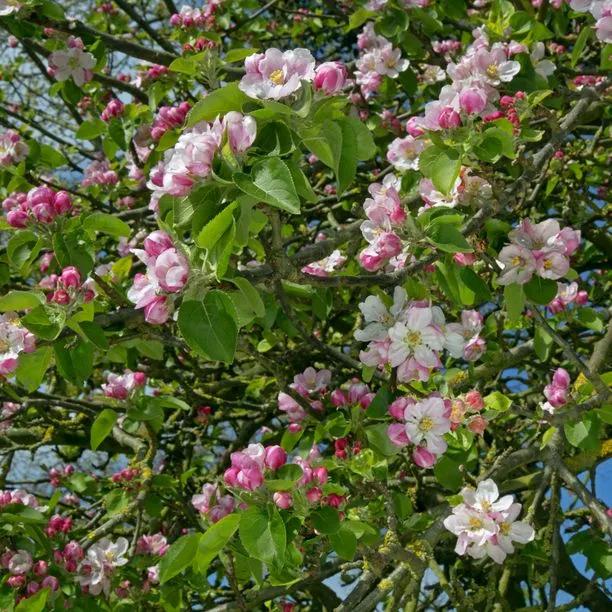
Bramley is a self-sterile triploid in Group C: its flowers must be pollinated by other apple trees in pollination Groups B, C and D to make any fruit, and it cannot pollinate other trees. Plant two other varieties with it, so that they pollinate each other as well as the Bramley. Use our interactive Guide to Apple Tree Pollination for a full list of partners & more tips about pollination.
Known by all as a Bramley, the proper name is Bramley's Seedling.
The tree was raised from a seed in 1809 (hence the "Seedling" bit) by Mary Ann Brailsford, a young girl at the time (undoubtedly with help from her mum), with no record of its parents.
The house, 75 Church Street in Southwell, Nottinghamshire, now owned by Nottingham Trent University and garden, were later bought by a Mr Matthew Bramley, and the tree was first raised commercially by Mr Merryweather's Nursery in 1865.
The original tree was cared for by Miss Nancy Harrison for some 70 years between the end of WW2 and 2014 before passing the torch on to Nottingham Trent University.
It was hit by lightning in the early 1900's and fell over, but shrugged off the damage and re-rooted itself.
However, at the time of writing, it is not long for this world: it contracted honey fungus in 2016, but as of 2022 the tough old girl was still fruiting.
In a sense, all Bramley trees are the original because they are propagated through grafts, which mean they are clones of their parent (above ground, at least).
The RHS awarded it a first class certificate in 1893.
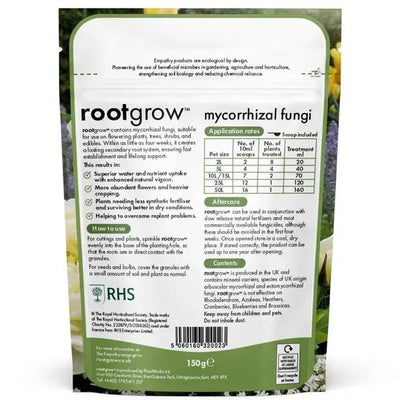
Your Bramley needs two partners that also suit each other. James Grieve and Discovery are both in Group C, and Egremont Russet is in Group B: any two of the three will pollinate a Bramley and each other. All our apples are on MM106, so they match in an orchard. Dust the roots with Rootgrow as you plant.
Your Bramley is grown on MM106, the same rootstock as all our apple trees, and our bareroot maidens are pruned before they leave, so the first cut is already made. Ashridge Nurseries is a Which? Best Plant Supplier 2025, and bareroot trees are guaranteed for 12 months.
You need two. Bramley is a triploid: its pollen is no use to itself or to any other tree. Plant two other varieties from groups B, C or D, and they will pollinate it and each other.
Any variety in groups B, C or D that is not itself a triploid. From our range, James Grieve, Discovery and Grenadier are in Group C, and Egremont Russet is in Group B.
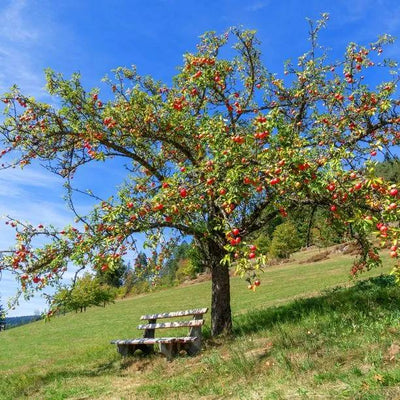
The rootstock sets the size. On MM106, which all ours are on, your tree will reach about 4 to 4.5 metres tall and wide. Bramley is vigorous, so give it the room.
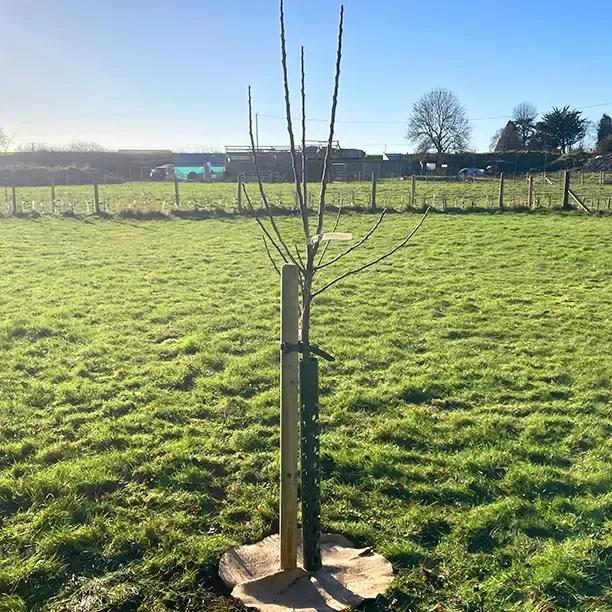
A maiden is a one-year tree for you to train as you like. A bush is already trained on a short trunk. A half-standard has about 1.2m of clear stem.
Lightly. It is a partial tip bearer, carrying some of its fruit at the ends of shoots, so do not shorten every shoot. Keep the centre open and take out dead or crossing wood.
Pick yours in early October. In a cool, dry place they will keep you going until March, and the sharp flavour mellows as they store.




'Bramley' Apple Trees needs a different apple tree nearby, in flower at the same time, to produce fruit. The varieties below are compatible pollination partners.


 Sign In
 Saved items