

Sold as:

from £6.99
Sold as:
from £19.99
 5 Star Service Rating




 Secure, One-Tap Checkout
 5 Star Feefo Rating
 Hand Picked, Delivered to Your Door!
 1 Year Bareroot Guarantee
 Platinum Trusted Service Award 2026
 Mail Order Plant Experts - Est. 1949
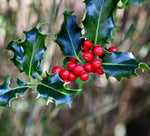
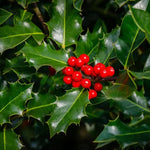
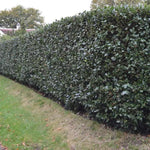
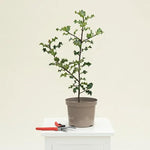
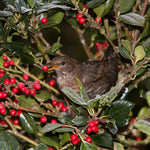





English Holly, Ilex aquifolium, is a native evergreen with glossy, spiny, dark green leaves that clips into a dense, stock-proof hedge, and it holds the RHS Award of Garden Merit. It grows on any drained soil in sun or partial shade, and the female plants carry red berries.
Common Green Holly (Ilex aquifolium) is familiar to everybody and risks being taken for granted. Which would be a mistake: it's a special plant, holder of an RHS Award of Garden Merit, and here's why. Holly will grow into a beautifully shaped, medium-sized tree if left to its own devices, or it makes a dense and glossy hedge all year round. It makes the best possible wind break, due to its densely packed, stiff, and contoured leaves. It's a highly responsive plant for clipping into almost any formal shape. Add the fact that it's stock proof and can provide a lifetime's supply of Christmas wreaths and berries, and everyone should have some in their garden in one form or another. Simply one of the best all-round hedge plants that we grow and sell.
Ilex aquifolium is so easy going, settling in well on all soils from acid to alkaline, sandy and dry to claggy clay. Holly will thrive in shade, on the coast, or next to the pollution of a busy road and, once established, is immune to long, hot, drought-ridden summers. It won't grow in the middle of a swamp, but it's fine next to one where the soil is wet most of the year and gets waterlogged periodically.
Start small. Ilex and its varieties grow away much more strongly when started off young: setback from transplanting increases with age. The amazing textural effect it achieves can be contrasted with yew or laurel to create a tapestry hedge. As with all evergreen hedges it's the perfect backdrop for a mixed and colourful herbaceous border. Try to include some bright winter reds to tie in with the berries: Skimmia rubella, Cornus sibirica or Cornus alba spaethii would all be obvious choices. Hollies also lend themselves to having their lower trunk stripped of branches so that you end up with a lollipop; an avenue of these looks splendid. Especially so if you use a variegated variety.
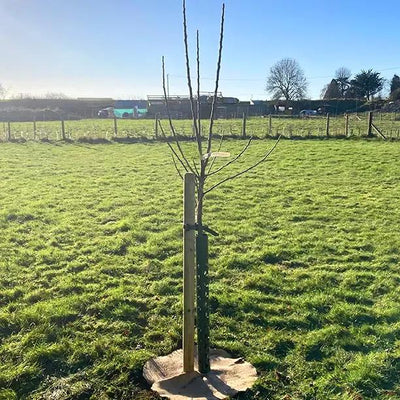
Young plants are a target for rabbits, and they like to chew straight through the stem. If rabbits are present, young holly plants will need protection with spirals or tree guards for the first couple of years. Bigger sizes have thicker stems and are unlikely to be targeted by a rabbit with other options.
Holly wood is prized by fine furniture makers who use the pure white wood for inlay work. The bits of holly that you cannot use for furniture make good firewood. Mature holly bushes and trees are a popular habitat for many birds and insects, especially robins, thrushes and blackbirds who have a built-in berry canteen. And while nothing is immune to honey fungus, holly is on RHS list of resistant plants.
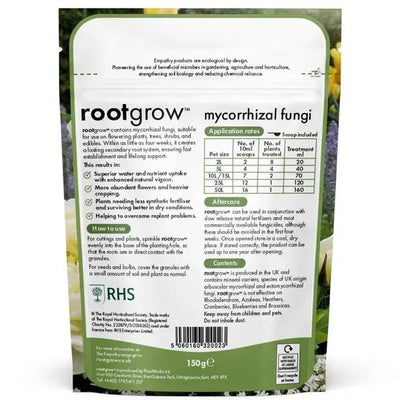
Holly and Yew are both native evergreens that take a formal clip, and matt yew beside glossy holly is the old tapestry hedge. Cherry Laurel plays the same trick with a bigger leaf. For a country boundary, plant holly among our native hedging plants; the rest of the evergreens are under evergreen hedging. Dust the roots with Rootgrow as you plant.
Ashridge hedging is grown for one job, to be a hedge, by specialist growers working to our specification. Your holly arrives pot-grown with its roots undisturbed, which suits an evergreen that dislikes being moved. Which? named Ashridge Nurseries Best Plant Supplier 2025.
Three per metre, 33cm apart, in a single row, which is how evergreens are usually planted. Measure the run, multiply by three and add a few spares.
Hollies are male or female, and only a female with a male nearby sets berries. The plants you receive are a natural mix, about half and half, so a hedge of any length has both.
When young, yes. The RHS calls it slow-growing at first and gives 20 to 50 years to full height. Start with small plants: they settle in faster than big ones.
In early spring, the RHS advises. Holly clips into almost any formal shape. Keep the hedge wider at the base than the top and it stays green to the ground.
Yes. The RHS lists it for sun or partial shade, any aspect, exposed or sheltered, on chalk, clay, loam or sand. It wants drainage: moist ground is fine, a swamp is not.
Where there are rabbits, yes. They chew through thin stems, so fit a spiral guard on a cane to each plant for the first couple of years, then take it off.




 Sign In
 Saved items