
Sold as:

from £10.95

Sold as:
from £19.99
 5 Star Service Rating




 Secure, One-Tap Checkout
 5 Star Feefo Rating
 Hand Picked, Delivered to Your Door!1 Year Bareroot Guarantee
 Platinum Trusted Service Award 2026
 Mail Order Plant Experts - Est. 1949
 1 Year Bulb Guarantee




Victoria is a self-fertile, dual-purpose plum with dark red fruit in August and September, and it holds the RHS Award of Garden Merit. On St Julien A rootstock it makes a tree of 4.5 to 5m that is easily kept at 3 to 4m.
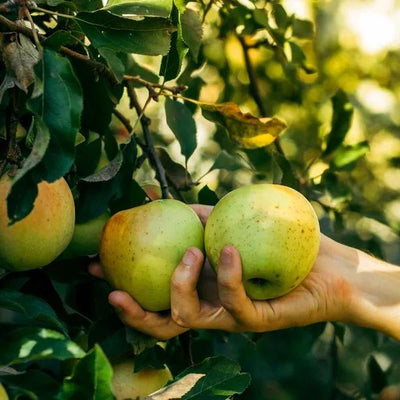
Victoria plum trees are a safe bet. They're reliable croppers that produce one of the best known eating plums in huge quantities: sweet and juicy, and excellent for cooking, jam making and desserts. They're famous for breaking under the weight of their crops if you neglect to thin them at the fruitlet stage, removing at least every other plum, even two thirds on a really productive tree. You will get larger and better fruit this way, so your yield won't decrease as much as you might expect, and will certainly be bigger than if a branch falls off.
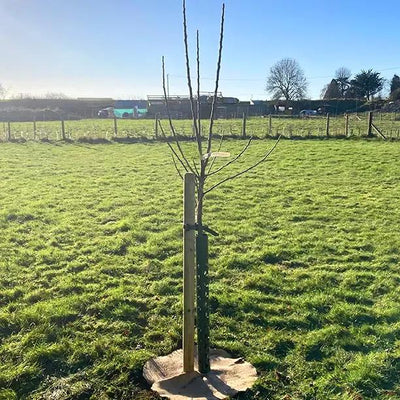
Please note: The maiden, bush and half-standard trees are sold bareroot and delivered in winter (November-April). The 10 litre bush is pot grown and delivered year round.
Browse our range of plum trees, or all our fruit trees.
Like most stone fruit, she loves richer soils and a warm spot. They're self-fertile and pollinate other plums, damsons and mirabelles well. The season for picking usually runs from August into September.
These plums have a reputation for being wasp magnets; they crop so heavily that there is almost always some over-ripe fruit around the place. Hang wasp traps (made out of glass jars half-filled with sugary water or beer) on at least three or four "corners" of your trees in early July. Clear them out and keep them going, and they'll neutralise the wasp scouts before they make it home to inform their sisters.
Victoria did not start out as Victoria. It was first called Sharp's Emperor. A nurseryman named Denyer bought the variety, introduced it commercially and renamed it Denyer's Victoria in 1837, the year the young Queen came to the throne. Time wore the name down to plain Victoria.
Victoria needs no partner, but it makes a good one. It is the pollinator we name for Opal and Cambridge Gage, both only partly self-fertile, so one Victoria can carry a small orchard. For a second plum, Czar and Marjories Seedling are both self-fertile too. Lavender nearby brings in pollinating insects in a cold spring, and daffodils under the canopy die back before the tree wants the water.
Your Victoria is grown on St Julien A, and our bareroot maidens are pruned before they leave, so the first cut is already made. Ashridge Nurseries was named Which? Best Plant Supplier 2025. Bareroot trees are guaranteed for 12 months, as are pot-grown trees delivered leafless between November and March.
No. Victoria is self-fertile and a single tree crops heavily. It sits in pollination group C and is itself the partner for plums and gages that are only partly self-fertile, such as Opal.
In summer, never in winter. Plums and cherries catch silver leaf through winter cuts, which apples and pears do not. Prune Victoria after picking, or in late spring once growth is under way.
On St Julien A, the rootstock all our plums are on, Victoria reaches 4.5 to 5m if left alone and is easily kept at 3 to 4m. Allow 5m between trees.
A maiden is a one-year tree to train as you like. A bush is already trained on a short trunk. A half-standard has about 1.2m of clear stem, tall enough to mow under.
Not for long. On St Julien A this is a tree for the ground, and it resents a container within a few seasons. The pot-grown bush is for planting out, in any month.
Too many plums. Victoria sets more fruit than its wood can carry, so thin the fruitlets in early summer. You get bigger plums, and you keep your branches.






 Sign In
 Saved items