
Sold as:

from £10.95

Sold as:
from £19.99
 5 Star Service Rating




 Secure, One-Tap Checkout
 5 Star Feefo Rating
 Hand Picked, Delivered to Your Door!1 Year Bareroot Guarantee
 Platinum Trusted Service Award 2026
 Mail Order Plant Experts - Est. 1949
 1 Year Bulb Guarantee




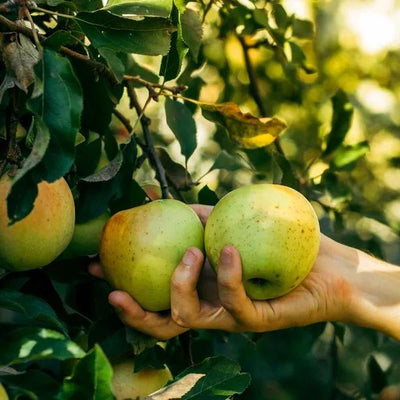
Cambridge Gage is a reliable Greengage with sweet, honey-flavoured fruit in late August, as good fresh as it is in jam. It is partly self-fertile, so it crops best beside another Plum such as Victoria. It holds the RHS Award of Garden Merit and wants a warm, sheltered place in full sun.
The Cambridge Gage is one of the most popular greengage trees. It's almost as delicious as the Old Greengage, but while that tree often bears quite small yields, the Cambridge gage is a reliable cropper and partly self-fertile. The sweet fruit are equally good for eating fresh and making jam. The trees are naturally compact and shouldn't require any pruning.
Browse our range of plums & gages or all of our fruit trees.
Rich soil is important: dig in plenty of good manure and compost before planting.
Soil drainage must be good.
The more sun your trees get the better your crops will be.
Cambridge Gage Rootstocks:
Please note that all our Cambridge Gage trees are on St Julien A rootstocks unless otherwise described.
Pollination Partners for Cambridge Gage:
Your trees are partly self-fertile, and crop best with a pollination partner such as Victoria. Your trees are in pollination group D, which means that they'll cross pollinate with trees in groups C, D and E of our plum tree pollination table.
Discovered in Cambridge by Chivers & Son as a chance seedling of the venerable Old Greengage. Trialled in 1927.
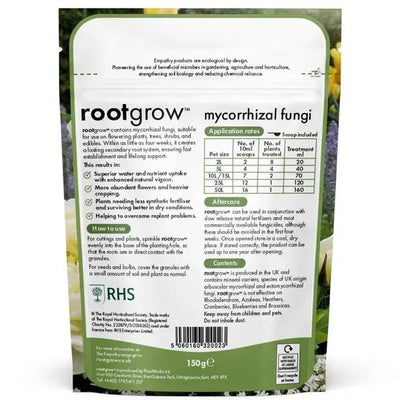
Cambridge Gage flowers in group D and crops best with a partner from group C, D or E. Victoria and Czar are both in group C, and Czar is self-fertile as well, so it crops well in its own right. Marjorie's Seedling is in group E. Lavender nearby brings more pollinating insects in a cold spring. Dust bareroot roots with Rootgrow as you plant.
Ashridge has sold trees since 1949 and is a Which? Best Plant Supplier 2025. Your Cambridge Gage is grafted onto St Julien A rootstock, and maidens are pre-pruned before despatch for the form you choose. Bareroot trees are lifted to order while dormant and guaranteed for 12 months.
It is partly self-fertile, so a lone tree sets some fruit. For full crops, plant it with Victoria or another Plum that flowers in group C, D or E.
On St Julien A rootstock, you can keep it at 3 to 4 metres with pruning. Left alone, it reaches 4.5 to 5 metres. Allow about 5 metres between trees.
In summer, never in winter. Plums and Gages can take in silver leaf disease through winter cuts. A bush needs little pruning once its shape is made.
In late August. Leave them on the tree until they are fully ripe and give a little in the hand: a Gage picked early never develops its full sweetness.
Yes. It suits all training forms, fans included. Buy a maiden, tell us the form you want, and we pre-prune it before despatch.
A sheltered spot in full sun, out of any frost pocket, on rich soil that holds moisture but drains. Keep a circle of bare soil or mulch around the trunk while it establishes.
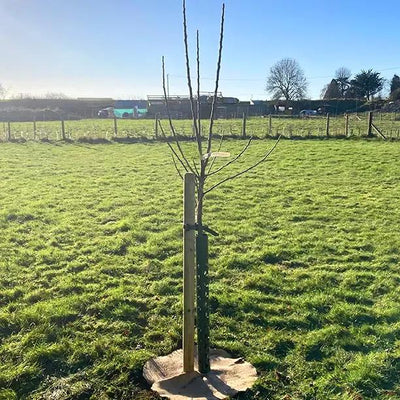
Bareroot only, from November to April, while the trees are dormant. You can order at any time of year and your tree is lifted and sent once the season opens.







 Sign In
 Saved items