
Sold as:

from £10.95

Sold as:
from £19.99
 5 Star Service Rating




 Secure, One-Tap Checkout
 5 Star Feefo Rating
 Hand Picked, Delivered to Your Door!1 Year Bareroot Guarantee
 Platinum Trusted Service Award 2026
 Mail Order Plant Experts - Est. 1949
 1 Year Bulb Guarantee




Opal is one of the first Plums of the year: small, sweet, reddish-purple eating Plums with pale yellow flesh and a Gage flavour, ripe in early August. It is a reliable cropper bred in Sweden from Oullins Golden Gage, and it holds the RHS Award of Garden Merit.
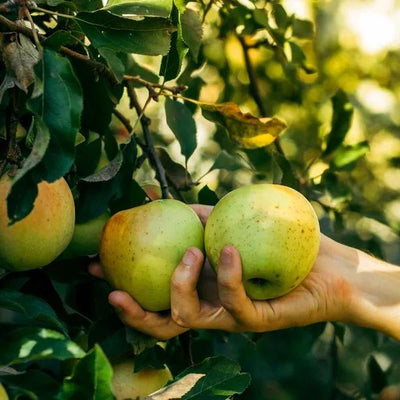
Opal produces bite-sized, deliciously sweet dessert plums in a great colour range, from sunshine yellow to deep purple on the same fruit. The pale yellow flesh has a signature Greengage flavour.
They crop extremely early, in a good year your first fruit's ready at the end of July.
Because they ripen so early, Opals do best in the sunnier South of England, and reward being planted in a south facing spot, perhaps trained against a south facing wall as a fan.
Browse our range of plum trees, or all our fruit trees.
Delivery season: Bareroot plants are delivered from late autumn to spring, November to April.
Your tree is partly self-fertile, so it sets a crop alone; a pollination partner like Coe's Golden Drop (crops later) or Rivers Early Prolific (crops earlier) is not strictly necessary, but will improve the harvest.
Plum trees are natives of a warmer climate and need some special consideration to encourage strong growth, resistance to disease and bumper crops. They're only pruned in summer, to reduce the risk of silver leaf disease.
Our plum trees are on St Julien A rootstocks.
Sweden's climate (in the south), is perfect for breeding hardy plants that will succeed in Northern Europe. Opal is one of many superb creations of the Horticultural Research Stations in Alnarp and Balsgard, near Sweden's southern tip.
It was crossed in the 1920's from two classic plum trees, the robust English Early Favourite and very tasty French Oullins Golden Gage.
Most of our fruit trees are delivered in up to 3 shapes (maiden, bush, and half standard), and you can buy selected varieties as potted mini patio trees: scroll up to see what's in stock.
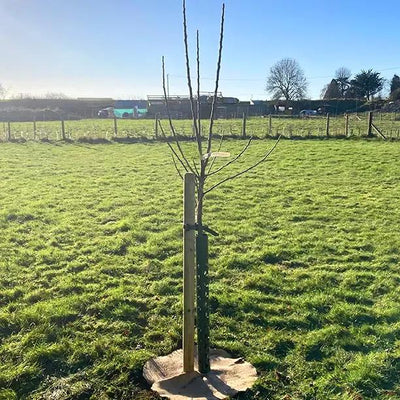
Maiden: Unbranched tree, the most basic starting size, which you can train into fans, or the forms below (apart from mini patio trees).
Bush: Freestanding tree with a short trunk about 60cm tall. It'll grow to about 3m. Ideal for small gardens.
Half-Standard: A freestanding form with a trunk about 120cm tall. It'll grow into a full sized, "normal" tree, about 4m. Ideal for orchards, easy to mow underneath.
Guide to Fruit Tree Sizing.
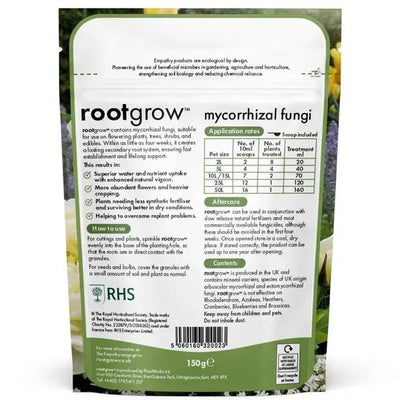
Opal sets a crop alone and a better one with a partner. The partner our fruit reference names is Victoria, in the same flowering group, and Czar is in group C too, which adds a cooking Plum to an eating one. Our Plum pollination chart shows every group, and our Plum pruning guide covers the summer cut. Dust bareroot roots with Rootgrow as you plant.
Ashridge has sold trees since 1949 and is a Which? Best Plant Supplier 2025. Your Opal Plum tree is grafted onto St Julien A rootstock, and maidens are pre-pruned before despatch for the form you choose. Bareroot trees are lifted to order while dormant and guaranteed for 12 months.
Not strictly. Opal is partly self-fertile, so one tree sets fruit alone. It flowers in group C and crops better with Victoria or Czar nearby.
In early August, and at the end of July in a good year, which makes Opal one of the earliest Plums. A warm, sunny spot brings the fruit on.
Sweet, with a Gage flavour that comes from its parent, Oullins Golden Gage. It is an eating Plum, best straight from the tree.
On St Julien A rootstock, you can keep it at 3 to 4 metres with pruning. Left alone, it reaches 4.5 to 5 metres. Allow about 5 metres between trees.
Opal flowers early, and the blossom is at risk from spring frosts. Give it a sheltered spot, or train it against a sunny wall.
In summer, never in winter. Plums can take in silver leaf disease through winter cuts.
Bareroot only, from November to April, while the trees are dormant. You can order at any time of year and your tree is lifted and sent once the season opens.






 Sign In
 Saved items