
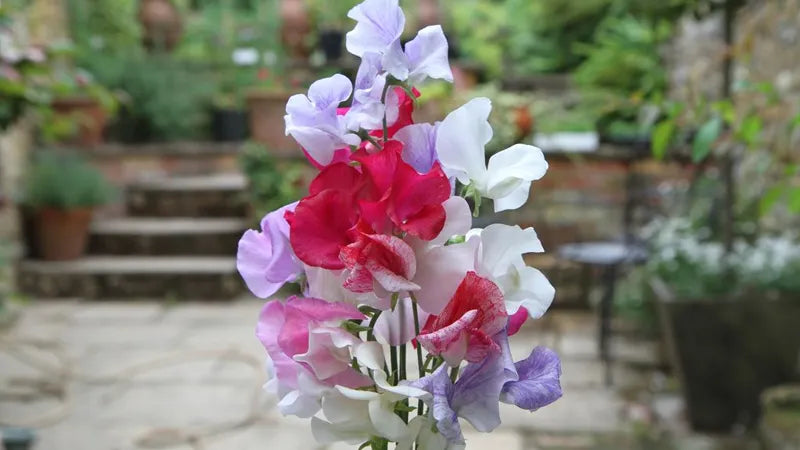
Sweet peas (Lathyrus odoratus) are hardy annual climbers in the legume family, reaching 1.5–2m on simple supports and flowering from June until September in the UK. They are grown almost entirely for their scent — a small bunch fills a room — and the more you pick, the more they flower. Despite the name, they are not related to edible peas; every part of the plant is toxic, and the dried seeds should be kept away from children.
You might also want to know:
- How do I grow sweet peas in pots?
- What’s the difference between perennials and bedding plants?
- How do I grow wisteria?
- Which clematis should I grow?
This guide covers how to plant, feed, train, support, and care for sweet peas in the UK, along with a month-by-month calendar and the common problems that stop them flowering. If you’re choosing between varieties, browse our full range of sweet pea seedlings or try a cottage garden collection. For container growing specifically, we have a separate sweet peas in pots guide.
What Are the Different Types of Sweet Pea?
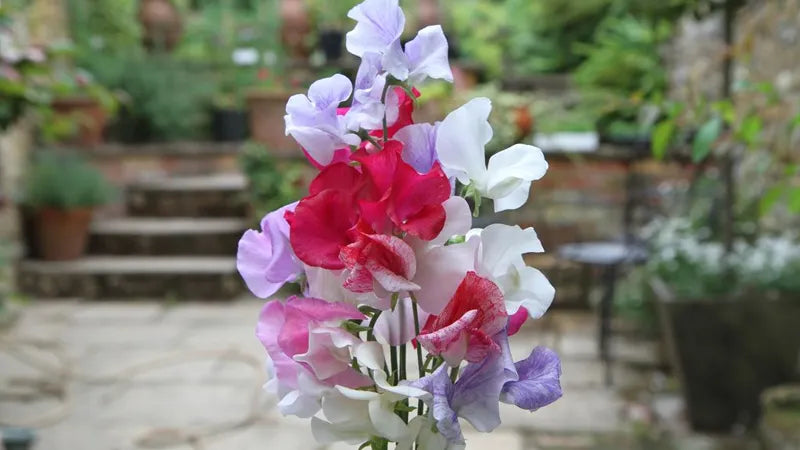
Sweet peas fall into four groups recognised by the National Sweet Pea Society (NSPS), and the differences matter when you’re choosing varieties for your garden or for cutting.
Grandiflora (Old-Fashioned): The heritage sweet peas, dating from Henry Eckford’s breeding work in the 1890s through to about 1914. Smaller flowers (2–3cm) on shorter stems, but intensely fragrant and extremely prolific. They flower from top to toe and are the best choice for sheer scent. Examples include Black Knight (crimson-black, Eckford 1898), Flora Norton (clear blue), and Lord Nelson (deep navy).
Spencer: Bred from the early 1900s by Silas Cole, who was head gardener for the Spencer family at Althorp. Larger flowers (4–5cm) with frilled, wavy petals on long, strong stems — the flower arranger’s choice. Fragrant, though usually less intensely than a Grandiflora. Examples include Bristol (pale blue, RHS AGM), Jilly (ivory-cream), and Windsor (dark maroon).
Modern Grandiflora: Post-1914 varieties with the grandiflora flower form — hooded, open-faced — but often larger flowers and longer stems than the true heritage types. Many are strongly scented. Matucana (magenta and purple, widely regarded as the most powerfully scented sweet pea of all) sits here, along with Heathcliff (deep maroon) and King’s High Scent. This group also includes the extraordinary Erewhon — a reverse bicolour (pink standards, blue wings) bred by Keith Hammett in New Zealand, who is probably the world’s leading sweet pea breeder today.
Semi-Grandiflora: An intermediate form — some Spencer-like ruffling in the petals but with the vigour and generous flowering of the Grandiflora types. Albutt Blue (lavender-blue picotee, arguably the finest fragrance of any sweet pea and my absolute favourite — Ed.) belongs here.
All four types are grown in exactly the same way. Choose Grandifloras for scent, Spencers for cutting and exhibition, Modern Grandifloras for an outstanding combination of both, or Semi-Grandifloras for something in between.
Where Should I Plant Sweet Peas?
Sun
Sweet peas flower best in full sun — at least six hours of direct sunlight a day. They will cope with light shade for part of the day, but flower production drops noticeably in anything less than a half-day’s sun. South- or west-facing positions are ideal.
Soil
Rich, moisture-retentive soil produces the best results. Sweet peas are both thirsty and hungry, so the more organic matter you can work in, the better. Ideally, dig in well-rotted compost or manure the autumn before planting. If you didn’t get round to it then, do it on planting day — it’s far better than not at all.
Sweet peas will grow in most soils, including clay, provided it isn’t waterlogged. Light, sandy soils dry out fast and will shorten the flowering season; on sandy ground, add organic matter generously and mulch around the base of the plants after planting. Here a trick is to put 2-3 strips of newspaper along the bottom of the planting trench, water well, cover with a bit of soil and plant as usual. The paper acts like blotting paper and retains moisture.
What supports do sweet peas need?
Sweet peas are natural climbers that grip with curling tendrils, but they need something to climb on from the start. So get your support structure in place before planting — it is almost impossible to do it afterwards without damaging your plants. Your newly planted sweet peas will start reaching for support within days.
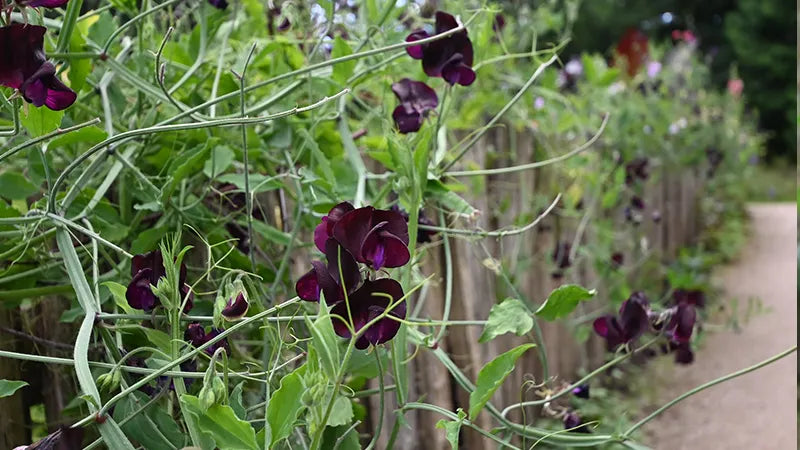
The support doesn’t need to be heavy-duty — sweet peas are lightweight compared to, even a small climbing rose — but it does need to be at least 1.5m tall. Most sweet peas will reach 1.5–2m, and some vigorous varieties will go higher. Here are the main options:
Chicken wire or mesh between posts: This is how we grow them at Ashridge. Stretch 180cm-wide chicken wire between two stout posts, 2–3m apart. The small mesh gives the tendrils plenty to grip, and you get a “wall” of sweet peas that’s easy to pick from both sides. Plastic pea and bean netting works the same way and is lighter, though it tends to sag more under the weight of a full-grown row. Biodegradable jute netting is another option — it can go on the compost heap at the end of the season.
Wigwam of canes: The classic cottage garden approach. Push 5–6 tall bamboo canes (1.8–2m) into the ground in a circle about 45–60cm across and tie them together at the top with garden twine. Wrap twine horizontally around the canes at intervals to give the tendrils extra grip as the plants climb. Plant 2 seedlings at the base of each cane. Plastic wigwam cane grips (available at most garden centres) make it quicker to tie the tops together.
Hazel or birch branches: If you have access to freshly coppiced hazel or prunings from silver birch, these make beautiful natural supports. The twiggy side branches give sweet peas countless points to grip, and the whole thing looks completely at home in an informal garden. Push the thicker ends firmly into the soil and gather the tops together as you would with canes.
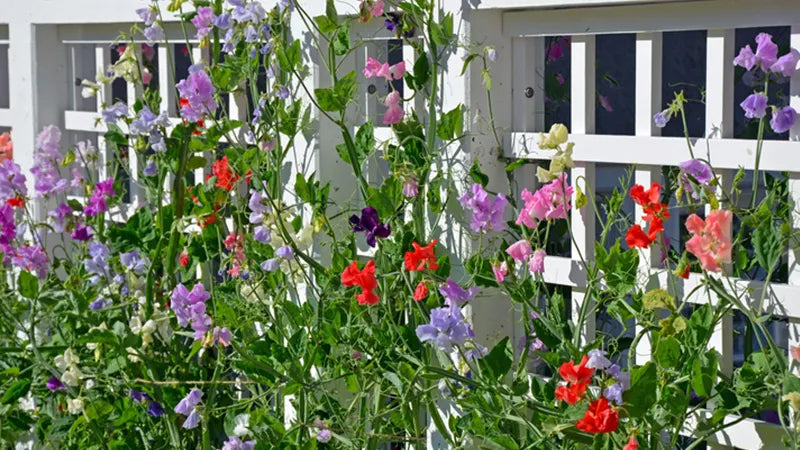
Obelisks and trellis panels: Metal or wooden obelisks make an attractive focal point in a border and are ideal for growing sweet peas alongside other plants. Trellis panels fixed to a wall or fence work well too — the grid pattern gives the tendrils plenty to hook onto. Both are particularly good for container growing, where a wigwam of canes can look top-heavy.
String cordons: Favoured by serious cut-flower growers and exhibitors. Build a simple frame from canes or posts with a horizontal bar at the top, then run vertical strings from the base to the bar. Each plant climbs a single string, which makes it easy to train and inspect individual stems. Strings are also easier on brittle sweet pea stems than rigid canes — you can gently twist the string around the growing shoot rather than tying it. See the exhibitor’s training section below for more on this approach.
Arches and pergolas: For something more ambitious, train sweet peas over a garden arch or along a pergola. The scent overhead is wonderful. You may need to add mesh or netting to the arch structure to give the tendrils something to grip — most arch bars are too thick and widely spaced for sweet pea tendrils alone.
Whatever support you choose, keep it simple and sturdy. Sweet peas aren’t fussy — they’ll climb almost anything, from a proper obelisk to a few sticks pushed in the ground with string between them. The important thing is that the support is there before the plants go in.
Sweet Peas in Containers
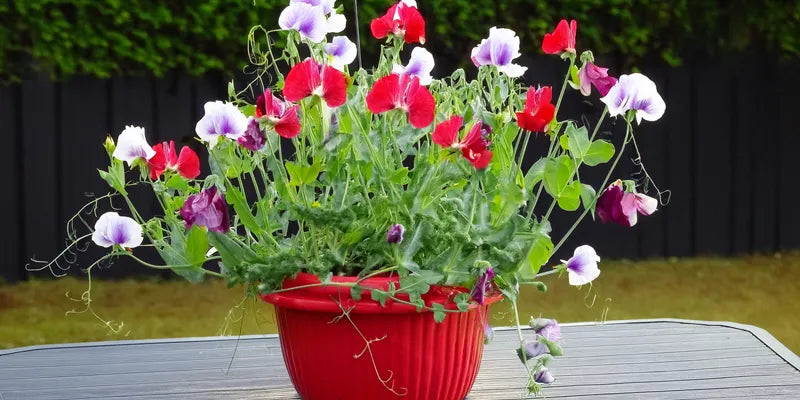
Sweet peas can be grown in large pots, window boxes, and troughs, provided you water frequently and feed regularly. Allow at least 3–4 litres of compost per plant, and use a rich planting mix: 50% multi-purpose compost, 40% topsoil, and 10% well-rotted manure is ideal. Ordinary potting compost works but will produce fewer flowers. Put the support into the pot before planting, and keep the compost consistently moist — containers dry out fast in summer. For detailed container advice, see our separate growing sweet peas in pots guide.
How Do I Plant Sweet Pea Plugs?
When is the best time to plant sweet peas?
Plant sweet pea plugs outdoors after the last frost. In most of the UK, this is between mid-April and mid-May. In colder inland areas and much of Scotland, wait until late May. Sweet peas are frost-hardy annuals and will shrug off a light overnight frost of -1 to -4°C, so don’t panic if one is forecast after planting. A prolonged hard freeze (below -4°C for several days) is a different matter — protect newly planted sweet peas with horticultural fleece until it passes.
How do I plant sweet peas?
Space plants 10–15cm apart, about 5cm from their support. If you’re growing up a wigwam of canes, plant 2 seedlings at the base of each cane. Dig a hole deep enough to accommodate the full rootball and a little more — sweet peas really like being planted deeper than they were in the plug, with the soil coming up to the level of the lowest side shoot. The buried stems produce additional roots. With sweet peas more roots mean better drought-resistance and more flowers for longer.
Firm the soil gently around each plant, then water in thoroughly. As soon as the plants are in, tie any loose stems to the support with soft twine, flexi-ties, or sweet pea rings — this gets them climbing quickly and reduces wind damage.
What about growing sweet peas from seed?
You can, of course, sow sweet pea seeds yourself. Sow in autumn or early spring, about 6–8 weeks before the last expected frost, in seed trays of well-draining potting mix, about 2.5cm deep. Harden off before planting out. But the easiest way is to buy our jumbo plug seedlings, which have been hand-sown, grown on in our Somerset polytunnel, and pinched out to ensure bushy, multi-stemmed plants. They’re hardened off and ready to go straight into the ground.
How Do I Water and Feed Sweet Peas?
Watering is the single most important thing you can do for sweet peas. They are extraordinarily thirsty plants, and if the soil dries out, they’ll set seed and stop flowering — sometimes in a matter of days. Keep the soil consistently moist, especially from late June onwards when the weather warms up. In hot, dry spells, water deeply every day or two. Container-grown sweet peas may need watering daily.
Sweet peas are members of the legume family and fix nitrogen from the air into the soil via root nodules. This means they don’t need extra nitrogen. What they do need is phosphorus and potassium (potash), which fuel flower production. Give them a high-potash liquid feed — tomato fertiliser (such as Tomorite) or home-made comfrey liquid is ideal — every 7–10 days once flower buds begin to form. On poor, sandy soil, start feeding a little earlier and don’t stop until flowering ends.
How Do I Train Sweet Peas?
There are two approaches, depending on whether you want an easy garden display or exhibition-quality blooms.
The garden way (recommended for most growers)
This is the low-effort, high-reward approach. Let the sweet peas climb naturally, tying in any wayward stems every couple of weeks. Remove a few of the curling tendrils as you go — the plant puts energy into producing these rather than flowers, and they can pull stems together into tangles. Check progress every week or so; sweet peas grow fast, especially in warm, wet weather.
The most important thing is to keep picking the flowers. This isn’t just a perk — it’s essential. Every time you cut a stem, the plant responds by producing more buds. If you let flowers fade and set seed pods, the plant’s job is done and it will stop flowering for the year. So pick, pick, and pick again. Even if you’ve run out of vases, deadhead the spent blooms.
The exhibitor’s way (for serious growers)
There is masses of detailed information on the internet about exhibiting sweet peas, so this is just a short taster. If you want fewer but larger blooms on long, perfectly straight stems — the kind that win prizes at village flower shows — you need to cordon-train your sweet peas. This is more time-consuming but produces spectacular individual stems.
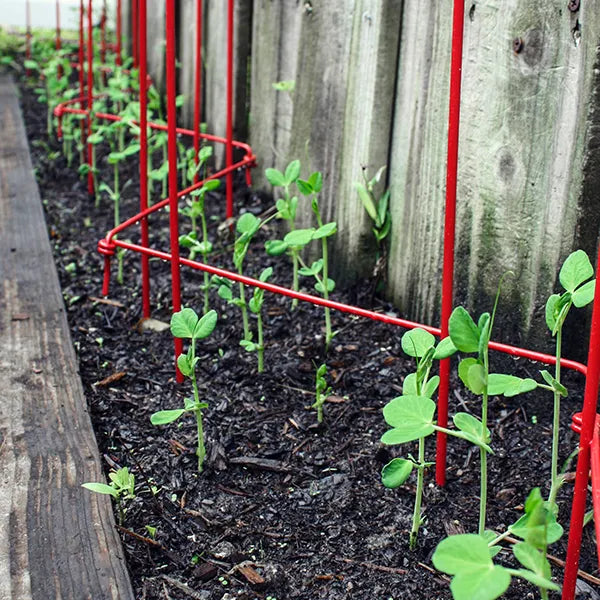
Grow Spencer varieties for exhibition, as they naturally have thicker stems and larger flowers. Once the stems reach about 20cm, select the single strongest shoot per plant and remove all others. Tie the chosen stem to a tall, individual cane as it grows. Remove all tendrils and side shoots throughout the season, directing all the plant’s energy into that one stem. When the stem reaches the top of its cane, carefully untie it (the stems are brittle — don’t rush) and lay it along the ground to a neighbouring cane, then train it upward again. This “layering” technique extends the flowering season considerably.
What Are the Common Sweet Pea Problems and How Do I Avoid Them?
Plants stop flowering
Almost always because seed pods have been allowed to form. Deadhead rigorously — even a few pods can trigger the plant to shut down flower production. The other common cause is drought: if the soil dries out badly, the plant will rush to set seed as a survival response. Keep watering.
Short stems
As the season progresses, stems naturally get shorter. This is normal and unavoidable, but you can slow the decline by keeping up with watering, feeding, and picking. Once stems are too short for cutting, the plant is nearing the end of its useful life — typically late August or September in most of the UK.
Aphids
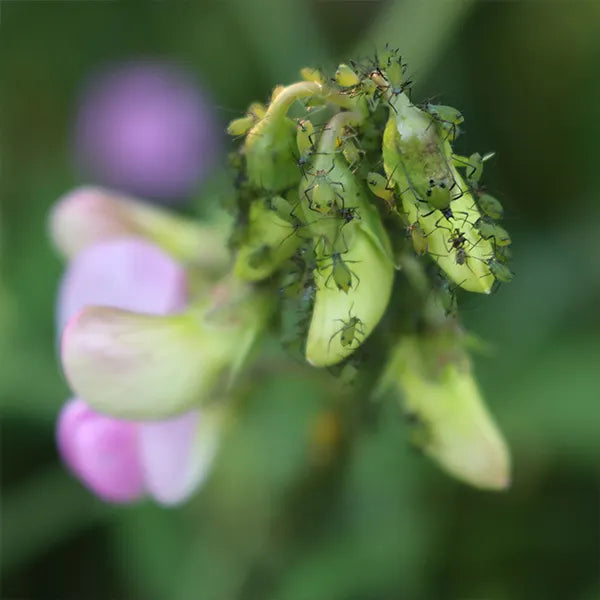
Greenfly love sweet peas, particularly the young shoot tips. A strong jet of water from a hose will dislodge most of them. Ladybirds and their larvae are voracious aphid predators, so avoid broad-spectrum insecticides if you can. For serious infestations, a spray with an appropriate insecticide will deal with them. They also hate soapy water and garlic sprays.
Bud drop
Flower buds dropping before opening is usually a sign of erratic watering — alternating drought and flood. Aim for consistent moisture rather than occasional drenching.
Poor germination (if sowing from seed)
Sweet pea seeds have a hard coat. If germination is slow, try nicking the seed coat with a small file or soaking seeds overnight before sowing. Our jumbo plug seedlings bypass this problem entirely, as we’ve done the germination for you.
What Do I Do With Sweet Peas at the End of the Season?
When flowering finishes — usually September, though dedicated pickers can sometimes stretch it into October or even November — cut the plants off at ground level but leave the roots in the soil. As legumes, sweet peas fix nitrogen in nodules on their roots, and this stored nitrogen will enrich the soil for whatever you plant next. Runner beans, tomatoes, or leafy brassicas all benefit from following sweet peas.
Remove the dead top growth and add it to the compost heap. Clean and store your supports for next year. Sweet peas are annuals and will not regrow, so plan to sow or buy new plants next spring.
When Do I Do What? A Month-by-Month Sweet Pea Calendar
January–February: Order sweet pea seedlings for spring delivery. If growing from seed, sow indoors in a cool greenhouse or on a bright windowsill.
March: Continue sowing from seed if not already done. Prepare the soil: dig in compost or manure. Erect supports. Our jumbo plug seedlings begin dispatching from late March in mild years.
April: Plant out plugs after the last frost (mid-April in the south, later further north). Tie in young stems to supports. Water in well.
May: Main planting window for most of the UK. Sweet peas grow fast now — check and tie in every week. Pinch out growing tips if the plants haven’t already been pinched (our plugs arrive already pinched at least once).
June: Flowers begin. Start picking immediately and don’t stop. Begin liquid feeding with high-potash fertiliser every 7–10 days. Water regularly — sweet peas are at their thirstiest now.
July: Peak flowering. Pick daily if possible. Keep feeding and watering. Remove tendrils and any seed pods that sneak through. Tie in vigorous growth.
August: Stems start to shorten. Keep picking, feeding, and watering to extend the season. Deadhead everything you don’t cut for the vase.
September: Flowering slows. Cut plants off at ground level when finished — leave the roots in the soil for their nitrogen. Compost the top growth. Clean and store supports.
October–December: If you want to get ahead, sow seed in deep pots in a cold frame or unheated greenhouse for a head start next year. Or browse our sweet pea range and order plugs for spring delivery.
Frequently Asked Questions
Are sweet peas poisonous?
Yes. Despite the name, sweet peas are not related to edible peas and all parts of the plant — especially the seeds — are toxic if eaten. Don’t confuse them with sugar snap peas or any other vegetable pea. Keep the seeds away from children.
Do sweet peas come back every year?
No. Sweet peas are hardy annuals — they complete their life cycle in one season and do not survive winter. You need to plant fresh each year, either from seed or from our jumbo plug seedlings.
Can I grow sweet peas in pots?
Yes — sweet peas do well in containers, provided three conditions are met. First, the pot must be big enough: allow at least 3–4 litres of compost per plant, and remember that sweet peas are deep-rooted, so a tall pot is better than a shallow one. Second, use a rich planting mix (50% multi-purpose compost, 40% topsoil, 10% well-rotted manure produces the best results; ordinary potting compost works but gives fewer flowers). Third, water and feed religiously — containers dry out fast in summer, and a sweet pea in a pot that dries out will set seed and stop flowering within days. Daily watering is often necessary in hot weather. Put the support into the pot before planting: a small obelisk, a trio of tall canes, or even a trellis panel behind the pot all work well.
Why have my sweet peas stopped flowering?
The most common cause is seed pods forming — even a few will trigger the plant to stop producing flowers. Deadhead rigorously. The second most common cause is drought. Keep the soil consistently moist and never let it dry out completely.
What is the best sweet pea for scent?
Matucana is widely regarded as the most powerfully scented sweet pea available — a Modern Grandiflora with magenta and purple flowers. Albutt Blue and King’s High Scent are also exceptional. As a general rule, Grandiflora and Modern Grandiflora types are more strongly scented than Spencers.
What is the best sweet pea for cutting?
Spencer varieties produce the longest, strongest stems and the largest, most frilled flowers — ideal for tall vases and formal arrangements. Bristol (pale blue, RHS AGM), Jilly (ivory-cream), and Henry Thomas (deep crimson, weather-resistant) are all excellent. For smaller posies in a rustic jug, any Grandiflora will do beautifully.
Do sweet peas fix nitrogen in the soil?
Yes. Sweet peas are legumes and form a symbiotic relationship with soil bacteria that fix atmospheric nitrogen into the soil via root nodules. This is why you should leave the roots in the ground at the end of the season — the stored nitrogen benefits whatever you plant next. It also means you should feed with high-potash fertiliser (not high-nitrogen) during the growing season, as the plants supply their own nitrogen.
Browse our full range of sweet pea seedling plugs, or try our cottage garden sweet pea collection for a hand-picked mix of colours and scent.




Leave a Reply