


Sold as:

from £10.95

Sold as:
from £19.99
 5 Star Service Rating




 Secure, One-Tap Checkout
 5 Star Feefo Rating
 Hand Picked, Delivered to Your Door!
 1 Year Bareroot Guarantee
 Platinum Trusted Service Award 2026
 Mail Order Plant Experts - Est. 1949
 1 Year Bulb Guarantee




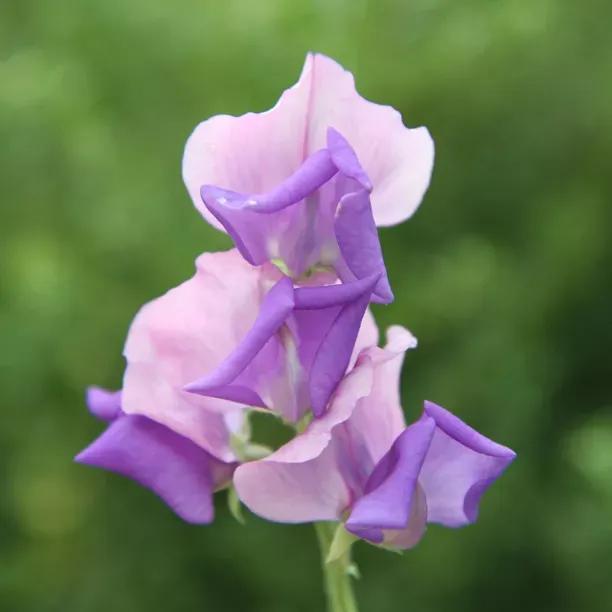





In almost every bicoloured sweet pea, the standard (the large upper petal) is darker than the wings below it. Erewhon is the other way round. The wings are a deep lavender-blue, darker than the pale mauve-pink standards above them. The effect is strange and beautiful, like looking at a familiar flower through a mirror. It was the first commercially available sweet pea to display this colour arrangement reliably, and after more than a decade in gardens it still stops visitors in their tracks.
The breeding story is remarkable. Dr Keith Hammett in New Zealand spent roughly thirty years crossing Lathyrus odoratus (the common sweet pea) with Lathyrus belinensis, a wild Turkish species discovered in Antalya province in 1987. He was chasing the yellow sweet pea, a goal that remains unfulfilled. What emerged instead was something nobody expected. Intensified blue tones and that extraordinary reversed colour pattern. Traditional plant breeding, not genetic modification; just patience measured in decades. The scent is a strong 4 on the Parsons scale: rich, honeyed, and carrying well, with the kind of intensity you associate with heritage Grandifloras rather than modern hybrids.
Erewhon takes its name from the 1872 novel by Samuel Butler, a satirical utopia set in a fictionalised version of New Zealand, which is Hammett's home country. The title is an anagram of "Nowhere", which is what utopia literally means. It is pronounced E-re-whon, not Air-one. The connection between the New Zealand setting and the New Zealand breeder is deliberate, though whether Hammett sees himself as a utopian or a satirist is something only he can answer.
Give Erewhon a prominent position. The reverse colouring is subtle and easily lost in a crowd of other sweet peas. A single obelisk or wigwam by a path or doorway, somewhere you pass daily, lets you appreciate what makes it unusual. The interplay between the pink standards and blue wings shifts in different light: warmer and more pink on overcast mornings, cooler and bluer in the afternoon. It is a sweet pea that rewards close attention.
Erewhon's unusual colouring needs neighbours that will not compete with it. Jilly (ivory-cream, AGM) is a natural partner. The clean cream provides a quiet backdrop that lets the reversed bicolour show to full advantage. Mrs Collier (primrose-cream, intensely scented) does the same job while adding exceptional fragrance.
For contrast, Black Knight (deep maroon) set against Erewhon's reversed blues and pinks is surprisingly effective, especially cut together for a vase. On a shared fence, Erewhon threads well through honeysuckle. The combined fragrance on a warm evening justifies the planting on scent alone, and the honeysuckle's cream trumpets complement the mauve-pink standards beautifully.
Full growing, training, and seasonal care instructions are in our sweet pea growing guide.
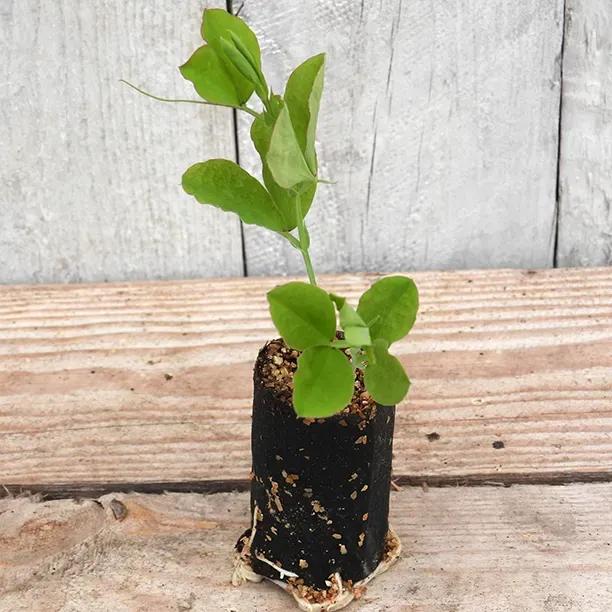
Every one of our sweet pea plugs starts life in our Somerset polytunnel. The seed, which we collect ourselves, is hand-sown at two seeds per plug. After germination, the weaker seedling is removed. Every plant is then pinched out to encourage bushy growth and hardened off before dispatch. What you are buying are sturdy, garden-ready jumbo plug plants that have had the best possible start.
Your sweet peas go out by next-day courier between March and May, packed in purpose-designed recycled cardboard packaging. They arrive ready for the ground or a container. If anything is not right, we have real people on the phone in Somerset who will sort it out. We hold a Feefo Platinum Service Award and have been named a Which? Best Buy plant supplier , both earned from our customers, not our marketing team.
In most bicoloured sweet peas the standard (upper petal) is darker and the wings (lower petals) are paler. Erewhon is the opposite: pale mauve-pink standards with deeper lavender-blue wings below. It was the first commercially available sweet pea to show this colour arrangement consistently, and it remains the most widely grown reverse bicolour.
It is a hybrid between Lathyrus odoratus (common sweet pea) and Lathyrus belinensis, a wild Turkish species. Botanically it belongs to Lathyrus × hammettii, named after its breeder. In the garden it behaves exactly like any other annual sweet pea: same growing conditions, same season, same need for picking and feeding.
You can collect seed, but it will not come true. As a complex interspecific hybrid, Erewhon's offspring are unpredictable. You may get something interesting, something bland, or something that barely germinates. For a reliable display, start with fresh plants each year.
Erewhon's hammettii heritage makes it naturally shorter than most sweet peas, so it handles containers better than many varieties. Use at least 4 litres of a rich growing mix per plant, provide a support, and keep the compost consistently moist. Daily watering in warm weather is not optional. Feed every fortnight with a high-potash liquid once buds form. Container advice is in our pots guide.
Erewhon is an annual and will not survive the winter. Fresh plants each spring, either from seed or from our jumbo plug seedlings, are needed. After the last flowers, cut the stems at ground level but leave the roots in the soil. As a legume, the roots contain nitrogen-fixing bacteria that benefit whatever you plant in that spot next.


 Sign In
 Saved items