
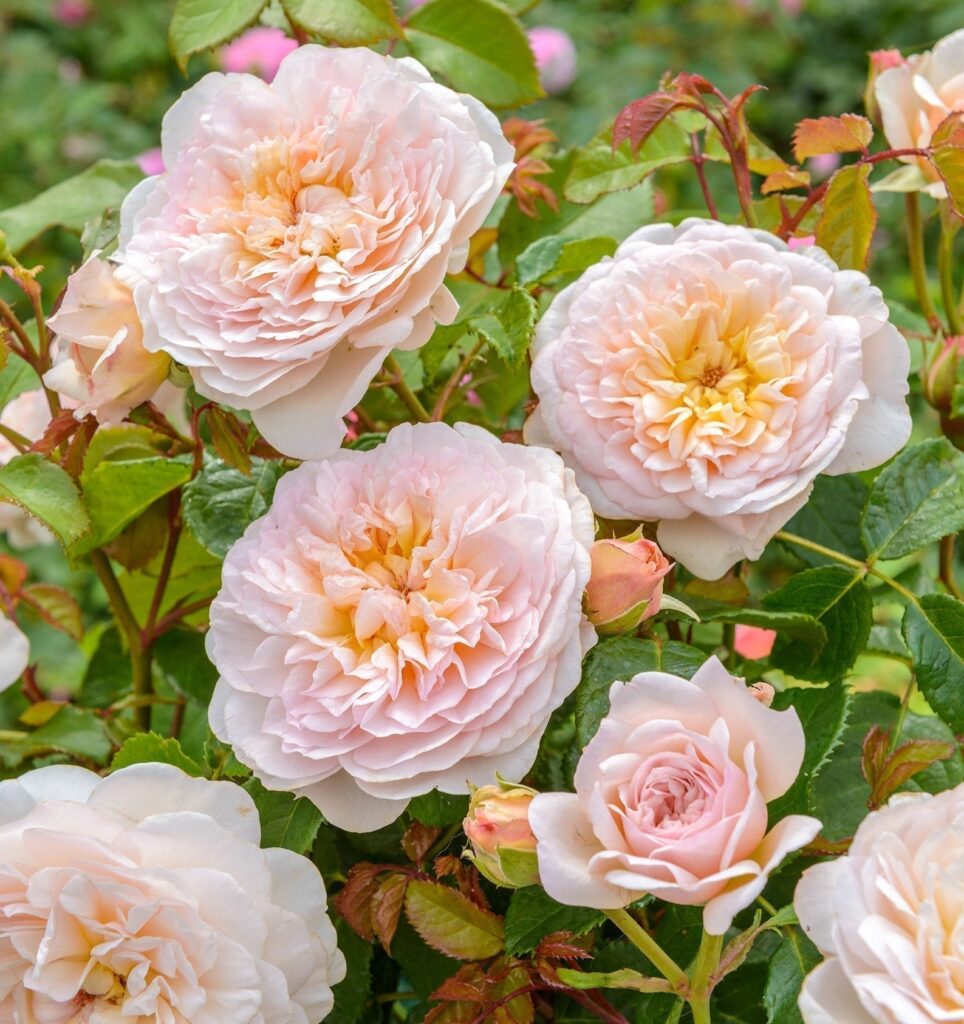
Roses – to climb or to ramble?
05/05/2026
How to grow climbing roses for stunning vertical displays?
Climbing roses transform walls, fences, pergolas and arches into spectacular flowering features, offering months of colour and fragrance. Unlike rambling roses which produce one flush of flowers, most climbing roses bloom repeatedly from June through to October, making them invaluable for creating dramatic vertical garden displays.
Success with climbing roses depends on choosing the right variety for your location, providing adequate support structures, and following proper planting and training techniques. With correct care, these magnificent plants will reward you with decades of breathtaking blooms.
Related articles
- Complete guide to growing and pruning roses
- How to plant bare root roses
- Creating vertical gardens with climbing plants
- Roses – to climb or to ramble?
What are climbing roses and how do they differ from ramblers?
Climbing roses are large-flowered roses with long, sturdy canes that can be trained vertically against supports. They typically flower repeatedly throughout the growing season and produce blooms on both old and new wood.
The key differences between climbing and rambling roses lie in their flowering habits, growth patterns, and maintenance requirements. Climbing roses generally have stiffer stems, larger individual flowers, and more manageable growth, making them ideal for smaller gardens and formal settings.
| Characteristic | Climbing Roses | Rambling Roses |
|---|---|---|
| Flowering period | Repeat flowering, June-October | Single flush, usually June-July |
| Growth habit | Stiff, upright canes, 8-15ft | Flexible stems, 15-30ft+ |
| Flower size | Large, often fragrant | Smaller, in clusters |
| Pruning needs | Light pruning, late winter | Heavy pruning after flowering |
| Best for | Walls, formal structures | Trees, large pergolas, wild areas |
Which are the best climbing rose varieties for British gardens?
The finest climbing roses combine reliable flowering, disease resistance, and strong fragrance. Popular varieties include 'New Dawn', 'Climbing Iceberg', and 'Golden Showers' for their exceptional performance and adaptability to British conditions.
When selecting climbing roses, consider your garden's aspect, available space, and colour preferences. Some varieties excel on north-facing walls, while others require full sun to perform at their best.
| Variety | Colour | Height | Best aspect | Key features |
|---|---|---|---|---|
| New Dawn | Pale pink | 10-12ft | Any aspect | Disease resistant, fragrant, hardy |
| Climbing Iceberg | Pure white | 8-10ft | South/west | Prolific bloomer, clean foliage |
| Golden Showers | Golden yellow | 8-10ft | South/west | Continuous flowering, good for beginners |
| Danse du Feu | Orange-red | 8-10ft | Any aspect | Vibrant colour, north wall tolerant |
| Zéphirine Drouhin | Cerise pink | 10-12ft | Any aspect | Thornless, strongly fragrant |
When is the best time to plant climbing roses?
The optimal planting time for climbing roses is between November and March, when plants are dormant. Bare root roses planted during this period establish more successfully than container-grown plants, developing stronger root systems before the growing season begins.
Avoid planting during periods of heavy frost or when soil is waterlogged. If you receive bare root roses during unsuitable weather, heel them into a sheltered spot or keep in their packaging in a cool, frost-free place until conditions improve.
Container-grown climbing roses can be planted year-round, though spring and autumn plantings generally perform better than those planted during summer heat or winter cold. Always water thoroughly after planting, regardless of season.
How do you plant climbing roses properly?
Successful climbing rose planting requires careful site preparation, correct planting depth, and immediate support provision. Plant the rose at least 18 inches away from walls or fences to allow air circulation and prevent the roots from drying out.
Begin by digging a planting hole twice the width of the root ball and the same depth. Improve heavy clay soils with compost and sharp sand, while light soils benefit from well-rotted manure or garden compost to improve moisture retention.
For bare root roses, soak the roots in water for 2-3 hours before planting. Position the plant so the graft union (swollen area where the rose is joined to the rootstock) sits just below soil level. Backfill with improved soil, firm gently, and water thoroughly. Apply a 3-inch mulch layer, keeping it away from the stem base.
| Planting step | Bare root roses | Container roses |
|---|---|---|
| Preparation | Soak roots 2-3 hours | Water container thoroughly |
| Hole size | Twice root spread width | Twice container width |
| Planting depth | Graft union just below surface | Same level as in container |
| Initial pruning | Cut back by one-third | Remove damaged growth only |
What support structures do climbing roses need?
Climbing roses require sturdy support systems as mature plants can become extremely heavy, especially when wet. Horizontal wires spaced 18 inches apart provide the most effective support, allowing you to train canes horizontally to maximise flowering.
Install wire supports before planting to avoid damaging established roots. Use galvanised wire tensioned between eye bolts or wall anchors, ensuring the system can support significant weight. Trellis panels offer an alternative but may not provide adequate support for vigorous varieties.
For pergolas and arches, ensure posts are set in concrete foundations at least 2 feet deep. The structure should be able to support not just the rose's weight but also wind loading, which increases dramatically when plants are in full leaf.
How do you train climbing roses for maximum flowering?
Training climbing roses horizontally or at angles encourages maximum flower production by restricting sap flow and promoting flowering shoots along the entire length of each cane. Tie in new growth regularly throughout the growing season, spacing canes evenly across the support structure.
Begin training immediately after planting by securing the main canes to your support system using soft ties or rose clips. As new shoots develop, fan them out to cover the available space, avoiding overcrowding which restricts air circulation and encourages disease.
The horizontal training principle applies whether growing against walls, fences, or over arches. For wall-trained roses, aim to create a framework of main branches with flowering side shoots developing from these. On arches and pergolas, spiral the main canes around the structure while training laterals horizontally.
When and how should you prune climbing roses?
Prune established climbing roses lightly in late winter (February-March), focusing on removing dead, diseased, and weak growth rather than severe cutting back. Unlike bush roses, climbing roses flower best on mature wood, so aggressive pruning reduces blooming.
For the first two years after planting, limit pruning to removing damaged wood and weak shoots, allowing the plant to establish a strong framework. From the third year onwards, annual pruning should remove about 25% of the oldest wood, encouraging new growth while maintaining the established structure.
Summer pruning involves removing spent flowers throughout the season, cutting back to the first strong leaf or bud below the flower head. This encourages repeat flowering and prevents the plant from putting energy into seed production. Remove any diseased foliage immediately to prevent spread.
| Pruning task | When to do it | How to do it |
|---|---|---|
| Remove dead wood | Late winter annually | Cut back to healthy wood or base |
| Renewal pruning | Late winter, year 3+ | Remove 25% of oldest canes at base |
| Deadheading | Throughout growing season | Cut above first strong leaf below flower |
| Disease removal | As soon as noticed | Remove affected material and dispose |
What feeding regime do climbing roses need?
Climbing roses are hungry plants requiring regular feeding to support their vigorous growth and repeat flowering. Apply a balanced rose fertiliser in early spring, followed by additional feeds every 6-8 weeks throughout the growing season.
Begin with a spring application of well-rotted manure or garden compost as a mulch, providing slow-release nutrients and improving soil structure. Follow with a granular rose fertiliser in April, working it lightly into the soil surface before watering thoroughly.
During the growing season, supplement with liquid feeds every fortnight from May to August, using either commercial rose fertiliser or a balanced liquid feed. Stop feeding after August to allow plants to prepare for winter dormancy. Maintain a permanent mulch layer to conserve moisture and suppress weeds.
What are the most common problems with climbing roses?
The most frequent issues affecting climbing roses include black spot, powdery mildew, aphids, and poor flowering due to incorrect pruning or training. Most problems are preventable through good garden hygiene, proper spacing, and regular maintenance.
Black spot appears as dark spots on leaves, eventually causing yellowing and leaf drop. Prevent by ensuring good air circulation, avoiding overhead watering, and removing affected foliage promptly. Choose resistant varieties like 'New Dawn' or 'Climbing Iceberg' for problem sites.
Poor flowering often results from excessive shade, over-feeding with nitrogen-rich fertilisers, or incorrect pruning. Climbing roses need at least 6 hours of direct sunlight daily and benefit from phosphorus-rich feeds to promote blooming rather than leafy growth.
| Problem | Symptoms | Prevention/Treatment |
|---|---|---|
| Black spot | Dark spots on leaves, yellowing | Good air circulation, resistant varieties |
| Powdery mildew | White powdery coating on leaves | Avoid overhead watering, improve ventilation |
| Aphids | Green insects on young shoots | Encourage natural predators, spray if severe |
| Poor flowering | Few or no flowers, excessive foliage | Reduce nitrogen, increase phosphorus, more sun |
Can you grow climbing roses in containers?
Climbing roses can be grown successfully in large containers, though they require more intensive care than ground-planted specimens. Choose compact varieties and provide substantial containers of at least 60 litres capacity with excellent drainage.
Container-grown climbing roses need daily watering during summer and regular feeding throughout the growing season. Use a high-quality multipurpose compost mixed with slow-release fertiliser, and refresh the top layer annually with fresh compost.
Suitable varieties for container growing include 'Laura Ford', 'Nice Day', and 'Warm Welcome' – all compact climbers that won't outgrow their allocated space. Provide sturdy support structures and protect containers from frost in winter by wrapping with horticultural fleece or moving to sheltered locations.
Frequently Asked Questions
How far apart should I plant climbing roses?
Space climbing roses 6-8 feet apart to allow adequate air circulation and prevent overcrowding. This spacing ensures each plant has sufficient room to develop without competing for nutrients and light.
Do climbing roses need full sun?
Most climbing roses perform best in full sun (6+ hours daily) but some varieties like 'Danse du Feu' and 'Zéphirine Drouhin' tolerate north-facing walls with only morning sun successfully.
How long do climbing roses take to establish?
Climbing roses typically take 2-3 years to become fully established and reach their flowering potential. First-year growth is usually modest while plants develop strong root systems.
Can I grow climbing roses on north-facing walls?
Yes, choose shade-tolerant varieties like 'New Dawn', 'Danse du Feu', or 'Zéphirine Drouhin' which perform well with limited direct sunlight.
When do climbing roses flower?
Most climbing roses begin flowering in June and continue through October with repeat-flowering varieties producing multiple flushes. Peak flowering occurs in June-July and again in September.
How high do climbing roses grow?
Climbing roses typically reach 8-15 feet in height, though vigorous varieties can exceed 20 feet given adequate support and favorable growing conditions.
Do climbing roses attract bees and wildlife?
Yes, climbing roses provide excellent nectar sources for bees and beneficial insects. Single-flowered varieties like 'Dublin Bay' are particularly attractive to pollinators.
How often should I water climbing roses?
Water deeply once or twice weekly during dry periods, ensuring soil remains moist but not waterlogged. Container-grown roses may need daily watering in summer.
Can I move an established climbing rose?
Mature climbing roses can be moved but it's challenging due to extensive root systems. Best attempted during winter dormancy with careful root ball preservation.
What's the difference between climbing and pillar roses?
Pillar roses are shorter climbers (6-10 feet) suitable for growing up posts or pillars, while true climbers are more vigorous and designed for walls, fences, and large structures.
Do I need to remove suckers from climbing roses?
Yes, remove suckers growing from below the graft union as these are rootstock growth that will compete with the desired variety and produce inferior flowers.
How do I protect climbing roses from winter damage?
Most climbing roses are hardy but benefit from thick mulch around the base. Tender varieties may need fleece protection, and container plants should be moved to sheltered locations.
Related Products
- Climbing Roses Collection
- Rambling Roses Collection
- Rose Fertilisers and Feeds
- Garden Support Structures
Related Articles


Secure, One-Tap Checkout
5 Star Feefo Rating
Hand Picked, Delivered to Your Door!
1 Year Bareroot Guarantee
Platinum Trusted Service Award 2026
Comments (0)
Add a commentLeave a comment
Please note, comments need to be approved before they are published.