

Sold as:

from £6.99

Sold as:
from £19.99
 5 Star Service Rating




 Secure, One-Tap Checkout
 5 Star Feefo Rating
 Hand Picked, Delivered to Your Door!
 1 Year Bareroot Guarantee
 Platinum Trusted Service Award 2026
 Mail Order Plant Experts - Est. 1949



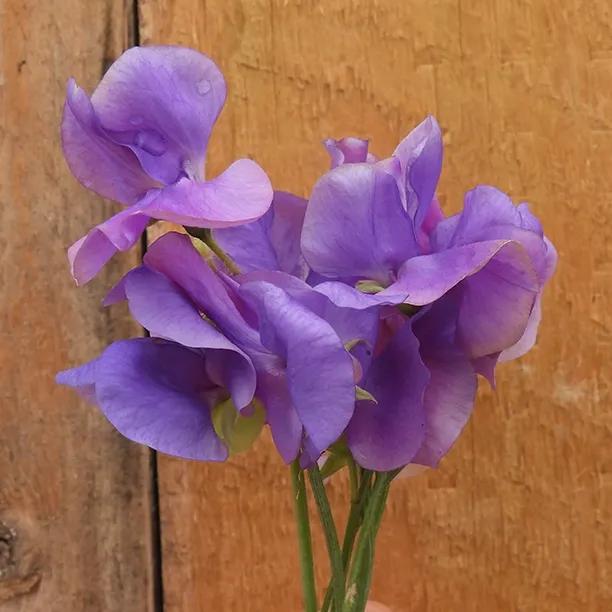
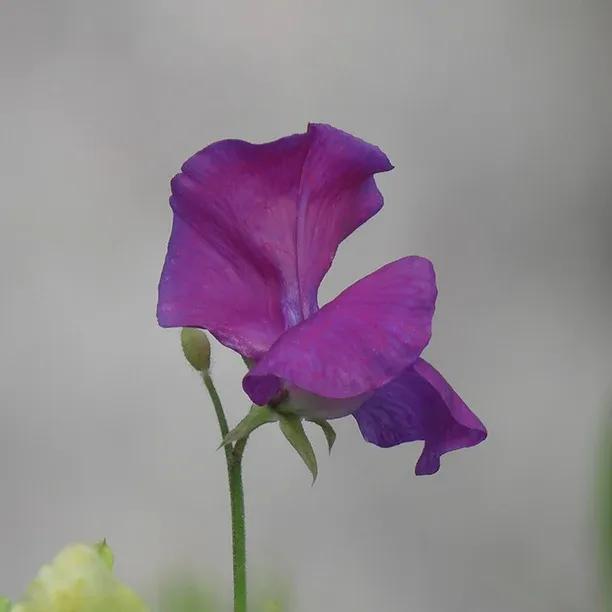
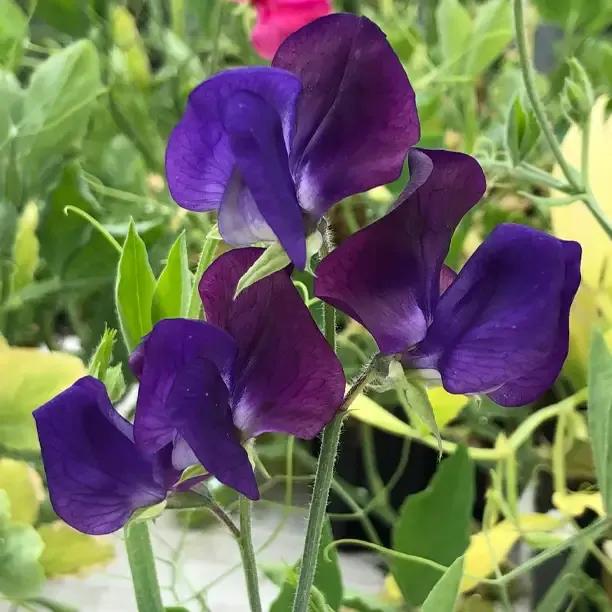





The colour of Lord Nelson is difficult to capture in a photograph. It sits somewhere between deep violet and navy, a complex, saturated blue-purple with a quality that changes depending on what is around it. Against white or cream flowers, it reads as pure navy. Against pinks, the violet comes forward. In low light or on an overcast day, it darkens almost to black. The petals are slightly veined, which adds depth and a sense of age, like the inside of a mussel shell.
Lord Nelson is a Grandiflora – smaller flowers, shorter stems, and far more scent than a modern Spencer. The trade-off is the same as with all heritage types: you lose the long-stemmed elegance that suits a formal vase, and you gain fragrance that fills a garden. A handful of Lord Nelson in a small jug on a windowsill will scent the room for days.
Lord Nelson was introduced in 1907, the same era that gave us Flora Norton, Mrs Collier, and the first Spencer sweet peas. The Spencers, bigger, showier, and longer-stemmed, went on to dominate the nursery trade and the exhibition bench. Lord Nelson survived by doing what the Spencers could not match: producing waves of intensely fragrant, deeply coloured flowers on a plant that requires very little cosseting.
Over a century later, it remains one of the most popular dark sweet peas in cultivation. That is not sentiment; it is a verdict from generations of gardeners who grew it, liked it, and grew it again. The plant is vigorous and reliable, reaching 2m with good support, and flowers prolifically along the length of the stem in the Grandiflora manner. Keep cutting and it keeps producing.
Dark navy needs light to play against. Flora Norton (clear sky-blue Grandiflora) is the classic pairing – two heritage varieties, two shades of blue, and extraordinary combined scent. They have been growing side by side in British gardens since the Edwardian era, and the combination still works. Add Mrs Collier (primrose cream) as a third voice and you have a heritage trio that predates the First World War.
For a bolder contrast, pair Lord Nelson with Valerie Harrod (warm coral-pink) – navy against coral is striking without being garish. On a fence or pergola, Lord Nelson threading through a rambling rose – Rambling Rector or Paul's Himalayan Musk – makes a scented partnership that suits a wilder, cottage-garden style. Full planting instructions in our sweet pea growing guide.
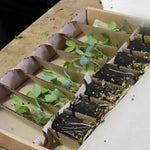
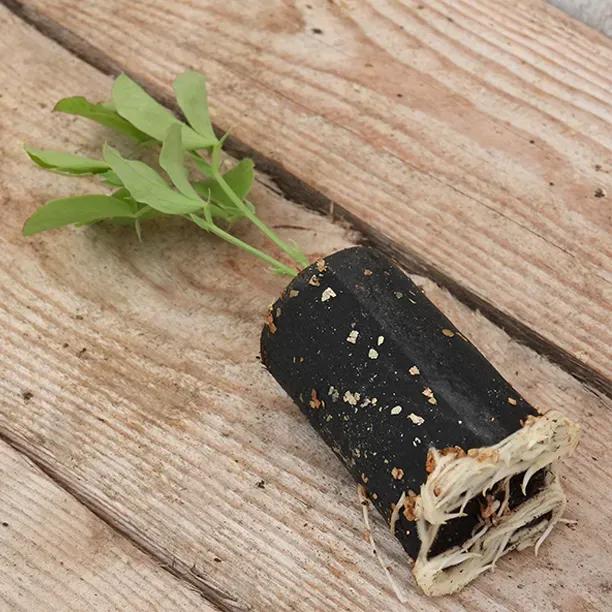
We have been growing sweet peas in Somerset since the early 2000s. The seed - which we collect - is hand-sown at two seeds per plug and the weaker seedling is removed. Every plant is then pinched out to encourage bushy growth and hardened off before dispatch. What you are buying are sturdy, garden-ready jumbo plug plants that have had the best possible start.
We send your sweet peas out by next-day courier between March and May, packed in purpose-designed recycled cardboard packaging. The moment they arrive, they are ready to go into the ground or a container. If anything is not right, we have real people on the phone in Somerset who will sort it out. We hold a Feefo Platinum Service Award and have been named a Which? Best Buy plant supplier – endorsements that came from our customers, not our marketing team.
A Grandiflora: the older, heritage type with smaller, open-faced flowers, shorter stems, and far stronger scent than modern Spencers. Grandifloras were the dominant sweet peas before the Spencer revolution. Lord Nelson is one of the finest survivors.
Intensely scented, near the top of the Parsons scale. As a Grandiflora, Lord Nelson carries the concentrated old-type fragrance that most Spencers have lost. A few stems in a small room fill it completely. In the garden, you notice the scent from several feet away on a warm evening.
Yes, and as a heritage Grandiflora it will usually come true from saved seed. Let a few pods ripen fully on the plant at the end of the season, collect them when dry, and store in a cool, dark place. Sow the following spring or let us do the work – our plants arrive ready to go.
Pick every flower as it opens – or at least deadhead before pods form. Every seed pod tells the plant to slow down; every cut stem tells it to produce more. With a Grandiflora like Lord Nelson, this is even more important than with Spencers, because the flowers are smaller and pods form quickly. Feed fortnightly with a high-potash liquid feed once flowering begins, and water deeply in dry spells.
Lord Nelson is an annual, flowering from spring to early autumn before finishing for the season. It has been grown afresh from seed every year since 1907, which is part of its charm. See our sweet pea collection for this season's full range.


 Sign In
 Saved items