


Sold as:

from £6.99

Sold as:
from £19.99
 5 Star Service Rating




 Secure, One-Tap Checkout
 5 Star Feefo Rating
 Hand Picked, Delivered to Your Door!
 1 Year Bareroot Guarantee
 Platinum Trusted Service Award 2026
 Mail Order Plant Experts - Est. 1949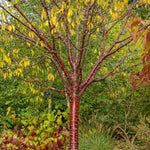
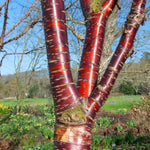
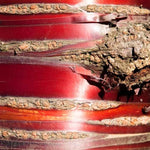






The Tibetan Cherry is a small deciduous tree with wonderfully unusual mahogany red bark that deserves to be the centre of attention. It's also called Birch Bark Cherry because of the way that its old bark strips away to reveal shiny new layers, similar to the paper bark birch.
It has narrow, oval leaves similar to a willow that do not create thick shade, so you can plant quite a range of bulbs and plants around it. The small white flowers aren't showy, and in hot summers they mature into decorative, bitter red fruit for the birds. The leaves turn a clear yellow in autumn and fall away to reveal the tree's bark in all its glory: in the right light, it seems to be sculpted from polished copper or bronze, but with a richer cinnamon tone than either.
Prunus serrula isn't a very big tree and is an excellent choice for a small garden where space and light are limited. It'll grow to about 8 metres.
Browse our variety of cherry blossom trees or our range of ornamental trees.
Delivery season: Tibetan Cherry trees are delivered bareroot during late autumn and winter, approximately November-March inclusive.
Choosing a size: Small trees are cheaper, easier to handle and more forgiving of less than ideal aftercare, so they're best for a big planting project. If instant impact is your priority, or if you are only buying a few plants for use in a place where it's convenient to water them well in their first year, then you may as well use bigger ones. All our bareroot trees are measured by their height in centimetres above the ground (the roots aren't measured).
Suitable for any fertile, well drained soil, we recommend planting in full sun. The faster it grows, the more often it'll shed its old skin and allow you to feast your eyes on its fresh red bark.
Top tip for getting the best from the bark: never give in to the temptation to peel away the bark yourself. This will slow down the tree's shedding cycle, and there is a risk of infection. Instead, when the tree starts looking a bit dull, give it a scrub with a large non-metallic brush and warm soapy water, or you could use a pressure hose on a gentle setting. This will brighten up the older bark without affecting the tree.
It was brought to Britain at the turn of the last century by the intrepid Mr Ernest Wilson, who we have to thank for some 2000 Chinese plants that are now regular features of British gardens. It's not really Tibetan, hailing from Szechwan/Sichuan province in Western China, although that area was the Eastern border of the Tibetan empire for a few decades in the late 700s AD.
Oddly, in our opinion, it does not have an RHS Award of Garden Merit, although two of its cultivars do.
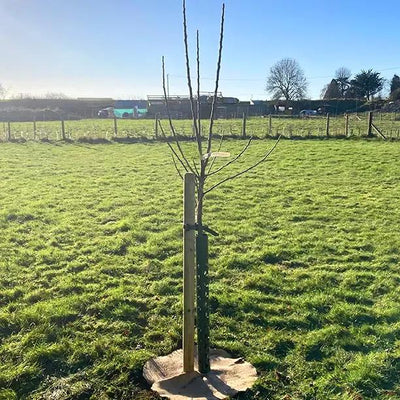
Standard trees are measured by their girth in centimetres 1 metre above ground level: their trunk's waist measurement. Unlike sapling trees and hedge plants, standards aren't measured by their height, which will vary quite a bit both between and within species.
So, a 6/8cm standard tree has a trunk with a circumference of 6-8cm and an 8/10 standard has a trunk 8-10cm around. This measurement makes no difference to the tree's final height.
On average, standard trees are 2-3.5 metres tall when they arrive, but we cannot tell you precisely how tall your trees will be before we deliver them.






 Sign In
 Saved items