
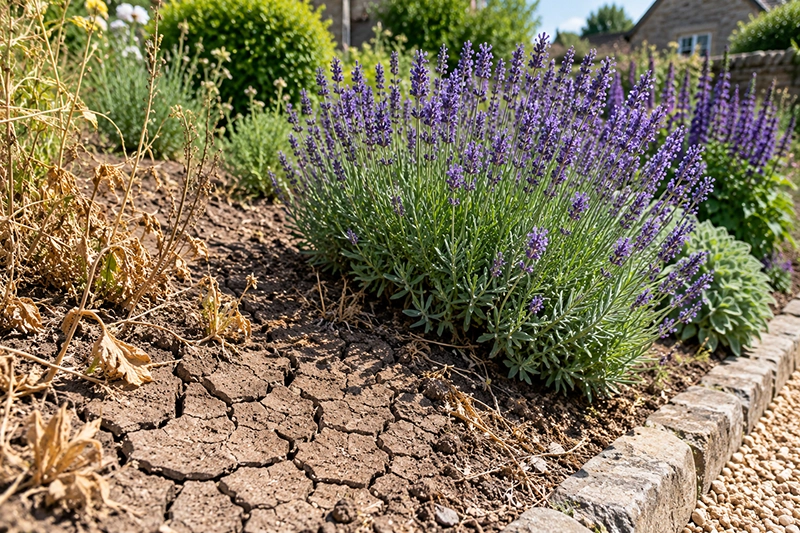
If your garden looked a bit sorry for itself by August, you weren’t imagining it. This was a genuinely tough summer for gardeners right across the UK — not just one soggy corner or one sun-baked region, but the whole country dealing with the same dry spell at once. Wherever you’re gardening, from a Cornish courtyard to a Yorkshire allotment, the last few months have asked a lot of your soil and your plants.
The good news: autumn is still the best time to plant. In some ways, it matters more this year, not less. Here’s what the drought actually means for your garden now, and how to plant smart as the weather turns.
Why the water table matters more than the weather forecast
A few days of rain doesn’t undo months of dry weather. Soil doesn’t reset the moment the forecast changes — it rehydrates slowly, from the top down, and a genuinely dry summer can leave ground moisture depleted well below the surface for weeks after the taps turn back on. That matters for planting because roots need consistent moisture at depth, not just a damp top inch, to establish properly.
Practically, this means:
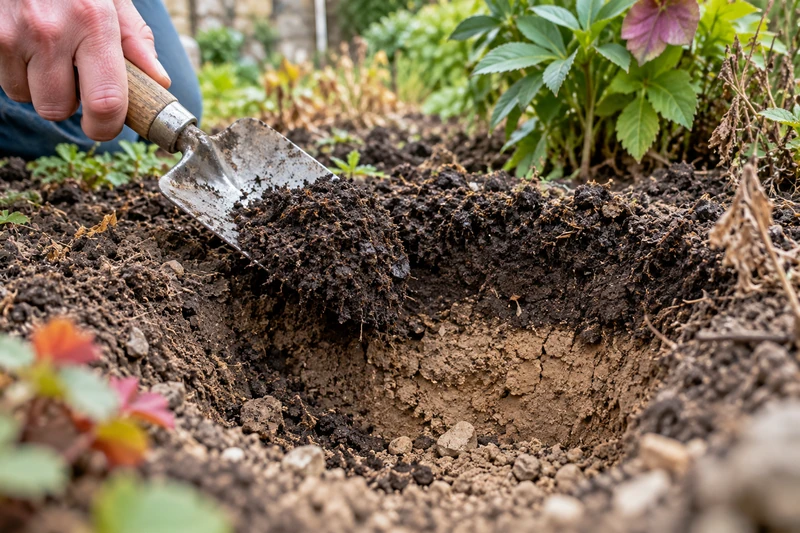
- Don’t judge soil moisture by the surface. Dig down 15–20cm before you decide a bed is ready — the top can look dark and damp while everything below is still bone dry.
- Water in thoroughly at planting time, even after rain. A new plant’s roots haven’t spread yet, so it can only draw on the moisture immediately around the rootball. Give it a proper soak, not a token splash.
- Expect recovery to take longer this year. With reservoirs still below average, don’t assume normal autumn rainfall alone will fully replenish deeper soil moisture before winter.
Why autumn planting is still the right call
It might feel counterintuitive to plant into ground that’s just been through a drought, but autumn is actually the best possible moment to do it, for one simple reason: the soil is still warm from summer, air temperatures are dropping, and rainfall — even a recovering amount of it — is increasing. That combination lets roots establish with far less stress than spring planting, when a new plant has to cope with root growth and top growth at the same time, often into soil that’s cold and only just waking up.
Plant now, and by the time next summer’s dry spell arrives — because there will be one — your plants will have had a full autumn, winter and spring to build a root system that can actually cope with it. Skip autumn planting because of drought anxiety, and you’re more likely to be planting into next spring’s compressed, higher-stress window instead.
What to plant if you want a border that shrugs off dry summers
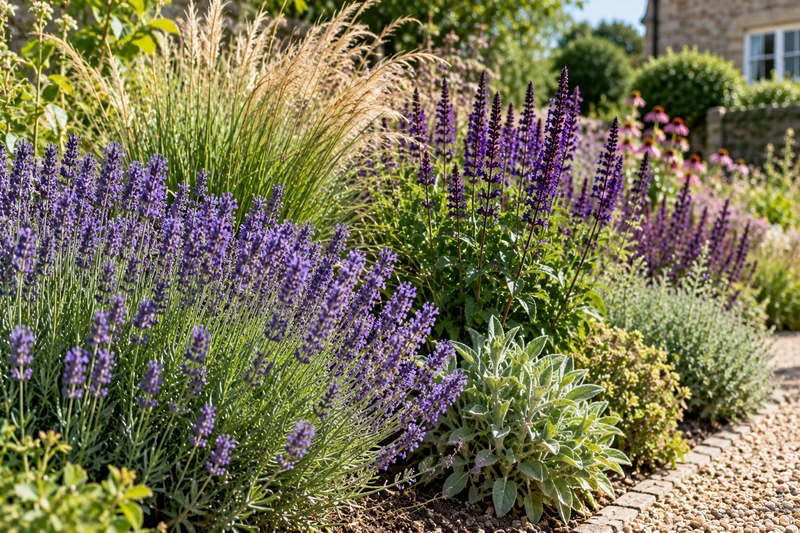
This year’s weather is a useful nudge to build some resilience in, without turning your whole garden into gravel and grasses. Good options for coping with dry spells once established:
- Lavender — thrives on the free-draining, sunnier spots that struggled most this summer
- Salvias — long flowering, genuinely drought-tolerant once rooted in
- Ornamental grasses — architectural interest that barely blinks at a dry August
- Hawthorn and other native hedging — resilient, pollinator-friendly, and well suited to UK-wide conditions rather than one specific climate
None of these need special treatment beyond the normal autumn planting routine — the drought-tolerance comes later, once they’re properly rooted in. The watering care in the first season is what gets them there.
The short version
This summer’s drought was a UK-wide event, not a regional one, and its effects on soil moisture haven’t fully gone away yet. That’s a reason to water new plantings properly and check moisture below the surface — not a reason to delay planting. Autumn remains the best window of the year to get things in the ground, drought or no drought, wherever in the UK you’re gardening.


Yes, indirectly. Soil moisture below the surface can stay depleted for weeks after rain returns. New plants need thorough watering at planting time, but autumn is still the best season to plant.
Yes. Autumn is the best planting window regardless of a dry summer, because warm soil and cooling air let roots establish with far less stress than spring planting.
Dig down 15–20cm rather than judging by the surface, and water new plants thoroughly at planting time even if it has rained recently.
Lavender, salvias, ornamental grasses, and native hedging such as hawthorn are reliable, well-suited choices for gardens anywhere in the UK.


Leave a Reply