
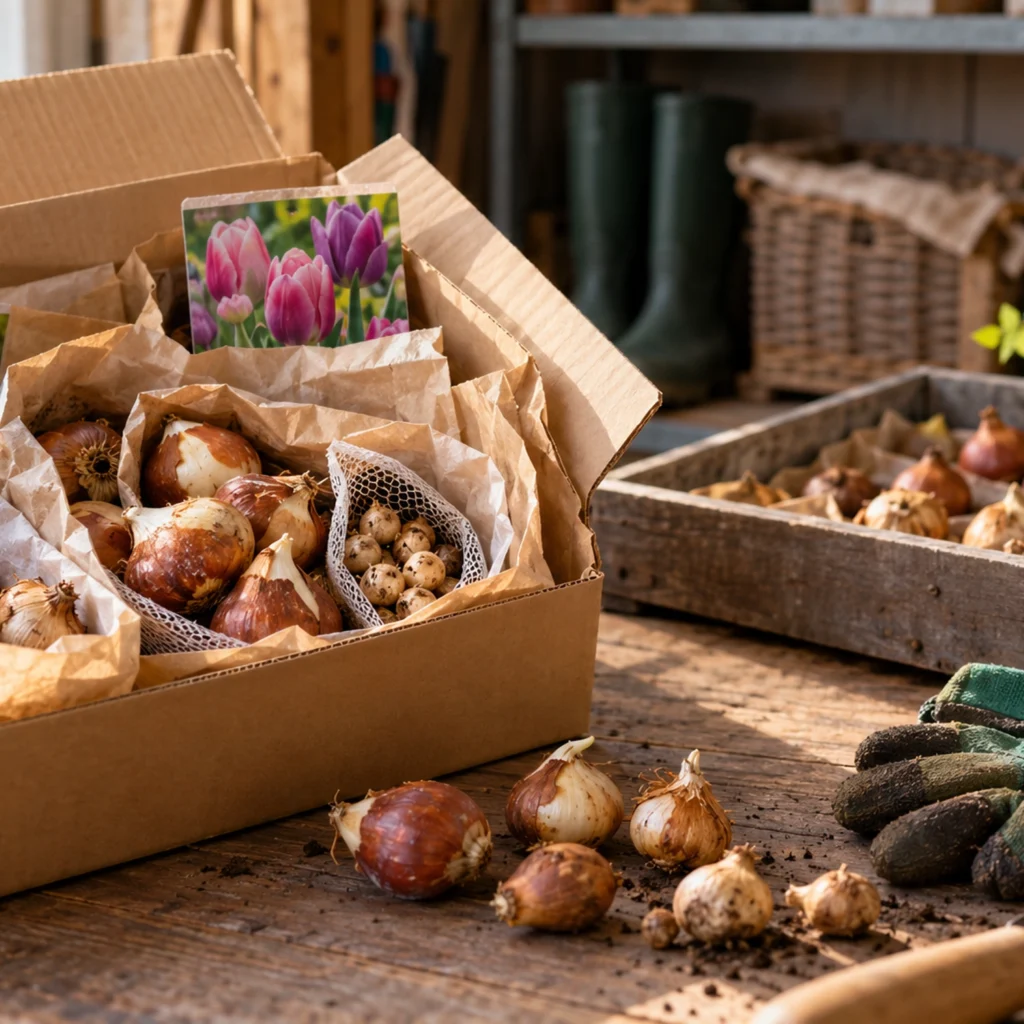
Your bulbs have arrived, the weekend is five days off and the forecast says rain. Don’t fret. A dry bulb is a plant in suspended animation, already carrying next spring’s flower folded up inside it. Kept cool, dry, dark and airy, most will wait a few weeks without complaint, and tulips a month or more.
The short version: open the box the day it lands, check the bulbs, and put them somewhere cool where air can move around them. The rest of this guide covers where, for how long, and the few bulbs that won’t wait. One group – bulbs in the green – won’t wait at all.
When your bulbs arrive
Open the box the day it lands. Bulbs travel well, but a sealed carton left in a warm hallway is the quickest way to spoil them.
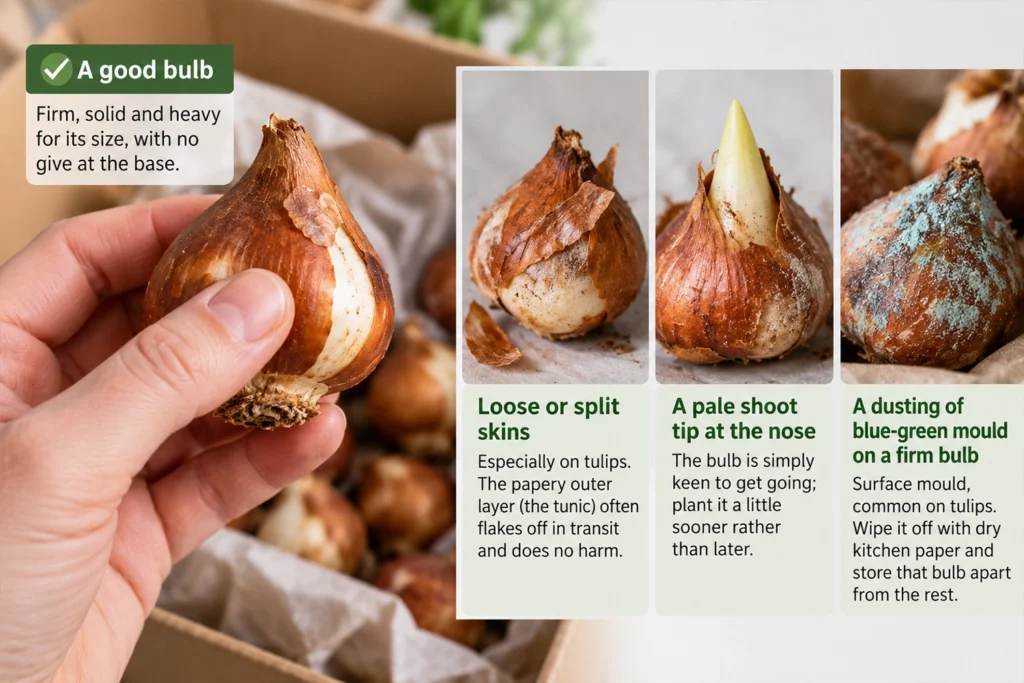
Give each bag a squeeze. A good bulb feels like a firm onion: solid, heavy for its size, with no give at the base. A few things look alarming but are perfectly normal:
- Loose or split skins, especially on tulips. The papery outer layer (the tunic) often flakes off in transit and does no harm.
- A pale shoot tip at the nose. The bulb is simply keen to get going; plant it a little sooner rather than later.
- A dusting of blue-green mould on a firm bulb. Surface mould, common on tulips. Wipe it off with dry kitchen paper and store that bulb apart from the rest.
A bulb that is soft, squashy at the base or smells sour is rotten. Take it out before it spreads trouble, and get in touch if more than the odd one has gone.
If you’re handling hyacinths, wear gloves. Their skins can make your hands itch for an hour or two.
Where to store bulbs
Bulbs want four things while they wait: cool, dry, dark and airy. Aim for somewhere around 10–15°C (50–60°F), out of the sun and never damp.
Good places:
- An unheated spare room, or the floor of a cool cupboard
- A dry garage or shed, provided the mice can’t get at them (more on that below)
- A cellar, if it is dry rather than musty
Keep them in the bags they came in, or in paper bags, egg boxes or a shallow tray, one layer deep, so air can move around them.
Places to avoid:
- Plastic bags or sealed tubs. Bulbs breathe out moisture; in plastic it condenses and rots them.
- Anywhere warm – the airing cupboard, the boot of the car, a sunny windowsill, next to the boiler. Warmth dries bulbs out and can damage the flower bud already formed inside.
- Next to fruit. Ripening apples and pears give off ethylene, a gas that can kill the flower bud in tulips. The bulb looks perfectly well, then comes up blind next spring: leaves, and no flower.
There’s no need to put spring bulbs in the fridge. They are made for a British autumn, and a cool room gives them all the cold they need before planting.
How long bulbs keep
Big bulbs with tough skins wait patiently; small ones with thin skins, or none at all, dry out fast. Here’s roughly how long each will sit in good conditions.
| Bulb | Comfortable wait | Best planted by | Notes |
|---|---|---|---|
| Tulips | 4–8 weeks | November (December is fine) | The most patient of the lot, and better for waiting: late planting helps them dodge tulip fire |
| Alliums | 3–4 weeks | October | Firm and long-lasting |
| Daffodils | 2–3 weeks | Late September to mid October | They want to make roots early, so don’t let them hang about |
| Hyacinths | 2–3 weeks | October | Store well, but flower bigger after an earlier start |
| Crocus and muscari | 2–3 weeks | October | Small corms and bulbs shrink if kept too long |
| Dwarf iris (Iris reticulata) | 2–3 weeks | October | Store dry; they rot more readily than they shrivel |
| Anemone blanda | 1–2 weeks | October | Soak the hard little tubers overnight before planting |
| Winter aconites (dry tubers) | A few days | As soon as they arrive | Soak overnight, then plant; they shrivel quickly in air |
| Snake’s head fritillaries | A few days | As soon as they arrive | No protective skin; if you must wait, keep them in barely damp compost or sawdust |
| Bulbs in the green | None | The day they arrive | Growing plants, not dormant bulbs – see below |
If you can only plant some this weekend, do the small, fussy ones first and leave the tulips till last.
A customer once rang to say her bulbs hadn’t come up. Autumn had got away from her, so she put the bags in her shed to wait for the next planting season, a whole year on. When she opened them, every one had rotted. A dry bulb looks inert, so it’s an easy assumption to make, but it is alive and drawing on its food store the whole time it sits. A few weeks is fine; a year is not. If the season slips past you, plant late or pot them up (see below) rather than keeping them for next year.
Check them every week or so
A quick look once a week catches trouble before it spreads.
- Mould on a firm bulb: wipe it off, move the bulb somewhere airier, and plant it soon.
- Soft, sunken or weeping bulbs: throw them away. Rot spreads to the neighbours.
- Shrivelled or light and papery: the store is too warm or too dry. Plant as soon as you can; a slightly wrinkled bulb often recovers once it’s in moist soil.
- Shoots longer than about 2cm (1in): the bulb has decided it’s time. Plant it this week, shoot upwards, without snapping the tip.
Keep the mice out
To a mouse, a shed full of tulips and crocus in October is a well-stocked larder. They will gnaw through a paper sack overnight and leave you the skins.
Hang the bags from a hook or a beam, or keep them in a lidded box with small air holes drilled in it, or under fine wire mesh. Daffodils are the exception: every part of them is poisonous, and rodents leave them well alone. Squirrels are a problem after planting rather than before – a subject for another day.
Can’t plant for weeks? Pot them up
If the border is waterlogged, the builders are still in, or life has simply got in the way, put the bulbs in pots rather than leaving them in a bag. In damp compost a bulb can start rooting, which is exactly what it wants to be doing in autumn.
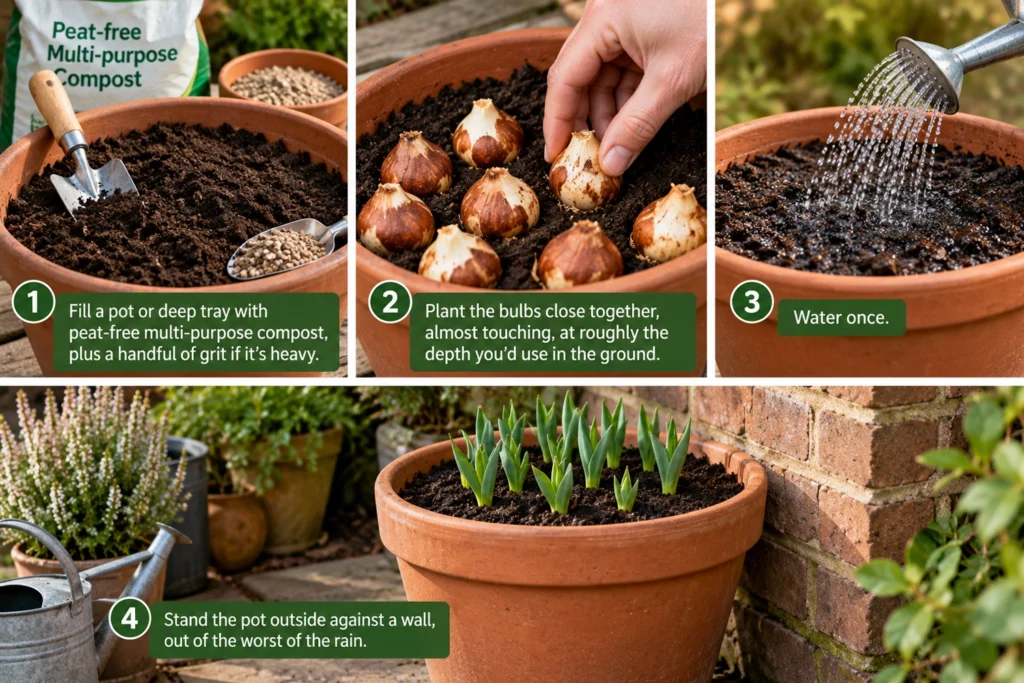
- Fill a pot or deep tray with peat-free multi-purpose compost, plus a handful of grit if it’s heavy.
- Plant the bulbs close together, almost touching, at roughly the depth you’d use in the ground.
- Water once and stand the pot outside against a wall, out of the worst of the rain.
You can tip them out and plant them in the garden later in the winter, or leave them be and enjoy them in the pot. Our guide to growing bulbs in pots has more detail.
Bulbs in the green: plant them the day they arrive
Everything above applies to dry bulbs. Bulbs in the green are a different animal, and the one rule for them is simple: plant them as soon as they are delivered.
“In the green” means lifted just after flowering, in late winter or early spring, with leaves, roots and all, still growing. Snowdrops, bluebells and winter aconites are the usual suspects. They establish far more reliably this way than from dry bulbs, because they go straight back into the ground mid-growth and carry on as if nothing had happened. But that is the whole point: they are living plants, not dormant ones, and they have no store of patience to draw on. The leaves are busy feeding the bulb for next year, and the roots need soil to do it.
If you can’t plant on the day:
- Open the box at once and loosen the packaging so air can reach the leaves.
- Keep the roots damp – wrapped in wet newspaper is fine – and stand them somewhere cool and shady, not in a warm house.
- Plant within two or three days at the outside. Longer than that, heel them into a spare patch of ground or a pot of compost until their proper home is ready.
When you do plant, set them at the depth they grew before. You’ll see where the leaves turn from green to white: that pale stretch was underground, so it goes back under the soil. Water them in, and next spring they’ll be where you put them, doing what they do.
Questions people ask
Can I store bulbs in the fridge?
You don’t need to. A cool room is cold enough for spring bulbs going into a British garden. If you do use the fridge, keep them well away from fruit.
Is it too late to plant if I’ve kept them till November?
Not for tulips, which are happiest planted in November anyway. Daffodils, crocus and hyacinths planted late will still flower, a little later and a little smaller in their first year.
My bulbs have gone soft. Can I still plant them?
No. A soft bulb is rotting and won’t recover. A wrinkled but firm one is worth planting.
Should I keep bulbs in the net bag they came in?
Yes. It lets air through, which is exactly what they need. Just keep it somewhere cool and out of the sun.
Can I store bulbs in the green until autumn?
No. They are growing plants and will rot or dry out within days of arriving. Plant them straight away, or heel them in until you can.
Ready to plant?
- How to grow bulbs: the complete guide
- How deep to plant flower bulbs
- When to plant bulbs
- Browse our spring-flowering bulbs, including tulips for planting through November



Leave a Reply