
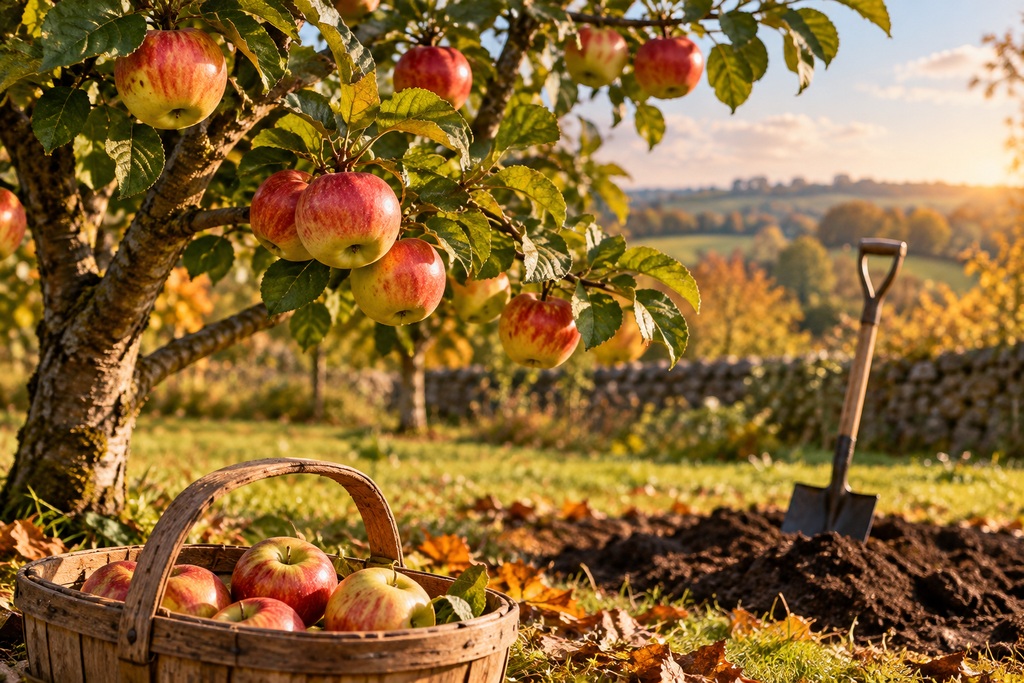
Apple Day falls on 21 October and was started in 1990 by the charity Common Ground to celebrate the diversity of British orchards and the hundreds of apple varieties at risk of disappearing. Planting a fruit tree this autumn, ahead of the main bareroot season, is a genuinely good way to grow your own small piece of that history — and with over 2,000 apple varieties recorded in the UK, there’s a lot more choice out there than the handful you’ll find in a supermarket.
There’s something quietly satisfying about an apple tree. Plant one this autumn and, all being well, you’ll still be picking fruit from it decades from now — long after most of what we plant in a garden has come and gone. That slow, steady payoff is really what Apple Day is about, and it’s as good an excuse as any to get your own tree in the ground.
We’ve been growing and despatching fruit trees from our Somerset nursery since 1949, so autumn planting season is one we look forward to every year. Here’s the story behind Apple Day, and a quick guide to choosing the right variety for your own patch of orchard history.
What is Apple Day, and where did it come from?
Apple Day was started in 1990 by Common Ground, a small charity with a knack for turning quiet conservation issues into proper cultural moments. Their concern was straightforward: Britain’s orchards, and the extraordinary range of apple varieties growing in them, were vanishing. Old orchards were being grubbed up, supermarkets wanted a handful of consistent, well-travelled varieties, and the hundreds of regional apples that didn’t fit that mould were slipping quietly out of cultivation.
Rather than a straightforward awareness campaign, Common Ground pitched Apple Day as a celebration — orchard visits, apple tastings, juicing days, village fetes built entirely around the fruit. It worked. Apple Day is now marked every 21 October with events up and down the country, and it’s become one of the more effective bits of grassroots conservation Britain has produced: not by asking people to worry about orchards, but by giving them a reason to enjoy them.
Why old orchards and heritage varieties matter
The UK has recorded over 2,000 apple varieties, most with a genuinely local story behind them — a particular county, a particular family, sometimes a single tree that got noticed and grafted onward. Compare that with the handful you’ll typically find in a supermarket, and it’s a striking gap. Each of those varieties carries something worth keeping: different flavours, different uses (cooking, eating, cider), different disease resistances, and different harvest times that, between them, used to spread the apple season out across several months rather than concentrating it into a few weeks.
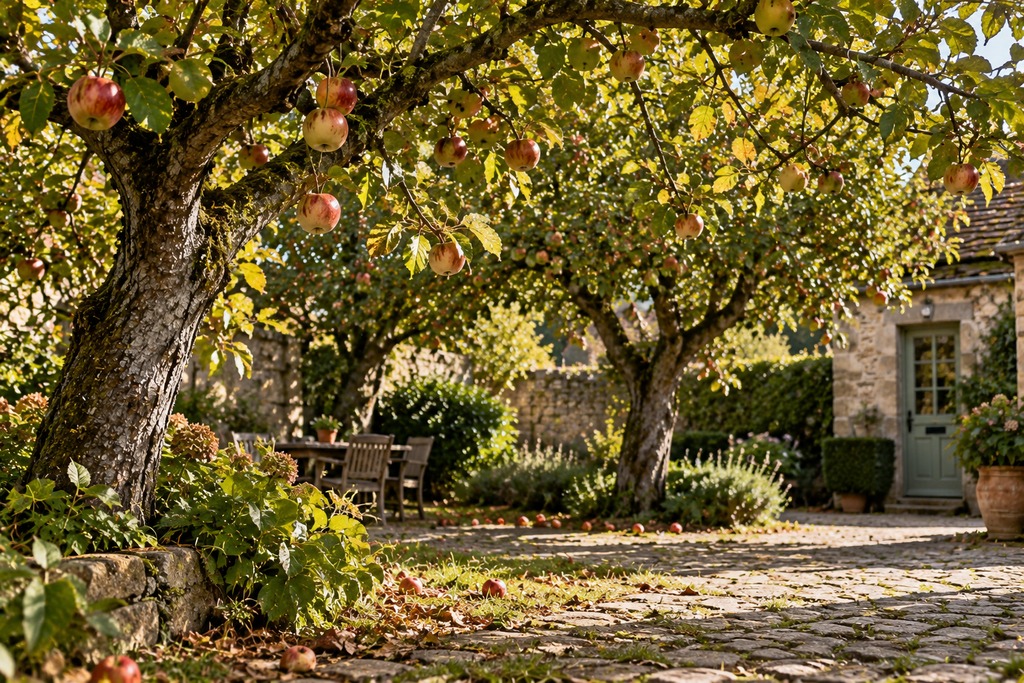
Traditional orchards are also surprisingly good habitat — older trees with hollows and deadwood support insects, birds, and lichens that a modern, closely-managed orchard doesn’t have room for. Every tree planted, even a single one in a back garden, is a small contribution to keeping that variety, and that kind of habitat, in circulation.
Which apple variety should you grow?
There’s no single “best” apple — it depends what you want from it. Here’s a quick steer:
- Want to eat it fresh off the tree? Look at a dessert variety such as Discovery (early, crisp, ready from August) or Egremont Russet (nutty, traditional, stores well into winter).
- Want it for cooking, crumbles and pies? Bramley’s Seedling is the classic choice — a vigorous tree and a properly sharp, fluffy-when-cooked apple.
- Short on space? Look for trees grafted onto a dwarfing rootstock, or a trained form such as a cordon or espalier, which can be grown against a fence or wall.
- Only planting one tree? Check whether the variety is self-fertile. Many apples need a different variety flowering nearby at the same time to pollinate properly, so if you’ve only got room for one, choose a self-fertile variety or make sure a neighbour’s tree can do the job.
When to plant, and why autumn has the edge
Fruit trees are typically sold and planted as bareroot stock through the dormant season, roughly November to March, which makes early autumn the right time to think it through and get your order in before the rush. Planting while the tree is dormant and the soil is still workable gives roots a full winter to settle in before next spring’s growth gets underway — a head start a container-grown tree planted later in the year simply doesn’t get.
Frequently asked questions
Apple Day is a UK celebration of apples, orchards, and the diversity of British apple varieties, held every year on 21 October. It was started in 1990 by the charity Common Ground.
Apple Day falls on 21 October every year, including 2026. Events and celebrations often run for several weeks either side of the date, especially through regional orchard and harvest festivals.
Not always. Some apple varieties are self-fertile and will produce fruit on their own, but many need a different variety flowering nearby at the same time for pollination. Check the variety before you buy if you’re only planting one tree.
Bareroot apple trees are best planted while dormant, from November through to March. Planting in this window gives the roots a full winter to establish before spring growth begins.
The short version
Apple Day, held every 21 October, was founded in 1990 to celebrate the huge diversity of British apples and the orchards that grow them. Planting your own tree this autumn — whether a classic Bramley, a russet, or something more obscure — is a small, genuinely lasting way to be part of that story.



Leave a Reply