There are three groups of lavender grown in UK gardens. English lavender (Lavandula angustifolia) is the hardiest, longest-lived, and best-scented — the right choice for most gardens, hedging, and cooking. Dutch lavender (Lavandula × intermedia) is larger, later-flowering, and has a more complex camphor scent prized for oils. French butterfly lavender (Lavandula stoechas) is the showiest but least hardy — best grown in a pot you can bring under cover in winter. Drainage and an annual hard prune in August are the two things that most determine how long any lavender lasts.
This guide tries to help you choose your lavender by giving you a quick overview of the three main types of lavender grown in the UK — but if you want more detail, take a look at our advice on types of lavender. Here we will cover where and how to plant lavender, and touch on aftercare including the pruning basics. We get more questions on how to prune lavender than almost anything else, so if you also want to learn, there is a more detailed piece on pruning and trimming lavender here.
Which Type of Lavender Should I Grow?
If you have to choose one type of lavender to grow in the UK, it should be English lavender.
This is the UK — it rains. Sometimes the wind comes straight from Siberia. Unquestionably, the hardiest, longest-lived, and all-round toughie is English lavender. For a nice simple life, stop right here and buy British.
However, for variety in terms of size, flower shape, and impact, Dutch lavenders can be real stars. And neither English nor Dutch is as pretty in a pot as French lavender.
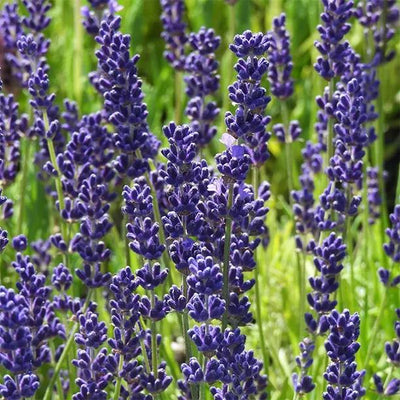
English lavender (Lavandula angustifolia) has the best scent of the three groups. This is the lavender for the best purple, for edges humming with pollinators, and it's a perfect height for six-year-olds to jump over. This is the one you cook with and cut for jam-jar arrangements on the kitchen table. At just under 50cm, Hidcote is the most popular edging plant in the UK — a wonderful purple, tight growth, and an RHS AGM. Munstead, at about 60cm, is a fraction taller and a shade lighter, and many chefs think it has the best flavour for baking. Both are trouble-free and will serve you well.
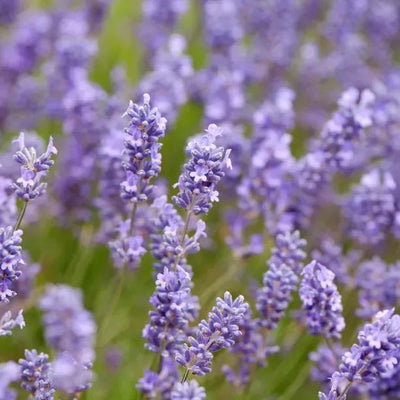
Dutch lavender (Lavandula × intermedia), more properly called Lavandin, is a naturally occurring hybrid between English and Spike lavenders. The most obvious difference is size — the plants are bigger, ranging from well over 60cm to up to a metre. When you get close enough, you will also notice the scent is different. There is a camphor note, which is prized in oils, pot-pourri, and candle-making. Grosso is the world's most widely grown variety for oil production — strange to think that all those lavender fields of Provence are actually Dutch. Meanwhile, for colder spots, Phenomenal has the best winter foliage of any lavender we grow.
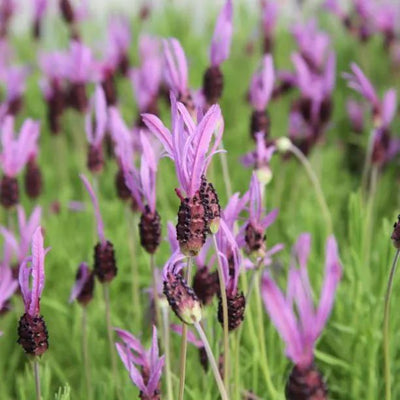
French butterfly lavender (Lavandula stoechas) has the showiest flowers — fat heads topped with petal-like "ears" — but it is also the least hardy. It might survive all year outdoors, but we strongly suggest you grow it in a pot you can bring under shelter in winter. It's not the cold; it is the damp. Papillon is the classic butterfly type.
The most usual mistake with lavender is choosing French butterflies for a cold, wet site. They may survive the worst first winter, but they almost certainly won't make it through the second. Pot planting produces perfect Papillons...
Where Should I Plant Lavender?
Plant lavender where you get the most sun and have the best drainage.
The clue is in the leaf; lavender's narrow, silvery foliage evolved in hot climates. So open, sunny, preferably facing south or west. On a slope. These are all good. Lavender is salt-tolerant and couldn't care less about wind. And while this is not a promise that they are deer-proof, most herbivores prefer not to eat scented foliage.
Can I grow lavender in shade? The books all say it's a bad idea and we agree; it needs sun to do well. If you have no choice, then try it. But be prepared to replace it every couple of years, and it will probably look pretty miserable in between replacements.
What Soil Does Lavender Need?
In case you hadn't noticed, we think that drainage is critical. With the exception of the French varieties, lavender can take the coldest British winter. Put a plant in a nice, warm but badly drained bed in the Scilly Isles, and it will turn up its toes.
Free-draining soils are a problem for most gardeners because they tend to be poor. Not so with lavender. The richer the soil gets, the less they smell. You'll get more foliage and fewer flowers, and your plants will get leggy sooner. It won't cope with pure sand without a bit of help. A little bit of compost is good. Otherwise, don't do anything to improve the soil. Just let them get on with it.
Lavender does really well in chalky and sandstone soils. The ideal pH is slightly alkaline, in the range 7.5 to 8.5, so if yours is lower than seven, follow the instructions on the packet and add a bit of lime.
At the risk of repetition, one person's "clay" is another's "rich loam." Here, when we're talking about clay, we're talking pottery. And unless the lie of the land favours you, have a look at our section on lavender on clay below. It can be a bit like pushing water uphill with a fork. Hard work.
How Do I Plant Lavender?
Plant lavender in late spring when the soil is warming, in weed-free ground.
Don't plant lavender too early; April into May is about the right time. Tough though it may be, lavender is prone to transplant shock, which will hold growth back. Transplant shock happens when the soil is too cold. Put it another way: lavender enjoys cold soil about as much as I enjoy a cold bath.
So we don't start delivering lavender until mid-April at the earliest, and only if nighttime temperatures are high enough. We did an experiment once, planting an established 3-litre lavender at the end of March and another from the same batch in the first week of May. By the end of June, against every metric that matters, the one planted in May had outperformed the one planted in March — it was bigger, carried more flowers, and looked healthier. By the way, you can use the warm soil of autumn to plant lavenders in 2-litre pot sizes and up at the end of the season. Their roots will establish, and they'll be ready to grow away in spring.
How Do I Prepare the Ground for Lavender?
Whenever preparing the ground for planting, there should be three thoughts in your mind: competition, drainage, improvement. Competition means getting rid of weeds, tree roots, and anything else that might get in the way of good root development. Drainage is usually about breaking up compacted soil that you often find nine or twelve inches deep. In some cases, it can be about the addition of grit or sand — but with lavender, if you need to do that, rethink your planting location. With lavender, improvement means add nothing.
Which Size Lavender Plant Should I Buy?
They will all end up the same. So really, we're talking about patience and cost.
P9 pots (9cm) hold year-old plants, making them the cheapest and smallest option. Great for window boxes, large hedge orders where cost matters, and for growers who like to shape their plants from the ground up. Plant them out from the end of May when the soil has really warmed up, and don't plant them out late in the season. They won't have time to establish before winter.
2-litre pots give you more. More root, more flower in the first year, and more size. Planted at three to the metre, you will have a hedge that will have joined up by the end of its first summer. They cost more than the P9s but you can plant them out from April and you can plant them in the autumn. This is our most popular size.
Can Lavender Grow in Clay Soil?
The short answer is: in real clay, lavender can't grow, survive, and prosper without good drainage, which is almost a contradiction in terms. You can try planting it in mounds like molehills, but our advice is, if your soil really doesn't drain, grow it in pots.
Does Lavender Need Full Sun?
Lavender will take as much sun as it can get, but six hours of direct light a day is a minimum. It will tolerate a little shade, but tends to become leggy and flower poorly.
How Often Should I Water Lavender?
Water it very well indeed when you plant it, and then maybe water it three more times in the summer after planting, also very well indeed. Then never water it again.
Can I Grow Lavender in a Pot?
All lavender grows very well in pots. For French butterfly lavender, we recommend pot culture — the best way to grow them in the UK. Dilute your compost with grit or sand, and use a soil-based compost to ensure good drainage.
How Do I Prune Lavender?
Cut it back to about eight inches high by eight inches wide at the very end of August. Give it a very light trim as it comes into growth in March. You can find the full guide on how to prune lavender here.
How Long Does Lavender Live?
In a sunny position in well-drained soil, a properly pruned English lavender such as Hidcote can give you fifteen to twenty years. On heavy soil or where there is some shade, you may get half of that. The same estimates apply to Lavandin, while French lavender is naturally shorter-lived, with five years being a good span.
Can I Save Leggy Lavender?
You can save leggy lavender as long as the neglect has not been going on for too long. If the exposed wood in the middle of the plant has some young shoots showing in August, cut back to the young shoots. If it does not, then it is beyond redemption.
What Is the Best Lavender for Clay Soil?
Recognising that no lavender will survive on true clay without drainage, if you had to choose one, it should probably be Munstead.
When Will I Get My Lavender?
We grow a lot of lavender right here in Somerset, and we only send plants out when conditions are right for planting — with lavender, that means warm soil, so typically from late April onwards. If spring comes late, we hold deliveries rather than send plants out into cold ground. If you need advice at any point, the team here — which is made up of gardeners — is always happy to help.
Is Lavender Good for Bees?
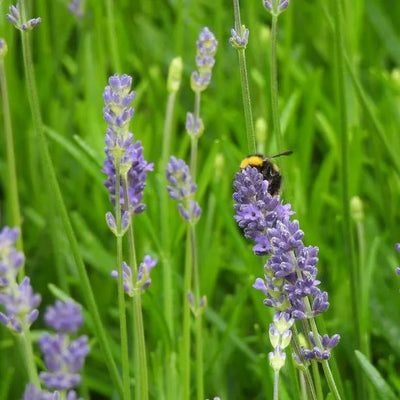
In a list of garden plants that grow well in the UK and are good for bees, hoverflies, and other pollinators, lavender would certainly be in the top ten.
Is Lavender Safe for Cats and Dogs?
While lavender oil can be toxic, especially to cats, the amount of oil from a lavender plant in your border is too little to have any effect.
Related Questions
-
Which lavender is best for my situation? — See south-facing gardens, dry gardens, and clay soil above, or our guide to types of lavender for a full comparison of English, Dutch, and French varieties.
-
How and when should I prune? — The basics are covered above. For the full method — including rescuing overgrown plants, the three eights mnemonic, and how French lavender differs — see How and When to Prune Lavender.
-
Can I grow lavender in a pot? — Yes, and it is often the best option on heavy soil or in colder gardens. See Growing Lavender in Pots above for compost mix, pot size, watering, and feeding advice.
-
What is the hardiest lavender for the UK? — English lavender (Lavandula angustifolia) varieties like Hidcote and Munstead are the hardiest, reliably surviving winters throughout the UK. See Which Type Should I Grow?
Buy Lavender Plants
All our lavender is grown here in the UK and dispatched when conditions are right for planting. If you already know what you want, browse our full range of lavender plants for sale. If you are not sure where to start, our top five picks for open garden planting are the varieties that perform most reliably across the widest range of UK gardens.
For hedging, Hidcote and Munstead are the proven choices — compact, hardy, and RHS AGM holders. For a pre-mixed colour display, see our mixed English lavender hedge pack. For the biggest flowers and strongest scent, try Grosso or Phenomenal. For pots and sheltered patios, Papillon is the classic butterfly type. For the full range of English varieties including whites and pinks, see our English lavender collection.









 Sign In
 Saved items
 Secure, One-Tap Checkout
 5 Star Feefo Rating
 Hand Picked, Delivered to Your Door!
 1 Year Bareroot Guarantee
 Platinum Trusted Service Award 2026
 Mail Order Plant Experts - Est. 1949







Comments (0)
Add a commentLeave a comment
Please note, comments need to be approved before they are published.