The basics of apple pollination
Here's the bit that catches a lot of new orchardists out: most apple trees can't pollinate themselves. Each blossom needs pollen from a different variety, carried over by bees, and — crucially — both trees need to be in flower at the same moment for it to work. Grow two varieties from wildly different ends of the flowering calendar and you could end up with two lovely displays of blossom that never actually meet.
That's the whole reason flowering groups exist. Every variety is slotted into a group based on its typical bloom time, so sticking to the same group — or straying just one group either side — gives you the timing overlap a good crop depends on.
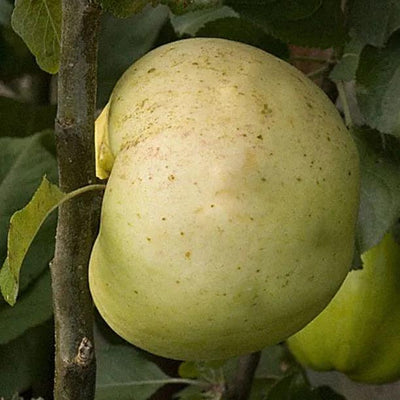
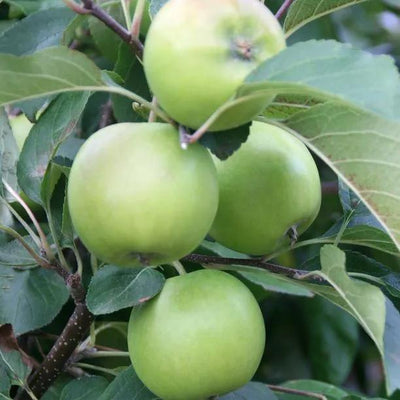
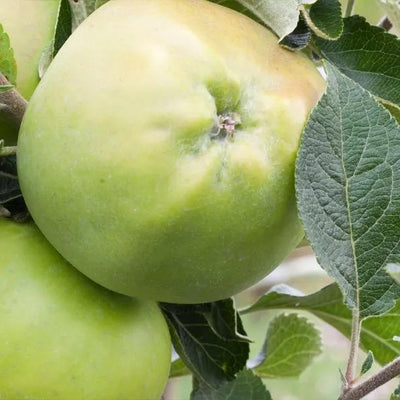
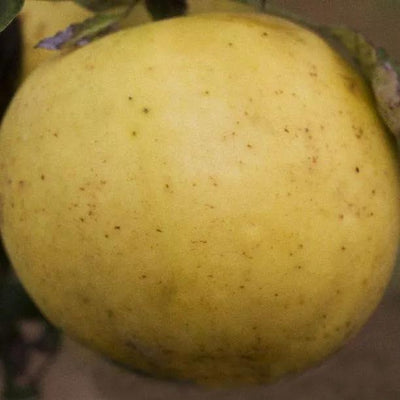
Varieties in Group B
Everything above blooms in this early-mid window, so any of these will cross-pollinate with each other.
Triploid varieties — the exception to the rule
A small number of apple varieties are triploid, which is a fancy way of saying their pollen doesn't work — it's sterile. Rather than one pollination partner, triploid trees need two other compatible varieties growing nearby to get a decent crop. We flag these clearly on the product page for each triploid variety, so there are no surprises once you're planting.
Not settled on Group B?
Because flowering times run on a spectrum rather than in strict blocks, Group B's blossom overlaps at both ends — with the earlier Group A varieties and the later Group C ones. So a tree from either neighbouring group should pollinate happily alongside your Group B trees. For the complete compatibility picture across every group, take a look at our full pollination guide.


 Sign In
 Saved items


 5 Star Service Rating




 Secure, One-Tap Checkout
 5 Star Feefo Rating
 Hand Picked, Delivered to Your Door!
 1 Year Bareroot Guarantee
 Platinum Trusted Service Award 2026
 Mail Order Plant Experts - Est. 1949
 1 Year Bulb Guarantee