


Sold as:

from £10.95


Sold as:
from £19.99
 5 Star Service Rating




 Secure, One-Tap Checkout
 5 Star Feefo Rating
 Hand Picked, Delivered to Your Door!
 1 Year Bareroot Guarantee
 Platinum Trusted Service Award 2026
 Mail Order Plant Experts - Est. 1949
 1 Year Bulb Guarantee
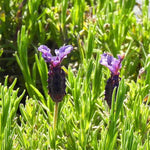



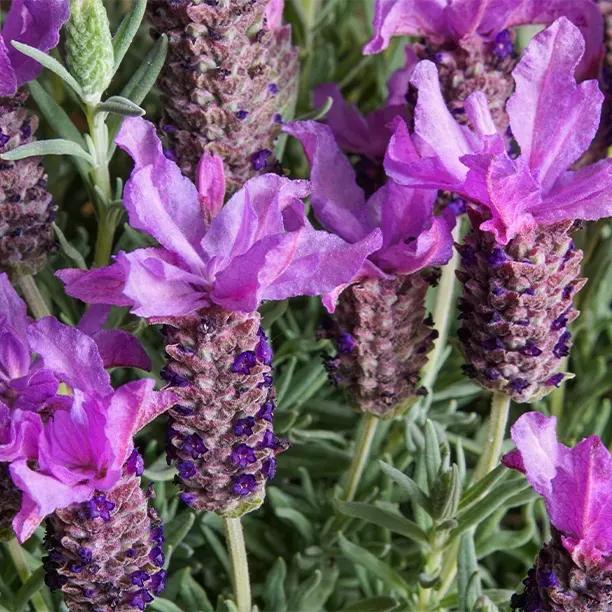
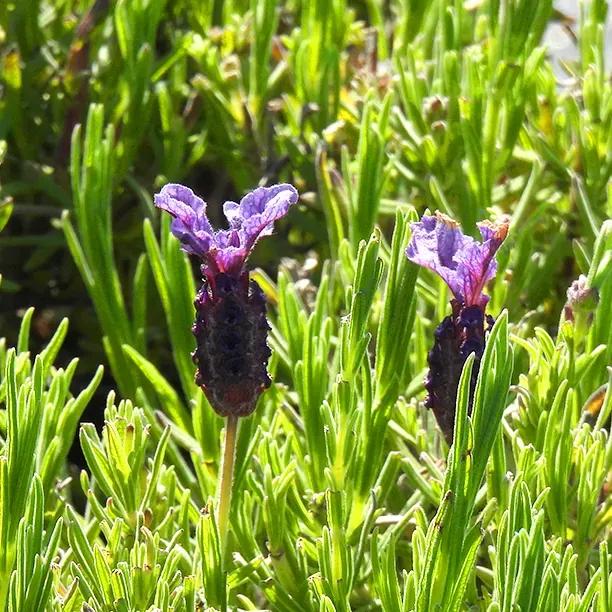
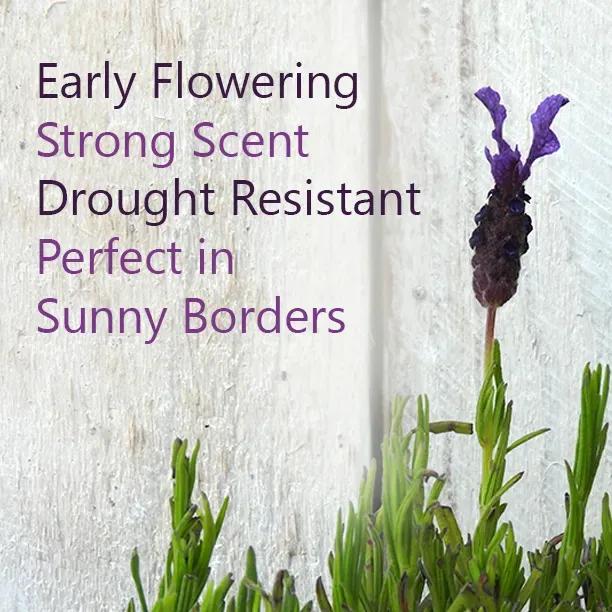
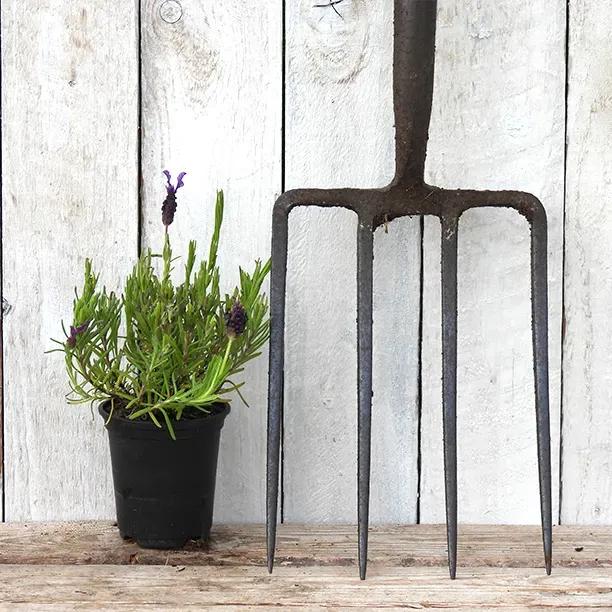




All butterfly lavenders have the distinctive bracts that sit on top of the flower head like a pair of rabbit ears, but Regal Splendour has bigger, showier ones than most. The ears are a paler lilac-pink, the flower head beneath them a saturated deep violet, and the contrast between the two is what makes this variety stand out from the rest of the stoechas crowd. The whole plant has a loose, generous habit — not as tidy as a clipped English lavender, not as wild as some French types can get, and it flowers from May right through into late summer if you deadhead it occasionally. That is a long season by any lavender standard.
The scent is not what most people expect from lavender. French lavenders have a warmer, more resinous fragrance with a camphor-eucalyptus edge that you either love or find a bit medicinal. By the way, in our experience customers tend to fall into two camps: those who adore the exotic look and forgive the scent, and those who sniff it once and go back to Hidcote. Both camps are right. Regal Splendour is a plant you grow for the flowers and the visual theatre, not for filling sachets or flavouring shortbread.
French lavenders are Mediterranean plants, and Regal Splendour is no exception. In a sheltered south-facing spot with sharp drainage, it will usually sail through a normal UK winter in the southern half of England. The problems start when winter is wet rather than cold — stoechas types hate sitting in damp soil more than they hate frost. A spell of minus five with dry soil? Probably fine. A fortnight of near-zero temperatures with waterlogged clay? That is when you lose them.
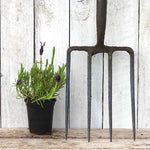
If you garden north of Birmingham, or on heavy ground, grow Regal Splendour in a terracotta pot and bring it somewhere sheltered over winter. A cold greenhouse, an unheated porch, even a south-facing wall with a bit of fleece in January will usually do the job. We sell plenty of these to gardeners in Yorkshire and Scotland, but we would be dishonest if we said they were as bulletproof as Munstead or Phenomenal. They are not. That is the deal you make with French lavenders.
A gravel garden is Regal Splendour's natural home. Stand it alongside rosemary and Cistus (rock rose) and you have a Mediterranean corner that more or less looks after itself once established. Agapanthus works well behind it — the round blue heads and the spiky lavender bracts make a good pair in July. Smaller sedums and Erigeron karvinskianus can tumble around the base. Lusi Purple, the compact Portuguese butterfly lavender, makes a lower companion at the front of the same bed. Avoid planting next to thirsty perennials — Regal Splendour wants sun and neglect, not competition from moisture-hungry neighbours.
Your Regal Splendour lavender is grown here in the UK and dispatched when spring conditions are right for planting — we will not send it out into a late frost. Plants travel by next-day courier, arrive with our guarantee, and our team of real gardeners here in Somerset are always happy to help if you have questions about siting, soil, or winter protection. Have a look at our full lavender collection or browse the French butterfly lavender range. We are a Feefo Platinum Trusted Service — which means our customers said nice things about us, and enough of them to count.
Our blog on growing lavender covers soil, pruning, and winter care in detail. Here are the questions we hear most about Regal Splendour.
English lavender (Lavandula angustifolia) is fully hardy, sweetly scented, and compact — the classic hedging and cooking lavender. French or butterfly lavender (Lavandula stoechas) is showier, with those distinctive bracts on top of each flower head, but it is less hardy and the scent is resinous rather than sweet. Think of English lavender as the sensible one and French lavender as the one that turns up to the party in a hat. Regal Splendour is firmly in the hat camp.
Yes, and for gardeners in cooler or wetter parts of the country, a pot is the smartest option. Use a container at least 30cm across with drainage holes, fill it with a gritty, free-draining compost (50:50 multi-purpose and perlite or sharp grit works well), and stand it in the sunniest spot you have. The advantage of a pot is that you can move it under cover when winter turns nasty. Water sparingly — French lavenders are more likely to die of wet feet than thirst.
Lavender oil has some insect-repellent properties, and French lavenders like Regal Splendour release a stronger, more pungent volatile oil than English types, so in theory they should be better at it. In practice, a single plant on a patio is unlikely to create a mosquito-free zone — you would need the essential oil applied directly for any real effect. Grow it because it is beautiful. If it keeps a few mosquitoes at bay, consider that a bonus.
Semi-ripe cuttings in late summer work well for most lavenders, including Regal Splendour. Take 8–10cm shoots from non-flowering stems, strip the lower leaves, dip in rooting hormone if you have it, and push them into a pot of gritty compost. Keep them somewhere bright but not in direct sun, and most should root within four to six weeks. French lavenders tend to root a bit less reliably than English types in our experience, so take more cuttings than you think you need.
Prune every year without fail, and get the timing right. Trim Regal Splendour after the main flush of flowers — typically late summer — cutting back the spent flower stems and shaping the plant lightly. The key rule with all lavenders: never cut into old bare wood. It will not reshoot. French lavenders are a bit more forgiving than English types on this front, but a plant that has been left unpruned for three or four years is usually beyond rescue. Start pruning from year one and you will get a good five to eight years from it. Our pruning guide has a short video that makes it all very clear.


 Sign In
 Saved items