

Sold as:

from £10.95

Sold as:
from £19.99
 5 Star Service Rating




 Secure, One-Tap Checkout
 5 Star Feefo Rating
 Hand Picked, Delivered to Your Door!
 1 Year Bareroot Guarantee
 Platinum Trusted Service Award 2026
 Mail Order Plant Experts - Est. 1949
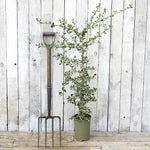

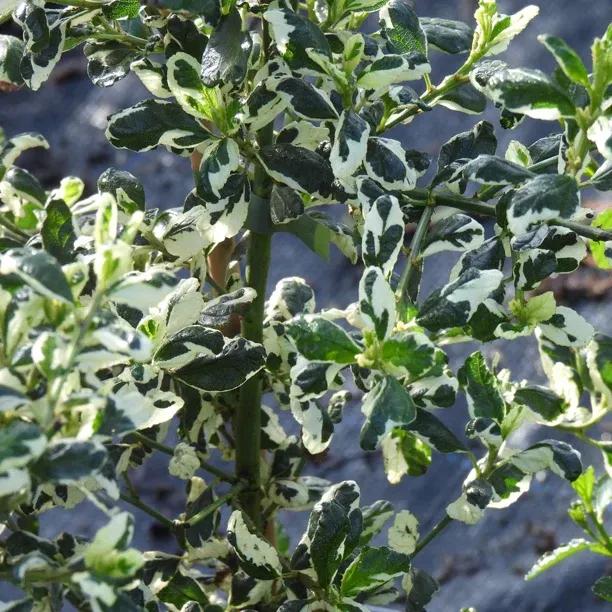
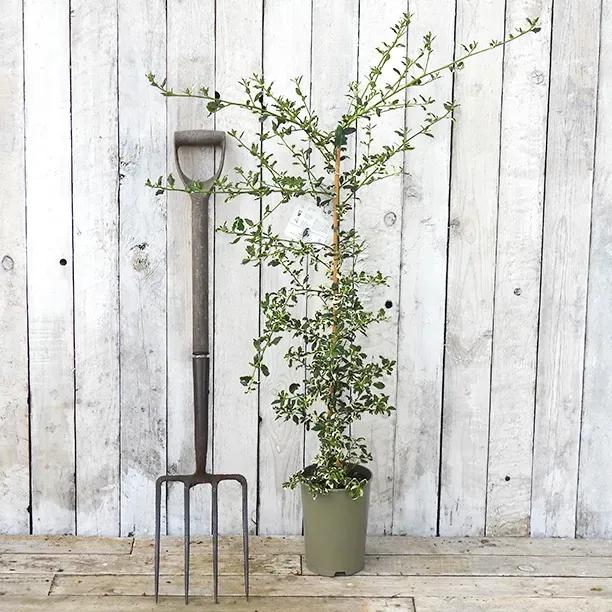




Silver Surprise is a compact variegated evergreen ceanothus of 0.5 to 1m, with cream and green leaves and clusters of small, rich blue flowers in spring. The RHS rates it H4, so it wants a sunny, sheltered spot, and a wall helps.
Most ceanothus keep their show for spring and spend the rest of the year as plain green shrubs. Silver Surprise gives you the leaves as well: vivid cream and green, evergreen, like a smooth version of a silver-edged holly. In spring, small clusters of rich blue flowers cover it.
It began as a sport (one mutant branch) of Yankee Point, found by Pete Brandt. The parent is the more vigorous plant and has plain green leaves.
Give it full sun, fertile well-drained soil and shelter. A south or west facing wall or a bank suits it, and a bank also drains. Ceanothus carry nitrogen-fixing nodules on their roots, so skip the feed. Prune lightly after flowering to keep the shape. It is not suitable for clipped hedging.
The RHS rates Silver Surprise H4, so an average winter will not kill it. What cold, drying winds do is scorch the leaves, and the leaves are the reason to grow it. A wall or a sheltered corner keeps them looking good through winter.
The blue spring flowers make a backdrop for a pink hebe such as Strawberries and Cream, which flowers later in the same sunny, free-draining ground. White Dazzler Choisya is the other small plant for a sheltered corner. For a dry, sunny border, add lavender.
Ashridge Nurseries has sold plants since 1949 and is a Which? Best Plant Supplier 2025. Your ceanothus is grown for us by specialist growers, neonicotinoid-free, and arrives pot-grown all year round. Browse more Californian lilacs, then ring us in Somerset with any question.
Lightly, after flowering, to keep the shape. It needs very little.
The RHS gives 0.5 to 1m (20 to 40in) in height. It is one of the smaller ceanothus we sell.
The RHS rates it H4, which means hardy through an average winter, with shelter from strong, cold winds. A south or west facing wall suits it, and the leaves stay in better condition there.
In full sun, in fertile, well-drained soil, sheltered from cold winds. A wall or a bank works well, because both drain.
It tolerates lime, but a thin layer of soil over chalk is the real problem. Choose a spot with fertile, well-drained soil.
No. Ceanothus carry nitrogen-fixing nodules on their roots, and the RHS gives no feeding advice for them.
Yes. The RHS lists Ceanothus on its Plants for Pollinators list.


 Sign In
 Saved items