Out of Stock
Sold as:

from £6.99



Sold as:
from £19.99
 5 Star Service Rating




 Secure, One-Tap Checkout
 5 Star Feefo Rating
 Hand Picked, Delivered to Your Door!
 1 Year Bareroot Guarantee
 Platinum Trusted Service Award 2026
 Mail Order Plant Experts - Est. 1949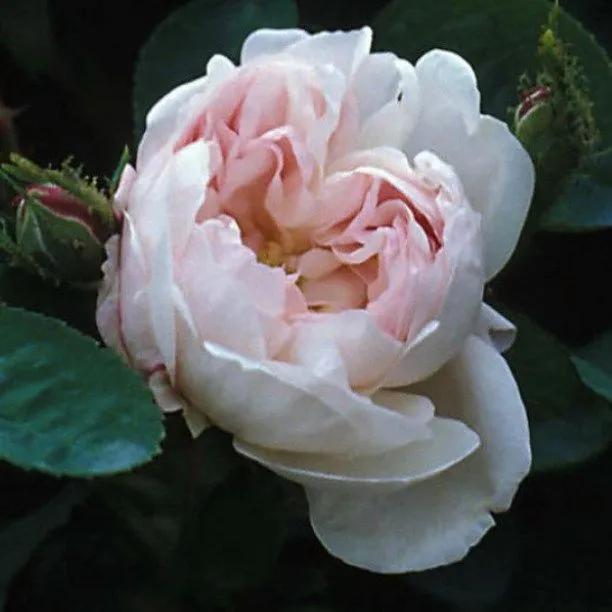

Alfred de Dalmas is a Moss rose bred in France in 1855, bearing soft blush-pink double blooms that fade to creamy white with the distinctive mossy sepals characteristic of its class. Strongly fragrant with sweet perfume, it flowers repeatedly from June to October, a rarity among Moss roses and one reason it remains among the best of its kind.
If you love old roses but have always thought Moss varieties flower only once, Alfred de Dalmas will change your mind. Bred by Portemer in France in 1855, this is one of the few Moss roses with genuine repeat-flowering habit, producing blooms throughout the growing season from June right through to the first frosts. Most gardeners know Moss roses for their luxurious, mossy sepals and buds that look as though they have been dusted with fine green velvet. Alfred de Dalmas has this character in abundance, but adds the practical advantage of a second and third flush of flowers when you deadhead spent blooms.
The flowers themselves are a soft blush pink that mellows to creamy white as they age, arranged in full, quartered double blooms that open loosely and hold their shape well. The fragrance is strong and true to the sweet, complex scent you expect from an old rose. At 100cm (3.5ft) tall with a compact, upright habit, it fits neatly into any border without sprawling, and is just as at home in a cottage garden scheme as it is grown formally.
This is a rose that rewards generous deadheading. Snip off the spent flowers just above the first strong outward-facing leaf, and the plant will respond by producing another flush within weeks. In a mild autumn, you may find it still flowering in November. The mossy growth on stems and calyx is part of its ornamental appeal and requires no special treatment.
Plant in full sun to partial shade, ideally in soil enriched with well-rotted manure or garden compost before planting. Feed with a balanced rose fertiliser in late March and again in mid-July to support the repeat flowering cycle. Water deeply during dry spells, especially while the plant is establishing, and mulch around the base in spring to suppress weeds and retain moisture. Pruning is light: in March, cut out any dead or diseased wood and lightly shape the plant to remove crossing stems. Unlike many shrub roses, Alfred de Dalmas does not need hard pruning, so you need not cut it back severely.
The compact habit means it works well in borders of mixed herbaceous plants, where its soft pink tones sit comfortably among lavenders, salvias, and catmints. It is also excellent for cutting, with long stems carrying several flowers at once, and the mossy buds add unusual interest to a vase arrangement.
The defining feature of Alfred de Dalmas is its repeat-flowering nature. Most Moss roses are summer-flowering only, making a single glorious display and then going to sleep until next year. Alfred de Dalmas breaks the mould, delivering blooms in early summer, midsummer, and again in late summer and autumn if conditions are favourable. This makes it far more useful in a modern garden where continuous colour matters. The mossy calyx is fully present on all flushes, so you get the ornamental benefit right through the season, not just in June.
Pair Alfred de Dalmas with soft perennials that echo its romantic character. Lavender makes a perfect partner, flowering alongside it and sharing the same cultural needs. Clematis (choose late-flowering varieties) will bloom through late summer. Allium adds height and airy structure, while hardy geraniums and salvias provide blue and purple tones that complement the pink blooms. Group it with other shrub roses of similar habit for a layered effect.
Our roses are budded onto vigorous rootstock and grown for us by specialist rose growers, ensuring strong healthy plants. As winners of the Which? Gardening Best Plant Supplier award and the Feefo Platinum Trusted Service Award, we stand behind every plant we send. Browse our complete rose collection.
Bare-root roses plant best from November to March when dormant. Potted plants can go in anytime the ground is not frozen or waterlogged, though autumn and spring are ideal for establishment.
Deadhead faded blooms regularly, cutting just above a strong outward-facing leaf. Feed with a balanced rose fertiliser in late March and again in mid-July to fuel repeat flowering. Water well during dry spells.
This variety has no documented disease resistance, so provide good air circulation, avoid overhead watering, and remove any affected leaves promptly. Choose a site with full sun to partial shade for best health.
At 100cm (3.5ft) tall with an upright compact habit, space plants 75-90cm apart. This variety does not spread widely, making it ideal for borders and smaller gardens where space is limited.
Yes, it grows well in a large container (at least 45cm diameter) filled with quality rose or multi-purpose compost. Potted roses need regular feeding and watering, especially during flowering, and should be repotted every second year.


 Sign In
 Saved items