


Sold as:

from £10.95

Sold as:
from £19.99
 5 Star Service Rating




 Secure, One-Tap Checkout
 5 Star Feefo Rating
 Hand Picked, Delivered to Your Door!1 Year Bareroot Guarantee
 Platinum Trusted Service Award 2026
 Mail Order Plant Experts - Est. 1949
 1 Year Bulb Guarantee
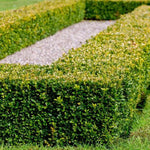
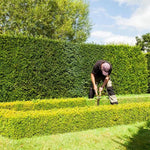
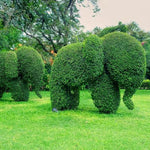
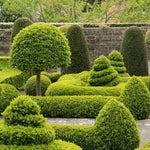




Common Box is the native evergreen for low formal hedges, edging and topiary: small, glossy, dark green leaves on a slow, dense plant that clips to a sharp line. It grows in any well-drained soil, chalk included, and is happier in shade than in hot sun.
Common box is the go-to variety if you want plants to shape into sharp-edged evergreen edging hedges or topiary. Left uncut, the shrubs can grow into small trees more than 5m. They respond well to cutting, forming dense, springy plants packed with small, glossy, bright green oval leaves. Box is shade tolerant, hardy down to -20C and frost resistant, so all areas of the UK can enjoy it. Add to that a slightly citrusy, fresh smell, and you have a winner. We stock other varieties of box hedging here.
Delivery season: Bare-root plants are delivered in winter and are only planted when they're dormant, from November to April. They can be pre-ordered in summer.
Choosing a size: Small plants are cheaper and more convenient for hedging, unless instant impact is your priority. If you are buying a few plants for ornamental use, then you may as well use bigger ones. All our hedge plants are measured by their height in centimetres above the ground (the roots aren't measured).
Box will grow well in poor, dry soils including chalk, and it thrives in shady conditions; the leaves can be scorched by sun and winds. It doesn't like poor drainage or waterlogging, but it'll grow in heavy clay on a slope or on top of a ridged bed where the drainage is good.
The other thing that Box hates is poor air circulation, which is a necessary condition for box blight.
As it's slow-growing, you only have to clip it once a year, and it can eventually grow to 2m as a hedge.
Spacing a Common Box hedge:
Plant at 5 plants per metre in a single row.
Box is one of the best hedging plants for a formal look, whether that's as traditional as a parterre or as contemporary as geometric topiary. The ornamental, evergreen low-growing hedges look equally good frosted in winter or glossy green in summer.
It clips so tightly that you can achieve knife-edge lines with it, due to the sheer number of small leaves. Box can act as a frame for bedding schemes and stop plants spilling over paths: think of Monty Don's Jewel Garden at Longmeadow. Here, the rich tones of dahlias and grasses tumble around. Ornamental kitchen gardens on country estates were often edged with box to create a productive yet handsome vista.
Buxus sempervirens is one of the favourite plants used for topiary, as it's so dense: think of the ubiquitous box balls you see in many a modern garden. However, box can live for several centuries and grow up to 6m tall, as many huge examples in stately homes will testify.
Since box blight became a problem, the tradition of clipping plants on Derby Day is no longer advised. Buxus is better trimmed in winter, as box blight likes warm, damp conditions where plants are overcrowded. Spores then enter wounds to a plant. Clip in winter, on a dry day when the temperature is above freezing.
There really is no other plant that can be sculpted as accurately, with such reliable coverage as box. However, if you would prefer something with about the same look but faster growing and without the risk of disease, consider using Lonicera nitida or Ilex Crenata.
Native to southern England and across South-western Eurasia, thriving on hillsides and woodland. England's most famous wild populations of Box are on Box Hill in Surrey, the Cotswolds, the North Downs and the Chilterns.
In English folklore, Box was associated with sorrow and branches were thrown onto coffins by mourners. As a contrast, Box trees are considered sacred in Georgia, where twigs are taken to church on Palm Sunday to bring protection to the home and good luck.
Boxwood is highly prized for its density, close-grained texture and warm yellow tone. It is made into inlay and marquetry, even as a substitute for ivory. Traditional uses include croquet mallets, recorders and stringed instruments.
Containing steroidal alkaloids and flavonoids, Box has been used medicinally for centuries. Maladies supposed to be helped by box include gout, urinary tract infections, intestinal worms, skin problems, haemorrhoids, epilepsy and headaches. Homoeopaths use the leaves to treat rheumatism and fever.
Flowers & Bees: Box has been awarded the RHS's Plants for Pollinators Award: bees love it, and it provides a sheltered home for birds, small mammals and insects. Fairly inconspicuous male and female green-yellow flower clusters are produced in April and May. Pollinated female flowers develop into a brown, woody seed case.
Firewood: It will burn well, but as it is one of the most expensive timbers in the world, costing as much as £40,000 per cubic metre, it is not advised.
Low Box edging wants something tall, dark and formal behind it, and Yew is the classic answer; there are more sizes under Yew hedging. Inside a Box frame, Dahlias and grasses can spill as they please, as they do at Longmeadow. Dust bareroot plants with Rootgrow as you plant.
Hedging is not a sideline here: your Box is grown for us as hedging by specialist growers. Bareroot plants are lifted to order while dormant and guaranteed for 12 months. Ashridge has sold plants since 1949 and is a Which? Best Plant Supplier 2025.
Five plants to the metre, 20cm apart, in a single row, whichever size you buy. Box is slow, so do not be tempted to stretch the spacing to save plants.
Keep it anywhere from 30cm edging to a 2 metre hedge. Left alone, it reaches about 5 metres as a large shrub or small tree, over 10 to 20 years.
Yes, and it prefers it. Box grows best in partial shade and can be scorched by sun and strong winds where the soil is dry.
Usually Box blight or Box Tree Caterpillar. Clean tools and good airflow through the plants help against blight. If either keeps coming back, Lonicera nitida gives you a similar look.
Slowly, which is the point: one clip a year keeps it sharp. Buy the 30/40cm size if you want the line of a hedge sooner.
Bareroot plants are delivered from November to April, while they are dormant. The pot-grown size can be delivered and planted in any month when you find it in stock.


 Sign In
 Saved items