
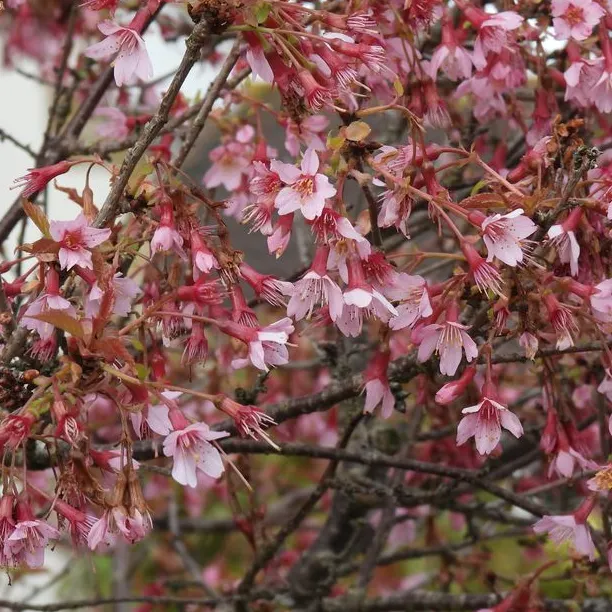
What is a flowering cherry tree, and why are they so popular in UK gardens?
A flowering cherry tree is an ornamental member of the Prunus genus grown primarily for its spectacular spring blossom rather than for edible fruit. These trees produce some of the most breathtaking floral displays of any hardy tree available to UK gardeners, with blooms ranging from pure white through blush pink to deep rose, often appearing before the leaves unfurl so that the whole canopy seems to float in colour.
Related guides
- Best Trees for Small Gardens — Buying Guide
- Best Trees for Autumn Colour
- How to Choose and Plant a Garden Tree
Which flowering cherry varieties are best for UK gardens?
The best flowering cherry for your garden depends on the space available, the flower colour you want, and whether you also value autumn foliage or attractive bark. The varieties below are reliably hardy across the British Isles and perform consistently well in our climate.
| Variety | Latin name | Flower colour | Mature height | Form |
|---|---|---|---|---|
| Kanzan | Prunus ‘Kanzan’ | Deep pink, double | 8–10 m | Vase-shaped |
| Yoshino | Prunus × yedoensis | White to pale blush | 8–12 m | Broadly spreading |
| Autumnalis Rosea | Prunus subhirtella ‘Autumnalis Rosea’ | Pale pink, semi-double | 4–6 m | Spreading, open |
| Amanogawa | Prunus ‘Amanogawa’ | Pale pink, semi-double | 6–8 m | Narrow columnar |
| Tai-Haku | Prunus ‘Tai-Haku’ | Pure white, single | 8–10 m | Broadly spreading |
| Cheal’s Weeping | Prunus ‘Kiku-shidare-zakura’ | Deep pink, double | 3–4 m | Weeping |
| Snow Goose | Prunus ‘Snow Goose’ | White, single | 5–7 m | Upright, compact |
Browse the full Ashridge cherry blossom trees collection for current stock and available sizes.
How big do flowering cherry trees grow, and which are best for small gardens?
Flowering cherries range from compact weeping standards of around 3–4 metres to broad spreading trees exceeding 10 metres, so matching the variety to your available space is essential. Choosing a variety that naturally suits your plot avoids the need for heavy pruning, which weakens cherries and opens wounds that invite disease.
For smaller gardens and tighter spaces, the following varieties stand out:
- Amanogawa — the classic choice where width is restricted. Its narrow, fastigiate habit (rarely more than 2–3 m wide) makes it ideal for urban gardens, front paths, or planting against a wall. Fragrant pale-pink flowers appear in April.
- Cheal’s Weeping (Kiku-shidare-zakura) — a grafted weeping tree usually supplied as a standard with a clear stem of 1.5–1.8 m. The arching branches cascade to the ground and are smothered in deep-pink double flowers in March–April, before the foliage.
- Autumnalis Rosea — invaluable for small gardens because it flowers in two phases: a main flush in November–December on bare stems, then again in spring. It remains modest in stature and provides winter interest when little else is happening.
- Snow Goose — one of the tidiest upright cherries available, with crisp white flowers and good resistance to bacterial canker. An excellent choice for a lawn specimen in a medium-sized garden.
See our full small garden trees collection for further ideas, and our advice article on best trees for small gardens for detailed guidance.
When do flowering cherry trees bloom in the UK?
Most flowering cherries bloom between late February and early May, with peak display typically falling in April across most of England and Wales. Choosing varieties with staggered flowering times extends the season of interest well beyond a single spectacular week.
| Flowering period | Varieties | Notes |
|---|---|---|
| Nov–Feb (winter) | Autumnalis, Autumnalis Rosea | Flowers intermittently on bare stems; precious winter colour |
| Late Feb–March (early) | Okame, Accolade | Often before leaves; vivid carmine-pink; can be caught by late frost |
| Late March–April (mid) | Yoshino, Cheal’s Weeping, Tai-Haku, Snow Goose | Peak season; most reliable display; simultaneous leaf emergence on some |
| Late April–May (late) | Kanzan, Amanogawa, Royal Burgundy | Flowers often appear with bronze emerging foliage; reduced frost risk |
A practical tip: plant at least one winter-flowering variety such as Autumnalis Rosea alongside a mid-season variety like Yoshino or Tai-Haku. The winter cherry bridges the gap between autumn and spring, while the mid-season tree provides the main spectacle.
How do you plant a flowering cherry tree?
Flowering cherries establish best when planted between November and March, whilst the tree is dormant and the soil is moist. Like all Prunus, they dislike waterlogged ground, so the single most important preparation step is to ensure reasonable drainage before you dig your hole.
Follow these steps for a successful planting:
- Choose the right site. Full sun produces the best flowering and reduces the risk of fungal disease. Avoid frost pockets for early-flowering varieties such as Okame or Accolade.
- Prepare the hole. Dig a square hole approximately three times the width of the root ball and the same depth. Loosening the sides helps roots penetrate the surrounding soil.
- Improve if necessary. On heavy clay, incorporate grit and organic matter to open the structure. On thin chalk or sandy soils, add well-rotted compost to improve moisture retention. Our guide to trees for clay soils has specific advice for challenging sites.
- Set the tree at the correct depth. The graft union (the kink in the stem just above ground level on grafted varieties) must remain above soil level. Burying it encourages scion rooting and can destabilise the tree.
- Stake securely. Use a short stake angled at 45° into the prevailing wind, tied with a proper tree tie, to allow the trunk to flex and develop strength. See our full guide on how to plant a tree with a stake.
- Water in and mulch. Apply a 75 mm layer of bark mulch or well-rotted compost in a 60–90 cm circle around the base, keeping it away from the trunk. This conserves moisture and suppresses competing weeds during the first critical growing season.
Bare-root flowering cherries from Ashridge are dispatched November to March and are typically 1–3 years old. They establish quickly, often catching up with container-grown specimens within two seasons.
What soil and conditions do flowering cherry trees need?
Flowering cherries are adaptable but perform best in a fertile, well-drained soil with a pH of 6.0–7.5. They tolerate chalk, loam, and sandy soils well, but struggle in ground that remains waterlogged for extended periods.
| Condition | Suitability | Notes |
|---|---|---|
| Free-draining loam | Excellent | Ideal growing medium; all varieties thrive |
| Chalky / alkaline soil | Good | Cherries tolerate high pH better than most ornamental trees |
| Sandy / light soil | Good | Improve organic matter to retain moisture |
| Heavy clay | Moderate | Improve drainage; avoid low-lying, slow-draining spots |
| Waterlogged ground | Poor | Roots suffocate; Phytophthora root rot risk is high — avoid entirely |
| Full sun | Excellent | Best flowering; improved disease resistance |
| Dappled / partial shade | Acceptable | Flowering and autumn colour may be reduced |
| Dense shade | Poor | Not recommended; weak, open growth and sparse blossom |
When and how should you prune a flowering cherry tree?
Prune flowering cherries in late spring or early summer — between May and July — when wounds heal rapidly and the risk of silver leaf disease is at its lowest. This is the single most important rule of cherry pruning and applies to all ornamental Prunus.
Silver leaf (Chondrostereum purpureum) is a fungal disease that enters through pruning cuts and causes progressive dieback. The spores are most prevalent and active in autumn and winter, which is precisely why the dormant season — instinctively appealing for pruning most trees — is so dangerous for cherries.
Practical pruning guidance:
- Young trees: Minimal pruning is best. Remove crossing, rubbing, or dead branches only. Establish the framework early by selecting well-spaced main branches and removing any that compete with the central leader (on upright varieties) or disrupt the intended form.
- Established trees: Annual light pruning immediately after flowering maintains shape and removes any dead or diseased wood. Always cut back to a healthy bud or lateral branch, and avoid leaving stubs.
- Weeping standards: Thin out the pendulous shoots in May to prevent the canopy becoming congested. Over-crowded centres stay damp and invite disease.
- Tools: Always use clean, sharp secateurs or a pruning saw. Wipe blades with a suitable sterilising solution between cuts if silver leaf is suspected in the area.
It is worth emphasising: flowering cherries do not respond well to hard renovation pruning. If a tree has been neglected and requires drastic reshaping, spread the work over two or three seasons and always work in the May–July window.
Do flowering cherry trees have value beyond blossom?
Yes — the best flowering cherry varieties offer three or even four seasons of garden interest. Blossom is the headline act, but several varieties also provide spectacular autumn colour, attractive glossy bark, and valuable food for early pollinators.
Autumn foliage: Kanzan turns rich amber and orange in October, while Tai-Haku develops warm gold and copper tones. Autumn colour on cherries is often underrated. Our article on best trees for autumn colour covers this in more detail.
Bark: The Tibetan cherry (Prunus serrula) is grown almost exclusively for its polished, mahogany-red bark, which gleams in winter sunlight and peels in horizontal bands — rivalling any ornamental birch for winter spectacle. It produces small white flowers but is primarily a bark tree.
Wildlife value: Single-flowered varieties such as Yoshino, Tai-Haku, and Snow Goose are far more valuable to early bees and other pollinators than heavily double-flowered types like Kanzan, whose densely packed petals make the nectaries inaccessible. If supporting pollinators is a priority, choose singles or semi-doubles. Small black cherries also provide food for birds in late summer.
Winter flowers: Autumnalis and Autumnalis Rosea flower on and off from November through to February on bare stems — an extraordinary asset in the winter garden when almost nothing else is in bloom.
What problems affect flowering cherry trees?
Flowering cherries are generally robust once established, but a small number of problems are worth knowing about so you can act promptly if they arise.
| Problem | Symptoms | Cause | Action |
|---|---|---|---|
| Silver leaf | Silvery sheen on foliage; branch dieback; brown stain in wood | Fungus entering pruning wounds | Prune only May–July; remove affected branches back to clean wood |
| Bacterial canker | Sunken dead patches on bark; amber gum; shot-hole in leaves | Pseudomonas bacteria | Remove affected wood; improve drainage and air circulation |
| Cherry blackfly | Curled, distorted shoot tips; black aphid colonies | Myzus cerasi aphid | Encourage ladybirds; blast off with water; rarely causes lasting harm |
| Blossom wilt | Flowers turn brown and wither; shoot tips die back | Fungus Monilinia spp. | Remove infected shoots promptly; improve air circulation |
| Root rot (Phytophthora) | Sudden or progressive decline; dark discolouration at root collar | Waterlogged soil | Prevention only — do not plant in poorly drained sites |
The good news is that a cherry planted in well-drained, sunny conditions, pruned only in summer, and given space to develop naturally is unlikely to encounter serious problems. Most disease issues trace back to waterlogging or incorrect pruning timing.
Can you grow a flowering cherry tree in a container?
Compact and weeping varieties can be grown successfully in large containers for several years, though all flowering cherries will eventually perform better in the ground. For container growing, Cheal’s Weeping and Amanogawa are the most practical choices due to their restrained root systems and manageable size.
Key requirements for container-grown cherries:
- Pot size: Start in a 45–60 litre container with excellent drainage holes. Repot every two years, moving up one pot size, until you reach the largest practical size.
- Compost: Use a John Innes No. 3 loam-based compost, which retains nutrients and provides stability in wind. Avoid multi-purpose compost alone, which breaks down too quickly.
- Watering: Containers dry out quickly in spring when the tree is in active growth and wind is strong. Water regularly and apply a liquid feed through the growing season.
- Winter protection: Containers allow the root ball to freeze solid, which can damage even hardy trees. Wrap pots in hessian or move to a sheltered wall in severe cold.
Our guide to 15 ideal trees for growing in pots includes further advice on managing trees in containers long term.
Frequently Asked Questions
How fast do flowering cherry trees grow?
Most ornamental cherries are moderately fast-growing, adding 30–60 cm per year in good conditions. Yoshino and Kanzan are among the quicker varieties; weeping forms tend to be slower.
Are flowering cherry trees messy?
Fallen blossom petals collect beneath the tree for one to two weeks in spring, but this is generally considered charming rather than troublesome. Autumn leaf fall is modest compared with larger deciduous trees.
Do flowering cherry trees produce fruit?
Yes, most produce small black or dark-red cherries in late summer, though they are not palatable to humans. Birds find them valuable. Heavily double-flowered varieties such as Kanzan produce little or no fruit as the extra petals replace the reproductive structures.
How long do flowering cherries live?
Ornamental cherries are shorter-lived than native forest trees, typically 30–50 years in a garden setting. Trees grown in good conditions and pruned correctly can live considerably longer.
Which flowering cherry is most fragrant?
Yoshino (Prunus × yedoensis) and Amanogawa both carry a pleasant sweet fragrance. Tai-Haku has notably fragrant flowers too. Kanzan is largely unscented despite its impressive display.
Can flowering cherry trees grow in shade?
Cherries tolerate light dappled shade but always perform best in full sun. In dense shade, flowering is sparse, growth becomes drawn, and disease risk increases significantly. Choose a sunny spot wherever possible.
What is the best white flowering cherry?
Tai-Haku (the great white cherry) is the definitive choice for large gardens, with single white blooms up to 5 cm across. Snow Goose is better for medium gardens. Both are available in the cherry blossom collection.
What is the best cherry for a small garden?
Amanogawa for tight spaces needing height without width, and Cheal’s Weeping for a compact focal point. Autumnalis Rosea works well where a winter-interest tree is needed. See our small garden trees collection.
When is the best time to plant a flowering cherry?
Bare-root trees should be planted November to March during dormancy. Container-grown trees can be planted at any time of year, but autumn and early spring remain the easiest periods with least watering required.
Do I need to feed my flowering cherry?
Established cherries in reasonable soil need little feeding. Apply a balanced slow-release fertiliser in early spring if growth seems weak. Avoid high-nitrogen feeds, which promote lush leafy growth at the expense of flowers.
Is Kanzan a good choice for a garden?
Kanzan is spectacular in full flower but grows large (8–10 m) and is not suitable for small gardens. Its heavily double flowers offer minimal wildlife value. For a smaller garden, Amanogawa or Snow Goose is usually more appropriate.
Can flowering cherries be planted near buildings or drains?
Ornamental cherries have relatively fine, non-invasive root systems compared with willows or poplars. A spacing of 5–8 m from buildings is a reasonable precaution. Avoid planting directly above drains or foundations where space is genuinely limited.
Related Products
- Cherry Blossom Trees
- Small Garden Trees
- Big Standard Trees
- Large Garden & Parkland Trees
- Rowan & Whitebeam Trees
- Crab Apple Trees

Leave a Reply