
What do beginners need to know about growing soft fruit in the UK?
Growing soft fruit is one of the most rewarding things a home gardener can do: most plants establish quickly, crop within a year or two, and deliver harvests for a decade or more with minimal fuss. The term “soft fruit” covers cane fruits (raspberries, blackberries, hybrid berries), bush fruits (blueberries, currants, gooseberries), and strawberries — all of which thrive in the UK climate given the right soil preparation and siting. This guide explains everything a first-time grower needs to get started.
Related guides
Which soft fruits are easiest for a beginner to start with?
Raspberries, blackcurrants, and gooseberries are the most forgiving choices for beginners because they tolerate a range of soils, establish reliably from bare-root plants, and crop heavily without elaborate training. Blueberries demand acidic soil but reward effort with very high yields; currants and blackberries slot in almost anywhere.
The table below gives a quick overview of the most popular soft fruits, their difficulty, and what to expect in the first few years.
| Fruit | Difficulty | Years to first crop | Typical lifespan | Key requirement |
|---|---|---|---|---|
| Raspberry | Easy | 1 | 10–15 years | Support canes; well-drained soil |
| Blackcurrant | Easy | 2 | 15–20 years | Annual hard pruning; fertile soil |
| Redcurrant / Whitecurrant | Easy–Moderate | 2 | 15–20 years | Open centre pruning; can be trained as cordon |
| Gooseberry | Easy | 2 | 15+ years | Annual pruning; watch for mildew |
| Blackberry | Easy | 1–2 | 15+ years | Robust support; annual tip pruning |
| Blueberry | Moderate | 2–3 | 20+ years | Acid soil (pH 4.5–5.5); ericaceous compost |
If you are choosing between varieties or wondering what suits your plot best, our guide to the best soft fruit to grow in the UK covers that decision in depth.
When is the best time to plant soft fruit?
Bare-root soft fruit plants should be planted between November and March, when the plants are dormant; this is the most economical way to buy and the plants establish quickly. Container-grown plants can go in at almost any time of year, but autumn and early spring remain the best windows because the soil is moist and warm enough to encourage root growth without the stress of summer heat.
Planting in autumn gives bare-root canes and bushes the entire winter to anchor their roots before spring growth begins — which often means heavier first-year crops. Avoid planting into frozen or waterlogged ground, and never let bare roots dry out between delivery and planting; heel them in temporarily if the ground is not ready.
| Season | Plant type available | Pros | Cons |
|---|---|---|---|
| Autumn (Oct–Nov) | Bare-root, container | Best root establishment; widest variety choice; lowest cost | Frost may delay planting briefly |
| Winter (Dec–Feb) | Bare-root | Still excellent establishment; good choice available | Hard frosts may pause work |
| Early spring (Mar) | Bare-root, container | Soil warming; quick establishment | Bare-root season ends; some varieties sell out |
| Late spring–summer | Container only | Flexible timing | More watering needed; higher cost |
How should you prepare soil for soft fruit?
Good soil preparation before planting is the single biggest factor in long-term productivity. Most soft fruit wants a well-drained, fertile soil with a pH between 6.0 and 6.8 — blueberries being the important exception, requiring a markedly acidic pH of 4.5 to 5.5.
Begin by clearing perennial weeds thoroughly; couch grass and bindweed will compete aggressively with newly planted canes and bushes and are very difficult to remove once plants are established. Dig or rotavate the bed to at least a spade’s depth (about 30 cm), breaking up any compaction and incorporating generous amounts of well-rotted garden compost or farmyard manure — aim for roughly one bucketful per square metre. This improves both drainage and moisture retention and provides a slow release of nutrients through the first growing season.
Check soil pH with an inexpensive test kit before planting. For most soft fruit, if your soil is below pH 6.0, incorporate garden lime according to the kit’s instructions. For blueberries, work in ericaceous (acidic) compost or composted pine bark, or plan to grow them in containers of ericaceous compost — see our full growing blueberries guide for detail.
On heavy clay soils, raise the beds slightly — even 10–15 cm — to improve drainage, as waterlogging kills roots over winter and promotes root rots in summer. On very sandy soils, extra organic matter is the key investment.
Where in the garden should you plant soft fruit?
Most soft fruit crops best in full sun to light partial shade with good air circulation to reduce disease pressure. A sheltered position — protected from strong winds but not enclosed enough to trap frost — gives the best results, particularly for blueberries and raspberries whose early blossom can be damaged by late frosts.
Some practical siting considerations:
- Raspberries and blackberries need a fence, wall, or post-and-wire support and are ideally planted along the boundary of the plot where the structure can be permanent. Allow at least 1.5 m width for a double row of raspberries.
- Currants and gooseberries will tolerate a north-facing wall better than most soft fruit, making them useful for awkward spots. They can also be trained as cordons against a fence to save space.
- Blueberries suit containers on a patio where you can control the compost pH precisely; two or more plants together improve pollination and yields dramatically.
- Strawberries work well along the front edge of a fruit bed or in raised beds, troughs, and hanging baskets.
Keep all soft fruit well away from large trees — shade, root competition, and drip lines from overhead branches all reduce yields significantly.
How do you actually plant soft fruit bushes and canes?
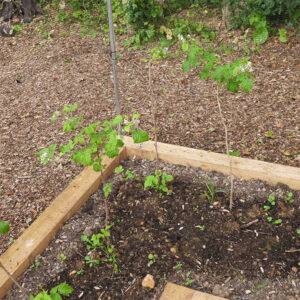
The method is broadly the same for all soft fruit: dig a planting hole wide enough to spread roots without bending them, set the plant at the correct depth, firm in thoroughly, and water well. The specific depth varies by fruit type and is worth getting right.
| Fruit | Planting depth | Spacing (plants) | Spacing (rows) | After planting |
|---|---|---|---|---|
| Summer raspberry | 5–8 cm deep | 40–50 cm | 1.8 m | Cut canes to 25 cm; tie in new canes as they grow |
| Autumn raspberry | 5–8 cm deep | 40–50 cm | 1.8 m | Cut to ground in Feb; no tying needed first year |
| Blackcurrant | 5 cm deeper than nursery mark | 1.5 m | 1.8 m | Cut all shoots to one bud above ground |
| Redcurrant / Whitecurrant | Same as nursery mark | 1.2–1.5 m | 1.5 m | Prune to open goblet shape |
| Gooseberry | Same as nursery mark | 1.2–1.5 m | 1.5 m | Prune to open shape; clear low shoots |
| Blackberry | Same as nursery mark | 2.5–4 m | 2.5 m | Tie in; cut cane to 30 cm |
| Blueberry | Same as nursery mark | 1.0–1.5 m | 1.5 m | Mulch with bark; keep moist with rainwater if possible |
After planting, apply a 5–8 cm mulch of well-rotted compost or composted bark around — but not touching — the stems. This suppresses weeds, retains moisture, and gradually feeds the soil. Water in well, and keep the area weed-free for the first growing season.
How much watering and feeding do soft fruit plants need?
Newly planted soft fruit needs consistent moisture throughout its first growing season; established plants are more drought tolerant but still benefit from irrigation during fruit swell in late spring and summer. Overfeeding with nitrogen is one of the most common beginner mistakes — it produces lush, disease-prone foliage at the expense of fruit.
Watering: In dry periods, water deeply once or twice a week rather than little and often — deep watering encourages roots to go down. Blueberries are the most water-sensitive: they dislike lime-rich tap water, so collect rainwater if possible and water them generously during fruit development.
Feeding: An annual application of general-purpose fertiliser in early spring is usually enough for currants, gooseberries, and cane fruits. Apply a high-potassium feed (such as sulphate of potash) in late winter to improve fruit quality and disease resistance. Blackcurrants are heavy feeders and respond well to an additional mulch of well-rotted manure in autumn. Blueberries should only ever be fed with fertiliser formulated for ericaceous plants; ordinary fertilisers can raise the soil pH and cause rapid decline. See our blueberry growing guide for full feeding schedules.
What pruning does soft fruit need, and when?
Pruning is essential to maintain productivity, control disease, and keep plants manageable — yet each type of soft fruit has its own pruning logic, and applying the wrong method can wipe out a year’s crop. The golden rule is to understand whether your plant fruits on one-year-old wood, two-year-old wood, or a permanent framework.
- Raspberries (summer-fruiting): Cut out all canes that have just fruited immediately after harvest in late summer. Tie in this year’s new canes — these will carry next year’s crop. For a full walkthrough, see our guide on how to grow raspberry bushes.
- Raspberries (autumn-fruiting): Cut all canes to ground level in late February. The new canes that emerge in spring will fruit in their first year — the simplest pruning regime of any soft fruit.
- Blackcurrants: Remove about one-third of the oldest, darkest stems to the base each winter. Blackcurrants fruit best on one-year-old wood. Hard renovation pruning every few years keeps yields high. See our guide on how to grow blackcurrant bushes.
- Redcurrants and whitecurrants: These fruit on spurs on a permanent woody framework. Each winter, shorten side shoots to one or two buds and reduce leading shoots by one-third. Full detail is in our guide to pruning gooseberry, redcurrant, and whitecurrant, and soil and pot advice in our growing redcurrants and whitecurrants guide.
- Gooseberries: Fruit on short spurs on old wood and at the base of one-year shoots. Prune in winter to an open goblet to allow light and air in; side shoots to two or three buds from the base.
- Blackberries: Cut all fruited canes to the base after harvest and tie in the current year’s new canes for next year’s crop. For fan and weave training methods, see our guide to training and pruning blackberry bushes.
What pests and diseases affect soft fruit, and how do you manage them?
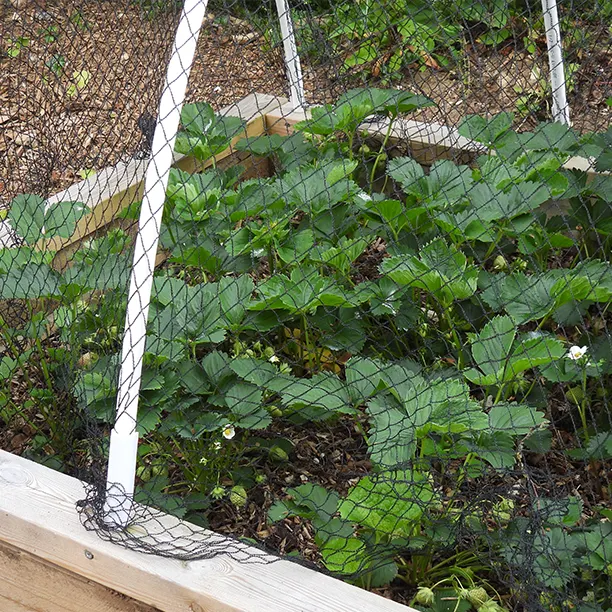
Birds are the most universally damaging pest for soft fruit and the simplest to deal with: a properly erected fruit cage or temporary netting at fruiting time is the most effective protection available. Beyond birds, each fruit type has its characteristic problems.
| Fruit | Main pest / disease | Symptoms | Organic / cultural control |
|---|---|---|---|
| Raspberry | Raspberry beetle | Maggots inside fruit | Cultivate soil in winter to expose pupae; plant late-ripening varieties |
| Blackcurrant | Big bud mite / reversion virus | Swollen round buds; distorted leaves | Remove and destroy affected buds; replace heavily infected plants; grow resistant varieties (e.g., ‘Ben Hope’) |
| Gooseberry | Powdery mildew | White powder on shoot tips and fruit | Open pruning to improve airflow; grow resistant varieties (e.g., ‘Invicta’) |
| Blueberry | Spotted wing drosophila | Larvae in ripe fruit; fruit collapses | Fine mesh netting from ripening; harvest promptly |
| Blackberry | Cane spot / spur blight | Purple spots on canes; die-back | Remove and burn infected canes; improve airflow; avoid overhead watering |
| All | Birds | Stripped fruit; damaged canes | Fruit cage; netting; humming line |
Buying certified, virus-tested stock from a reputable supplier is the single most important disease-prevention measure you can take, particularly for raspberries (which are susceptible to several viruses spread by aphids) and blackcurrants (reversion virus). All Ashridge bare-root fruit plants are grown from certified stock.
Can you grow soft fruit in a small garden or containers?
Yes — several soft fruits are very well suited to containers, raised beds, and small plots, and some perform better when their environment is controlled this way. Blueberries in particular are ideally grown in large pots of ericaceous compost if your garden soil is alkaline, since it is nearly impossible to permanently acidify an entire garden bed.
Space-saving approaches to consider:
- Cordon redcurrants and gooseberries trained as single vertical stems against a fence take as little as 30 cm width and can yield 1–2 kg per plant. Our guide to pruning gooseberry, redcurrant, and whitecurrant cordons explains the training method.
- Autumn-fruiting raspberries in a large pot (at least 40 litres) or a narrow bed alongside a fence are ideal for very small gardens.
- Thornless blackberries such as ‘Loch Ness’ take up far less lateral space than thorned varieties and are more manageable against a garden fence.
- Blueberries in 40–50 litre containers of ericaceous compost need watering with rainwater and annual top-dressing, but reliably produce 2–3 kg per bush each year.
When and how do you harvest and store soft fruit?
Harvest timing varies significantly between fruits and even between varieties of the same fruit, so choosing varieties with a staggered harvest season extends your fresh-fruit window considerably. Most soft fruit is highly perishable once picked and is best used within a few days, though almost all freeze superbly.
Harvesting tips:
- Pick raspberries when they slip from the plug easily and without juice running — this is peak ripeness. A fruit that resists picking is not yet ready.
- Blackcurrants are best harvested as whole strings (strigs) once most berries on a strig have turned fully black. Strip them off the stalks at home with a fork.
- Gooseberries can be harvested in two waves: thin the crop in May/June for cooking (green), leaving the remainder to ripen fully by July for dessert eating.
- Blueberries turn blue about a week before they are fully ripe; wait until they come away from the cluster without resistance and taste them — sweetness is the best guide.
- Blackberries are ripe when they are deeply black and yield gently to the touch; sour flavour means they need a few more days.
Storage: Refrigerate freshly picked soft fruit in a single layer and use within two to three days. For longer storage, spread on a tray and open-freeze for two hours, then bag up — this prevents clumping. Frozen soft fruit retains excellent flavour for cooking for up to twelve months.
Frequently Asked Questions
How long does soft fruit take to produce a worthwhile harvest?
Most soft fruit yields a modest first crop in year one or two and reaches full production by year three. Autumn raspberries are fastest, often cropping generously in their first summer after spring planting.
Do I need to grow more than one plant for pollination?
Most soft fruit is self-fertile, so a single plant of raspberries, blackcurrants, or blackberries will crop well. Blueberries are an important exception — growing two or more varieties together significantly improves yield and berry size.
What is the best soft fruit for a shady garden?
Redcurrants, whitecurrants, and gooseberries tolerate partial shade better than other soft fruit and will even crop adequately on a north-facing fence. Blackcurrants and raspberries need at least half a day’s sun for good yields.
Can I grow soft fruit on clay soil?
Yes, with preparation. Improve drainage by raising beds slightly and incorporating plenty of organic matter. Avoid planting into waterlogged ground; raspberries in particular are prone to root rot in heavy, wet soil.
When should I cut back raspberry canes?
Cut summer-fruiting raspberries immediately after harvest; cut autumn-fruiting varieties to the ground in late February. See our raspberry growing guide for full details.
Why are my blackcurrant buds swollen and round in spring?
Swollen, spherical buds indicate big bud mite, which also spreads reversion virus. Remove affected buds or, if heavily infected, replace the plant with a resistant variety such as ‘Ben Hope’.
Do blueberries need acidic soil?
Yes — blueberries require a soil or compost pH of 4.5 to 5.5. Grow them in containers of ericaceous compost if your garden soil is neutral or alkaline. Our blueberry guide covers this fully.
How do I stop birds eating all my soft fruit?
A permanent fruit cage with fine netting is the most effective long-term solution. Temporary draping of netting at fruiting time works for smaller plantings; check regularly that birds have not become trapped underneath.
What is the difference between summer and autumn raspberries?
Summer raspberries fruit on canes grown the previous year and crop in June–July. Autumn raspberries fruit on canes grown in the current year, cropping August–October. Autumn types have the simpler pruning regime.
Can I grow blackberries in a small garden?
Yes — choose a compact, thornless variety such as ‘Loch Ness’. Trained against a fence or trellis it needs just 2–3 metres of horizontal space and produces heavy crops. See our blackberry training guide.
How often should I replace soft fruit plants?
Well-maintained blackcurrants, redcurrants, and gooseberries crop reliably for 15–20 years. Raspberries are best replanted after 10–12 years, moving them to fresh ground to avoid soil-borne disease build-up.
Should I mulch soft fruit?
Yes — an annual mulch of well-rotted compost or bark chippings applied in early spring suppresses weeds, retains moisture, and slowly improves soil structure. Keep mulch a few centimetres clear of the main stems to prevent rot.


Leave a Reply