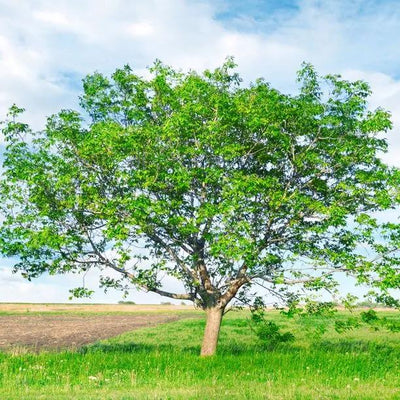
Why plant a walnut tree?
Walnuts are among the most handsome of deciduous trees, with elegant pinnate leaves that emerge in a bronze-flush of spring excitement before settling into deep, architectural green through summer. Come autumn, the show is far from over: the foliage turns a warm, buttery yellow, and – if you've been patient – those satisfying green-husked nuts will be dropping into the grass. Glorious.
As a garden tree, the walnut does best in a sunny, sheltered spot with deep, well-drained soil. It's not a tree for tiny gardens, it must be said – a mature specimen will eventually reach 15–20 metres – but for those with space, it rewards handsomely. And if you're tempted to worry about the famous allelopathic effect (the walnut's roots releasing a chemical called juglone that inhibits certain nearby plants), don't panic – in most garden settings, sensible planting distance keeps everything neighbourly.
When will walnuts produce nuts?
Patience, as ever in gardening, is the key virtue here. Grafted walnut trees will typically begin producing nuts within 3–5 years, while seedling-grown trees may take a little longer to get into their stride. Worth the wait? Absolutely. There are few things more satisfying than cracking open your own home-grown walnuts at Christmas.
Bareroot or potted?
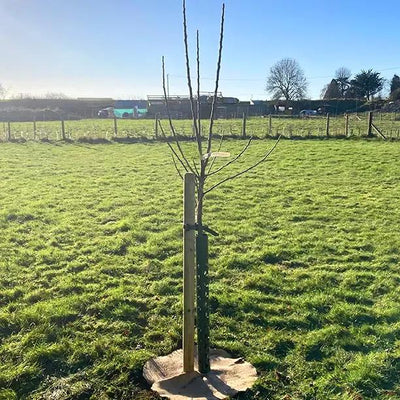
We sell our walnut trees as bare root plants during the dormant season (November to March) – the most economical and often the most successful way to establish a new tree. Bare root trees settle in with minimal fuss, and with a decent mulch and a stake to see them through that first year, they'll romp away come spring.
Planting & care tips
Plant your walnut in a spot that gets plenty of sun – it won't thank you for shade or waterlogged ground. Dig a generous hole, work in some good compost, stake firmly, and mulch well. Young trees benefit from a little TLC in the early years; once established, they're remarkably self-sufficient. Do avoid pruning in late winter or early spring when the sap is rising – walnuts bleed enthusiastically and won't appreciate the interruption. Late summer is the moment, if any pruning is needed at all.
A note on wildlife
Squirrels. Yes, they will find your walnuts before you do. This is simply a fact of life to be accepted with a philosophical shrug and perhaps a stronger vocabulary. The good news: a productive mature tree yields more than enough for all parties, with some to spare.



 Sign In
 Saved items


 5 Star Service Rating




 Secure, One-Tap Checkout
 5 Star Feefo Rating
 Hand Picked, Delivered to Your Door!
 1 Year Bareroot Guarantee
 Platinum Trusted Service Award 2026
 Mail Order Plant Experts - Est. 1949
 1 Year Bulb Guarantee