

Sold as:

from £10.95

Sold as:
from £19.99
 5 Star Service Rating




 Secure, One-Tap Checkout
 5 Star Feefo Rating
 Hand Picked, Delivered to Your Door!
 1 Year Bareroot Guarantee
 Platinum Trusted Service Award 2026
 Mail Order Plant Experts - Est. 1949
 1 Year Bulb Guarantee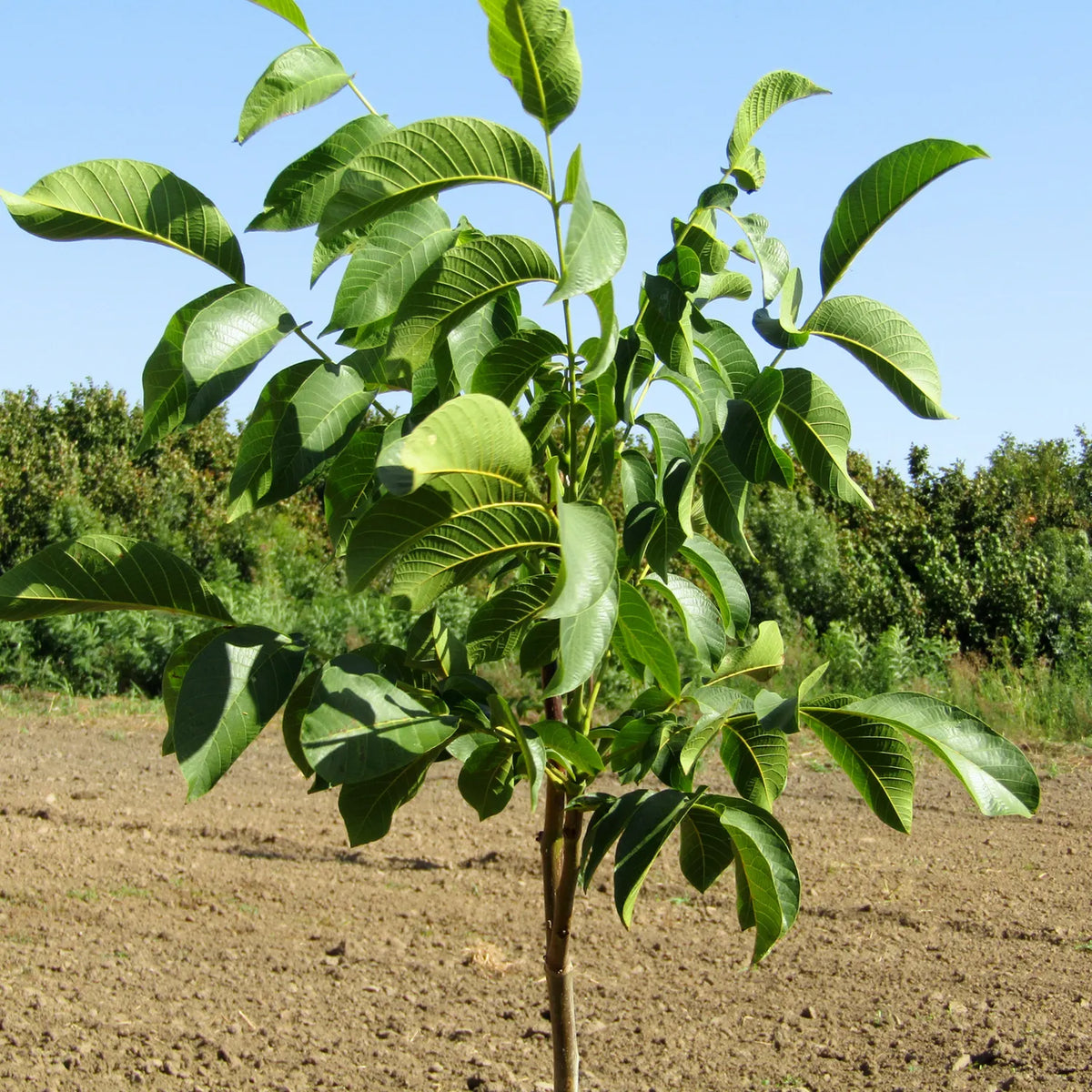




Buccaneer (Juglans regia 'Buccaneer') is a named UK variety of common walnut, selected specifically for reliable cropping in our climate. It leafs out late in spring, later than most, which means those first tender leaves miss the worst of the late frosts that can otherwise nip the flush and set back the harvest. The nuts themselves are round, well-filled, and come in September and October. It's self-fertile, so one tree is enough.
It won't grow as large as a seedling common walnut. Six to eight metres at maturity is typical, which puts it within reach of most gardens with a sunny, open corner to spare. The canopy is handsome in its own right: pinnate leaves on a spreading head, good yellow autumn colour, and that unmistakable walnut scent when you rub the bark or the foliage. The nuts are, of course, the main event, but you're not sacrificing anything ornamentally by choosing a named variety over an unselected seedling.
The late-leafing habit is the thing most people don't know about Buccaneer, and it matters. Walnut is frost-susceptible at bud break; a hard late frost can wipe out the whole season's crop in a night. Buccaneer's later-than-average flush gives it a meaningful advantage in most UK gardens, especially anywhere north of the Midlands or at any elevation. We'd plant it over an unselected common walnut almost every time for exactly this reason.
One thing to be aware of: all walnuts, including Buccaneer, produce juglone, a natural compound that inhibits the growth of certain nearby plants, particularly potatoes, apples, and some ornamentals. Keep it away from a vegetable garden and at least 10 metres from apple trees. The full list of susceptible plants is worth reading before you choose a site. Oaks, most grasses, and most fruit trees other than apple are fine with walnut as a neighbour.
Buccaneer makes a fine centrepiece for a small productive garden or orchard corner. It companions well with other nut and fruit trees from our edible nut tree range; a hazel or two planted nearby will draw in pollinators and crop happily in the walnut's partial shade once the canopy fills in. If you're planning a small mixed planting, our fruit trees include a wide range of apple and pear varieties that will sit comfortably alongside a walnut at the recommended distance. And if you're interested in the plain common walnut as a larger specimen tree or hedgerow plant, our Common Walnut Trees come as bareroot ornamental standards, a quite different proposition, but same species.
We source Buccaneer from specialist fruit tree nurseries: pot-grown, well-rooted and hardened off before dispatch. It establishes reliably in any month, though autumn or early spring planting eases its first year. All plants are guaranteed, and Which? Gardening named us Best Plant Supplier. Browse our full walnut range.
Expect the first meaningful crop in four to six years from a pot-grown tree. Named varieties like Buccaneer tend to come into production earlier than seedling-grown walnuts, which can take a decade or more. The first crops are usually modest, just a handful of nuts, building to a reliable harvest as the tree matures.
No. Buccaneer is self-fertile and will crop as a single tree without a pollination partner. A second walnut nearby can increase yield slightly, but it isn't necessary. Most UK gardens manage perfectly well with one tree.
Typically 6–8m (20–25ft) at maturity, noticeably smaller than a seedling common walnut, which can reach 30m if left unchecked. That makes Buccaneer a more practical choice for most gardens. It grows slowly, so the space it occupies in year five looks nothing like its eventual spread.
Full sun and shelter from cold winds, in deep, fertile, well-drained soil. Walnuts hate sitting in wet ground and will decline in waterlogged clay. Avoid frost pockets, which is partly why the late-leafing habit of Buccaneer is such a practical advantage. Give it as open and sunny a position as you have.
It's the same species (Juglans regia), but a selected, named cultivar rather than a seedling. The difference in practice is meaningful: Buccaneer leafs out later (better frost resistance), tends to crop more reliably and at a younger age, and stays smaller at maturity. A common walnut seedling is cheaper and ultimately taller; Buccaneer is the better choice if consistent nut production is the point.
Not long-term. Walnuts develop a substantial taproot and need deep, open soil to perform. A large container can work for the first year or two while you prepare a permanent site, but this isn't a tree for a pot on a patio. Plant it where you intend it to stay.
September and October, once the green husks begin to split and fall naturally. Pick them up from the ground, remove the outer husk before it stains, and dry the nuts in a well-ventilated spot for a few weeks before storing. Freshly picked walnuts taste noticeably different from dried; worth eating a few straight from the tree before putting the rest away.


 Sign In
 Saved items